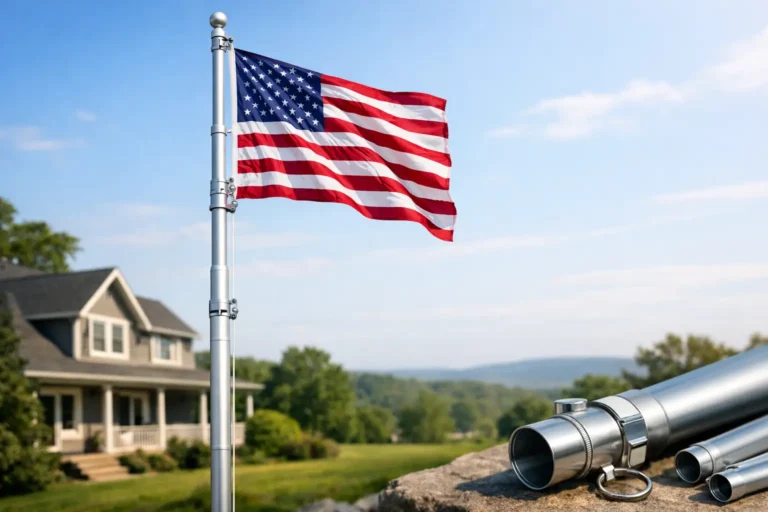
Best Telescoping Flagpole for Home
A flagpole looks simple until you live with the wrong one. Homeowners usually find that out after the first hard wind, the first tangled flag, or the first time they try to lower the pole and realize the hardware feels flimsy. If you are shopping for the best telescoping flagpole for home, the right choice comes down to more than height and price. It comes down to how your property handles wind, how often you want to raise and lower the flag, and whether you want a pole that still looks good year after year.
What makes the best telescoping flagpole for home?
For most residential buyers, a telescoping flagpole wins on convenience. It lets you raise or lower the pole without ropes and pulleys, which means fewer moving parts, less maintenance, and a cleaner look in the yard. That matters if you plan to fly the American flag daily, swap flags for holidays, or bring the flag down during storms.
But not every telescoping pole is built the same. The best ones feel solid in the hand, lock securely at each section, and use hardware that stands up to weather. A bargain pole may look similar online, yet the difference shows up fast when clips break, sections stick, or the finish starts to fade.
A good residential telescoping flagpole should do three things well. It should be easy to operate, stable in local wind conditions, and sized appropriately for the home and lot. If one of those is off, the whole installation feels off.
Height matters more than most buyers expect
The most common residential heights are 15, 20, 25, and 30 feet. The right one depends on your house, your setback, and how visible you want the flag to be from the street.
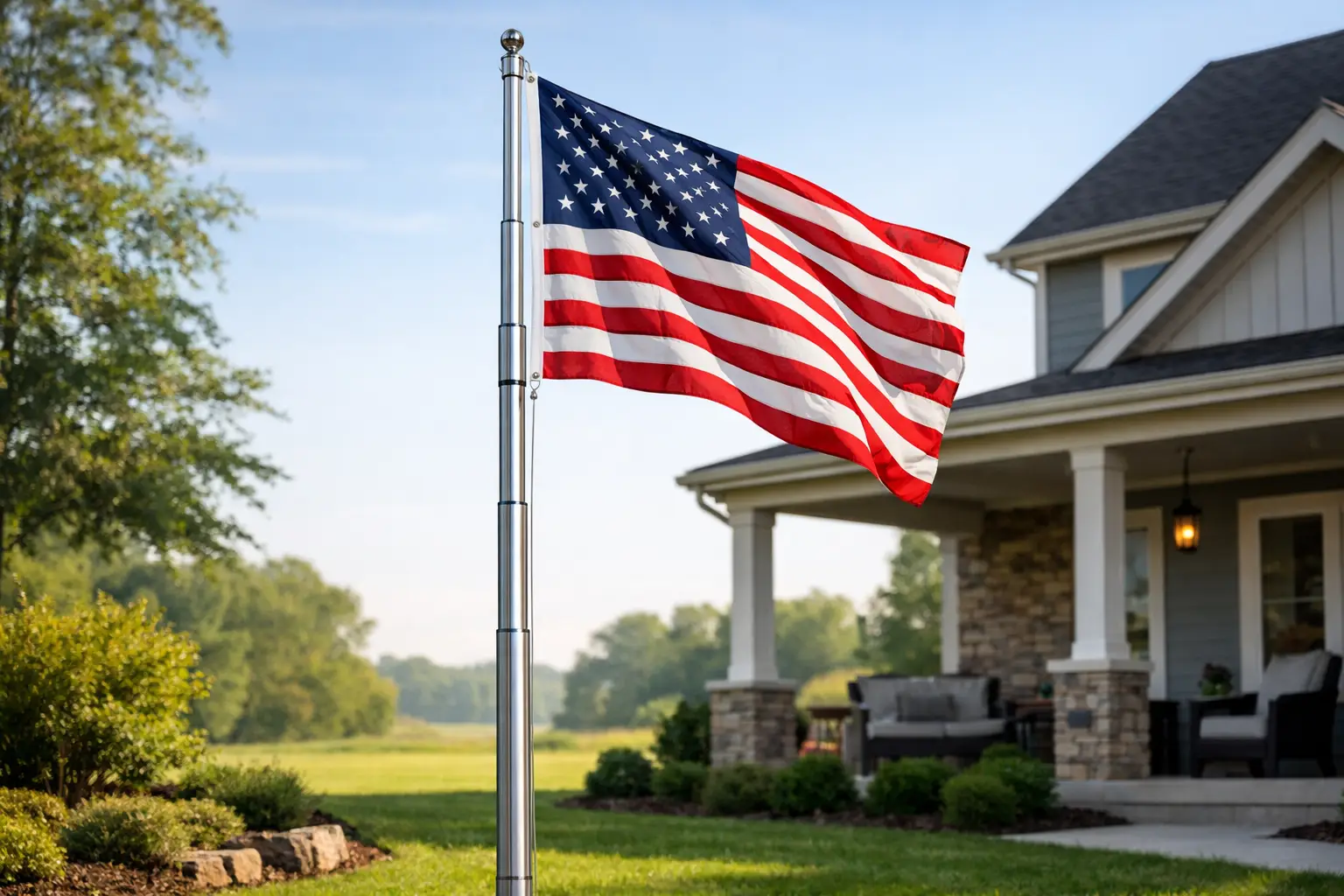
A 15-foot pole can work well for smaller homes, tighter lots, or backyard placement. It gives you a respectful presentation without overpowering the property. A 20-foot pole is often the sweet spot for average single-family homes because it is visible, balanced, and practical to install. For larger two-story homes or wide front yards, 25 feet often looks more proportionate. A 30-foot telescoping pole can be a strong choice on larger estates, corner lots, or places where the pole needs to stand out, but it can be too much for a modest suburban yard.
This is where buying from a specialist matters. The best telescoping flagpole for home is not always the tallest one. It is the one that fits the scale of the property and still performs well in your wind conditions.
Wind rating is where quality shows up
If you live in a calm inland area, you have more flexibility. If you live in open country, near the coast, or in a region known for strong storms, the pole needs to be chosen with more care.
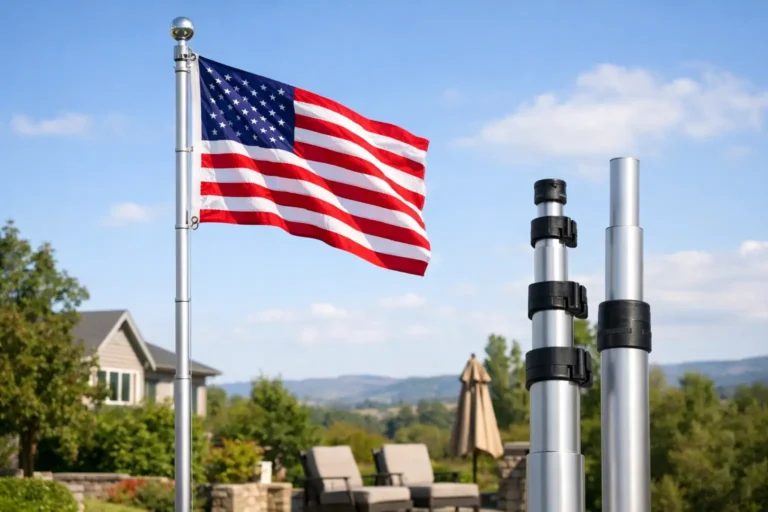
A telescoping pole is convenient, but convenience should never come at the expense of strength. Look closely at wall thickness, diameter, alloy quality, and how the sections lock into place. A stronger aluminum pole with quality engineering will usually outperform a cheaper model that relies on thin material and light-duty hardware.
There is always a trade-off. A lighter pole may be easier to handle during installation, but it may not inspire much confidence in repeated high wind. A heavier-duty model can cost more upfront, yet it often saves money and aggravation over time because it is less likely to bend, fail, or require replacement parts after one bad season.
For homeowners in windy areas, this is not the place to guess. A pole that works beautifully in one neighborhood may not be the best fit for another just a few miles away if exposure is different.
Material and finish are not small details
Most quality telescoping residential flagpoles are made from aluminum, and for good reason. Aluminum gives you a strong balance of durability, corrosion resistance, and manageable weight. It also holds up well in different climates, from humid Southern summers to freezing Northern winters.
The finish matters too. Satin and clear-coated finishes are popular because they look clean and professional. Powder-coated finishes can also look sharp, but quality varies. A good finish should resist oxidation, weathering, and the chalky look that some lower-grade poles develop over time.
Hardware deserves the same attention. Flag clips, snap hooks, stopper rings, toppers, and locking mechanisms all take wear. If the pole body is strong but the hardware is cheap, the ownership experience still suffers. That is one reason many homeowners decide to skip generic marketplace options and buy from a company that knows the product line and can recommend proven residential systems.
The easiest pole to use is often the one that gets used most
A telescoping pole appeals to homeowners because it removes the hassle from flying a flag. You can extend it when you want a full-height display and lower it when weather turns rough or when you need to change the flag. There is no rope slapping in the wind, no pulley maintenance, and usually less chance of tangling.
That said, not every telescoping system feels smooth. Some poles lock positively and release easily. Others can be stiff, awkward, or noisy. If you plan to fly the flag regularly, those small differences matter. A pole that is frustrating to operate tends to stay neglected.
For many homeowners, the best telescoping flagpole for home is the one that combines strength with simple everyday handling. That balance is what separates a premium residential flagpole from a product that only looks good in photos.
Think about the flag as part of the system
A flagpole should never be chosen in isolation. The size and weight of the flag affect performance, especially in wind. A larger flag creates more load, which can stress both the pole and the hardware. That is why matching flag size to pole height is so important.
A residential setup that looks right and performs well is usually proportioned from the start. Too small a flag can look lost. Too large a flag can whip excessively, wear out faster, and place unnecessary strain on the pole. Homeowners who want to fly two flags should also keep in mind that dual-flag arrangements create additional wind resistance.
This is another area where practical advice pays off. A specialist can help pair pole height, flag size, and site conditions so the display looks sharp and works the way it should.
Installation should be straightforward, but not casual
One of the big advantages of a telescoping residential pole is that installation is generally simpler than many sectional or commercial systems. Even so, the foundation sleeve, ground setting, and vertical alignment all need to be done correctly.
A properly installed pole stands straighter, operates better, and lasts longer. Problems often start at ground level. If the sleeve is off, the pole can lean. If the base is not prepared correctly, drainage and stability can become issues later.
For some homeowners, a do-it-yourself installation is perfectly reasonable. For others, especially with taller poles or tougher soil conditions, professional help makes sense. There is no shame in that. The goal is a clean, secure installation that you do once and do right.
Price matters, but value matters more
It is easy to compare telescoping poles by price alone. It is harder, and more useful, to compare them by long-term value. A lower-priced import may look appealing at checkout, but if it needs replacement hardware, fades quickly, or struggles in normal residential wind, it stops being a bargain.
A better-made pole usually gives you stronger materials, better fit and finish, smoother operation, and more dependable support after the sale. That support matters. When you are investing in a flagpole for your home, you want answers from someone who understands residential installations and real weather conditions, not just a product listing.
That is why many buyers prefer to work with a specialist such as Bob's Flagpole Company. You get product guidance based on actual use, not guesswork, and that can make the difference between buying once and buying twice.
How to choose the right one for your property
Start with three questions. First, how tall should the pole be in proportion to your house and lot? Second, what kind of wind does your property actually get, not just your broader zip code? Third, how often will you raise, lower, or change the flag?
If your home is average in scale and your site has moderate conditions, a quality 20-foot telescoping aluminum pole is often the strongest all-around choice. If your property is larger or your display needs more presence, 25 feet may be a better fit. If you are in a high-wind location, strength and engineering should move ahead of convenience and price on your priority list.
The best telescoping flagpole for home is the one that suits your property, your climate, and the way you plan to use it. A good flag display should feel proud, steady, and easy to maintain. If you are unsure, it is worth getting expert advice before you buy. A short phone call can save you from choosing a pole that looks right on paper but feels wrong in the yard.
When you put up a flag at home, you are not just adding a yard feature. You are making a statement about pride, respect, and permanence. Choose a pole that honors that commitment and gives you confidence every time you raise the flag.