
How to Choose a Flagpole That Lasts
A flagpole that looks great in a product photo can be the wrong choice for your yard, business, or facility. The real question is not just how to choose a flagpole, but how to choose one that fits your property, handles your weather, and gives you years of dependable service.
That starts with a few practical decisions. You need the right height for the space, the right material for your conditions, and a design that matches how often the flag will be raised, lowered, and maintained. If you get those three right, the rest becomes much easier.
How to choose a flagpole for your property
The first thing to look at is where the pole will stand. A residential front yard has very different needs than a dealership, school, municipal building, or waterfront property. One of the most common mistakes buyers make is choosing based on appearance alone without thinking through scale, exposure, and use.
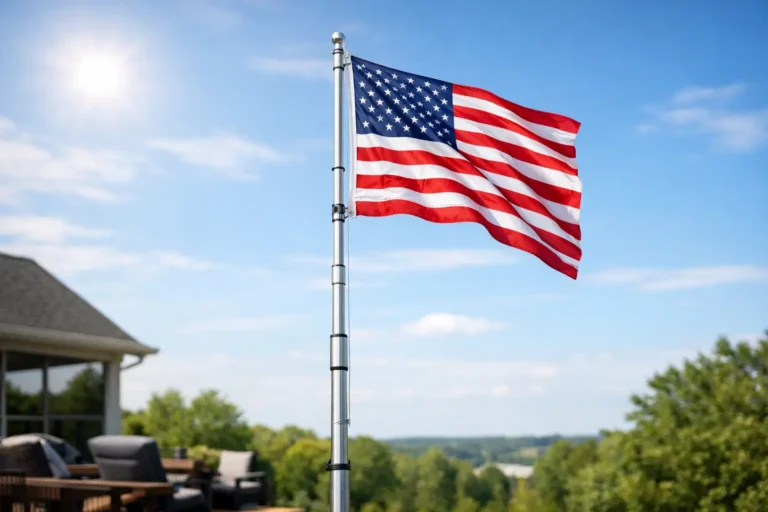
For a home, a 15-foot to 25-foot pole is often the right range, depending on lot size, roofline, and setback. A pole that is too short can disappear against the house. One that is too tall can overwhelm the property and draw the wrong kind of attention. Most homeowners want a flagpole that is visible, dignified, and proportionate.
For businesses and public buildings, visibility matters more. A commercial site usually calls for a taller pole with more presence, especially if the building sits back from the road or has a large parking area. Schools, churches, municipal sites, and government properties often choose poles that project strength and permanence, not just convenience.
The site itself matters just as much as the building. Open lots with no windbreaks put more stress on a pole than sheltered areas. Coastal conditions, hilltops, and wide commercial developments tend to need stronger materials and hardware than a protected suburban lawn.
Start with height, not features
Many buyers jump straight to telescoping models, lighting, or finish options. Those details matter, but height should come first because it shapes the whole project.
A good rule is to choose a flagpole that looks balanced with the structure nearby and still allows the flag to fly freely. If tree canopies, power lines, or overhangs are close, you need enough clearance for both the pole and the flag. A larger pole also needs a larger flag, and that affects wind load, appearance, and hardware demands.
For residential use, a telescoping or sectional pole in the mid-range is often enough. For a business entrance, a car lot, or a civic property, taller ground-set poles are usually the better fit. Bigger is not always better, though. If your foundation, site access, or budget does not support a taller installation, a slightly smaller premium pole will often outperform a larger bargain model.
Material matters more than most people think
If you want to know how to choose a flagpole that will hold up over time, pay close attention to material. This is where durability, maintenance, appearance, and price all come together.
Aluminum is a popular choice for many commercial applications because it offers a clean look, good corrosion resistance, and long-term durability. It is strong without being excessively heavy, and it works well for many in-ground installations. For buyers who want a traditional, permanent appearance, aluminum is often the standard.
Fiberglass is especially useful in high-wind and coastal environments. It resists corrosion very well and can be a smart choice where salt air or severe exposure is a concern. It also has a distinct appearance that some buyers prefer for institutional or marine settings.
Telescoping poles appeal to many homeowners because they are easier to raise and lower without climbing or dealing with complex rigging. They can be practical, clean-looking, and user-friendly. That said, not every telescoping model is built the same. The locking system, wall thickness, and wind rating make a big difference. A well-made telescoping pole can be an excellent choice. A lightly built one can become a frustration fast.
Sectional poles can offer a more budget-friendly option for residential buyers, but they are not always the best answer for every site. If ease of use and long-term strength are priorities, spending more upfront for a heavier-duty design often pays off.
Wind load is not a side detail
A flagpole does not fail on a calm day. Wind is what separates a decorative purchase from a serious outdoor installation.
Every property has its own exposure, and the flag itself adds stress. A larger flag catches more wind, which means the pole, hardware, and foundation all need to work harder. That is why a buyer in a quiet inland neighborhood may do well with a different setup than a customer on the Gulf Coast, in the Plains, or on a wide-open commercial parcel.
High-wind flagpoles are worth serious consideration if your area sees strong seasonal weather, frequent storms, or year-round exposure. The extra strength is not just about surviving a single event. It is about reducing wear over time and lowering the chance of damage to the pole, the flag, or surrounding property.
This is also where cheap imports tend to show their weaknesses. The finish may look fine at first, but light-duty components and poor engineering usually reveal themselves once the weather turns. A premium American-made pole with real wind capacity is often the safer and more economical investment.
Decide how the pole will be installed
Installation changes what you can buy and how the pole will perform. A homeowner may want a simpler setup that avoids a major project. A commercial buyer may need an engineered in-ground installation that meets site requirements and presents well for years.
Telescoping and some residential poles can be easier to manage for do-it-yourself installation, depending on the height and site conditions. Ground-set commercial poles are more involved and usually require proper excavation, sleeve placement, and concrete work. The taller the pole, the less room there is for guessing.
Before choosing a model, think about soil conditions, drainage, access to the location, and whether professional installation makes sense. A beautiful pole installed poorly can become a maintenance problem before the first season is over.
Think about operation and maintenance
Some buyers want a classic rope-and-pulley setup. Others want a quieter, lower-maintenance system. Neither choice is automatically right. It depends on who will use the pole and how often.
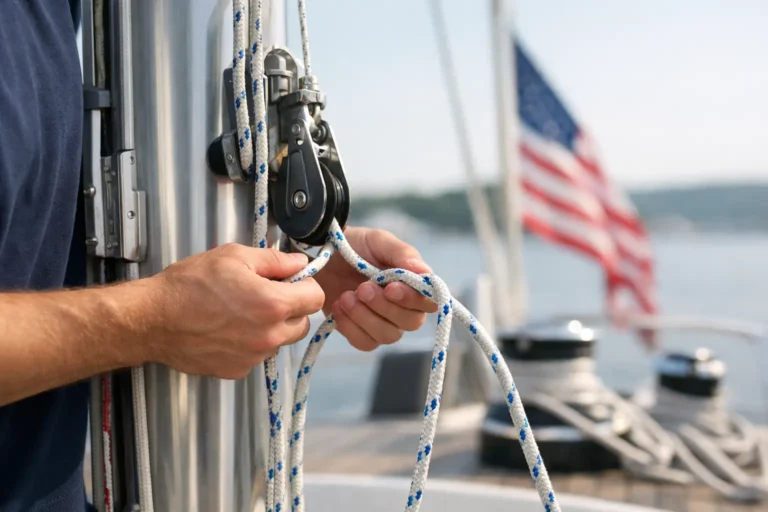
External halyard systems are traditional and widely recognized. They are serviceable and familiar, but they can produce noise in windy conditions and may be more accessible to tampering in public spaces. Internal halyard systems offer a cleaner appearance and added security, which can be especially appealing for schools, businesses, and government sites.
If this is a residential pole, convenience matters. A telescoping design can make it easier to lower the flag, change it out, and perform routine care. If the flag will be flown daily, that convenience can matter more than buyers expect.
Lighting is another practical factor. If you plan to fly the American flag at night, proper illumination should be part of the decision from the start. Solar flagpole lights can work well in many residential settings, while larger installations may call for dedicated lighting solutions.
Match the pole to the flag
A flagpole should be chosen with the flag in mind, not as an afterthought. Flag size needs to be proportionate to pole height, and flag quality needs to match the environment.
A heavy-duty American flag makes sense if the pole is in a windy location or if the flag will be displayed continuously. Lighter-weight flags may look great in calmer conditions but wear faster under constant stress. Buyers sometimes spend carefully on the pole, then cut corners on the flag. That usually leads to more frequent replacements and a less impressive display.
The goal is a complete system that works together - pole, hardware, flag, and lighting. When those pieces are chosen as a set, performance improves and the display looks right.
Price matters, but value matters more
Everyone has a budget. That is real. But with flagpoles, the cheapest option is rarely the best value.
A lower price can mean thinner walls, weaker hardware, lower wind tolerance, and less dependable finishes. It can also mean less guidance before the sale and less support after it. That may not show up on day one, but it shows up later in noise, wear, repairs, and replacement.
A better approach is to buy for your conditions and expected use. If this is a permanent display at your home, business, school, or public facility, you want a pole that reflects pride and holds up accordingly. That is why many buyers prefer to work with a true specialist instead of a general retailer. At Bob's Flagpole Company LLC, that hands-on guidance is part of the value.
If you are still weighing options, that is normal. The best flagpole is not the most expensive or the tallest. It is the one that fits your property, stands up to your weather, and makes you proud every time you see the flag flying.