
Commercial Flagpoles That Fit the Job
A flagpole in front of a business, school, or government building does more than hold a flag. It sends a message about pride, professionalism, and permanence. That is why commercial flagpoles need to be chosen with more care than many buyers expect. Height, material, wind exposure, foundation requirements, and the look of the finished installation all matter.
If you are buying for a storefront, office park, school campus, municipal building, church, or industrial property, the right choice depends on the site. A pole that looks perfect at a small business entrance may be undersized at a courthouse, and a basic setup that works in a sheltered area may not last where wind is a constant factor. This is one of those purchases where getting expert service upfront can save time, money, and frustration later.
What makes commercial flagpoles different
Commercial flagpoles are built for larger properties, heavier use, and higher visibility than many residential poles. They are often taller, engineered for stricter wind loads, and designed to create a stronger visual presence from the road or across a campus. In many cases, they also need to meet site standards, purchasing requirements, or municipal expectations.
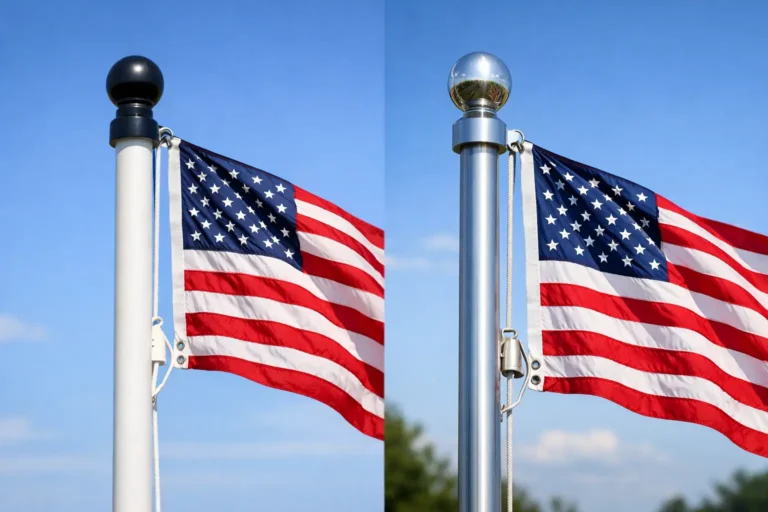
That means buyers are usually balancing appearance and performance at the same time. A polished aluminum pole can give a property a clean, professional look, but the right wall thickness and hardware matter just as much as the finish. A fiberglass pole may make sense in certain settings, especially where corrosion resistance is important, but it is not automatically the best option for every location. The right answer depends on the property and how the pole will be used.
Choosing the right height for commercial flagpoles
Height is one of the first decisions, and it is where many buyers hesitate. They do not want the pole to look too small, but they also do not want to overbuild the site or create installation complications.
For many small businesses, a pole in the 20 to 30 foot range creates a strong presence without overwhelming the property. Larger office buildings, schools, dealerships, churches, and municipal sites often move into the 35 to 50 foot range, and some locations need even more height depending on the scale of the building and the surrounding landscape.
The practical question is not just how tall the pole can be. It is how tall it should be to look right from the street, clear nearby trees or structures, and display the flag in proportion to the site. A pole that is technically adequate can still look undersized if it gets lost against a large façade or a broad parking area.
This is where a specialist approach helps. Experienced flagpole buyers know there is no universal chart that solves every project. A school entrance, a car lot, and a county building can all have very different needs even if the square footage is similar.
Material matters more than people think
When buyers compare commercial flagpoles, material often seems straightforward at first. In reality, it affects appearance, maintenance, longevity, and performance.
Aluminum remains a top choice for many commercial applications because it offers a classic look, solid durability, and dependable outdoor performance. It is especially popular for businesses, public buildings, and institutional settings where a clean, traditional presentation matters. Aluminum poles are available in several finishes and configurations, and they work well across a wide range of heights.
Fiberglass is another strong option, especially in coastal or corrosive environments. It can be a smart choice where salt air, moisture, or harsh weather would be a concern. It also offers a different visual style, so some buyers prefer it for specific architectural settings.
The best material is not always the one with the broadest appeal. It is the one that fits the environment, the maintenance expectations, and the visual goals of the property. That is why the decision should be based on use case, not guesswork.
Wind load, location, and why site conditions matter
A flagpole is only as good as its ability to perform where it stands. One of the biggest mistakes in commercial projects is choosing based on appearance alone while overlooking wind exposure.
Open commercial corridors, hilltop sites, coastal properties, school athletic complexes, and large municipal campuses can all experience stronger wind conditions than a buyer expects. In those settings, engineering matters. Pole diameter, wall thickness, flag size, and hardware all work together, and changing one factor can affect the whole system.
That is also why replacing an old pole is not always a simple one-for-one purchase. The previous setup may have failed because it was undersized for the site, the wrong material was used, or the flag flown was too large for the pole and wind conditions. If the goal is long-term performance, the better question is not what used to be there. It is what the site actually requires.
Internal halyard or external halyard
Hardware choice affects both appearance and day-to-day use. For many commercial properties, the main decision comes down to internal halyard versus external halyard systems.
External halyard poles use a rope system mounted outside the shaft. They are familiar, easy to operate, and often cost less upfront. For many businesses, schools, and churches, they are a practical and dependable solution.
Internal halyard systems place the operating mechanism inside the pole, offering a cleaner appearance and added security. These are often preferred for government buildings, public spaces, and higher-visibility commercial properties where aesthetics and tamper resistance matter. They usually come at a higher price point, but for the right setting, that added investment makes sense.
It depends on who will access the pole, how often the flag will be raised or lowered, and how much emphasis the property places on presentation and security.
Installation is part of the buying decision
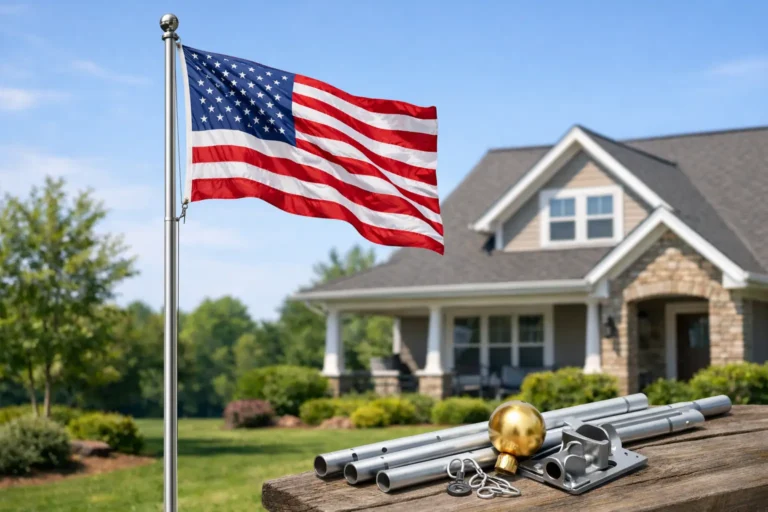
Commercial flagpoles are not impulse purchases. Foundation design, ground sleeve requirements, site access, shipping coordination, and installer availability all need attention before the pole arrives.
That does not mean every project is complicated, but it does mean installation should be considered early. A buyer planning for a new office location may have the advantage of coordinating concrete work during a broader site project. A school replacing an existing pole may need to work around active walkways, student traffic, or a limited maintenance window. A municipality may need to line up approvals before the order is placed.
A quality flagpole supplier should help buyers think through those details before there is a problem on the jobsite. That kind of guidance is especially valuable for first-time buyers, but even experienced facility managers appreciate having a specialist confirm the fit.
Matching the flagpole to the property
The best commercial flagpoles do not feel generic. They fit the scale and purpose of the property.
A retail business may want a pole that improves curb appeal and reinforces a welcoming, professional image. A school may be looking for a durable setup that holds up year after year with minimal maintenance. A veterans memorial, courthouse, or municipal building may need a more formal presentation with a taller pole and upgraded hardware. Industrial and high-wind sites often put function first, but that does not mean appearance should be ignored.
The point is simple. Different properties have different priorities, and a true flagpole specialist should be able to guide buyers toward the right balance.
Why expert guidance matters
There are plenty of places online where you can scroll through hardware and hope for the best. Commercial flagpoles are usually not that kind of purchase. Most buyers want confidence that they are choosing the right height, the right material, and the right setup for the wind and the site.
That is where working with a specialist still matters. A company focused on premium flagpoles, real product knowledge, and direct customer service can help prevent the common mistakes that cost buyers more later. Bob's Flagpole Company has built its reputation around that hands-on support, American-made products, and expert service you can count on.
For schools, business owners, property managers, churches, and public agencies, the best result is rarely about buying the cheapest pole or the tallest one. It is about choosing a flagpole that looks right, performs well, and stands up to the conditions it will face every day.
If you are planning a commercial flagpole project, take a little extra time before you order. The right questions now can lead to a better installation, a better-looking property, and a flag display you can be proud of for years to come.