20 Foot Telescoping Flagpole Buyer’s Guide
A 20 foot telescoping flagpole hits a sweet spot for a lot of properties. It is tall enough to make a strong statement from the road, yet still manageable for homeowners, small businesses, churches, schools, and municipal buildings that want easier installation and simpler flag changes than a traditional one-piece pole often allows.
That balance is exactly why this height gets so much attention. Buyers want something that looks substantial, holds up in real weather, and does not turn routine flag changes into a ladder job. A well-made telescoping pole can do all three, but only if you choose the right one for your site.
Why a 20 foot telescoping flagpole is so popular
Twenty feet works well on a wide range of properties because it offers visibility without overwhelming the building or landscape. On a typical home lot, it stands out clearly and gives the flag room to fly. On a small commercial property, it presents a professional appearance without the scale or installation demands of a much taller pole.
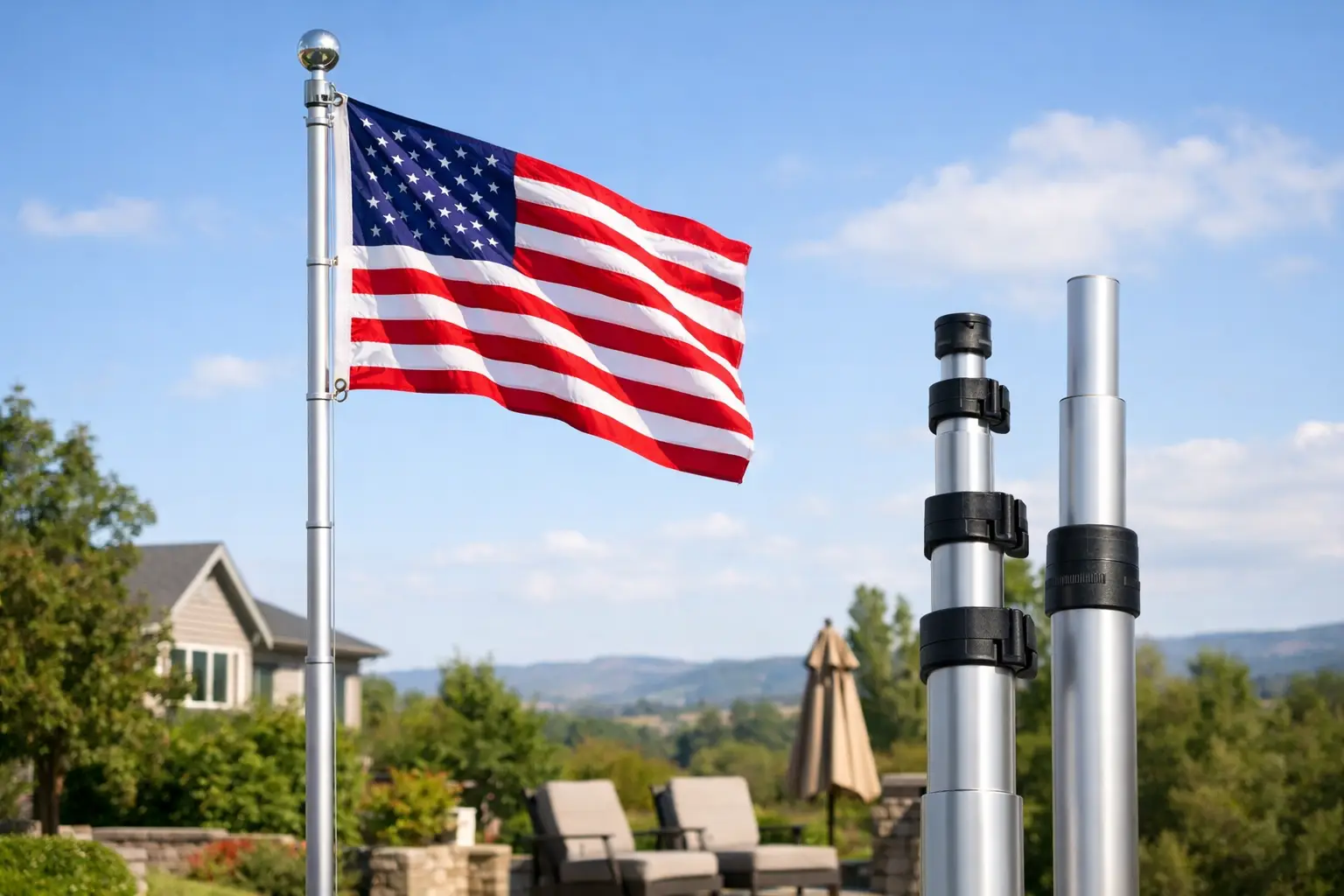
The telescoping design adds another practical advantage. Instead of dealing with halyards, pulleys, and separate hardware mounted high on the shaft, the sections raise and lock into place. For many customers, that means a cleaner look and less day-to-day fuss. It also makes lowering the pole for maintenance or flag changes much more straightforward.
That said, not every telescoping model performs the same way. Height alone does not tell you how the pole will behave in wind, how it will look after a few seasons, or how much maintenance it will require.
What to look for in a 20 foot telescoping flagpole
The first thing to evaluate is material quality. Most telescoping poles in this category are aluminum, but there is a big difference between lightweight imported aluminum and a heavier-duty USA-made pole built for long-term outdoor use. Wall thickness, finish quality, and engineering at the locking points all matter. A lower-priced pole may look similar in a product photo, but under wind load the weak points show up fast.
Finish is another factor that buyers sometimes overlook. A quality anodized or powder-coated finish helps the pole resist corrosion, fading, and surface wear. If your property gets strong sun, heavy rain, salt air, or winter weather, the finish is not just cosmetic. It directly affects how the pole looks and performs over time.
You should also pay close attention to the locking system. A telescoping pole depends on secure, reliable section locks. If those components are poorly made, the pole can become frustrating to raise, lower, or keep fully extended. Better poles are designed so the sections engage cleanly and stay put under normal conditions.
Then there is the hardware that supports the flag itself. Some systems use internal mechanisms for a cleaner exterior. Others use rings or clips that allow the flag to rotate more freely around the pole. In moderate wind, several styles can work well. In frequent or gusty wind, the hardware design becomes much more important.
Matching the pole to your property
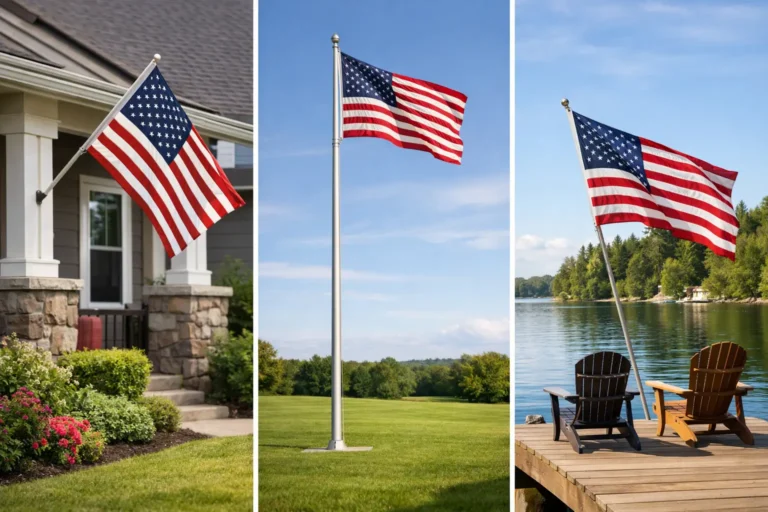
A good flagpole choice starts with the setting. On a residential lot, a 20 foot height is often ideal when you want a true yard-mounted pole rather than one attached to the house. It gives the American flag the prominence it deserves without creating an oversized look in front of a one-story or two-story home.
For small business owners, this height often fits storefronts, office buildings, service centers, and community properties. It has enough presence to be noticed by customers and visitors, but it usually does not require the same planning as a taller commercial installation. Schools, churches, HOAs, and municipal offices also frequently choose this size when they need something practical, durable, and easy to service.
The surrounding environment matters just as much as the building. Open land, hilltops, coastal exposure, and wide parking lots all create more wind stress than a sheltered backyard. If your site is exposed, a 20 foot telescoping flagpole can still be a strong option, but you may need a heavier-duty model specifically designed for higher wind conditions.
Wind, flag size, and real-world performance
This is where smart buyers separate themselves from impulse buyers. A flagpole does not fail just because of its height. It fails when height, wind exposure, flag size, and pole construction are mismatched.
A common flag size for a 20 foot pole is 3 by 5 feet or 4 by 6 feet, depending on the manufacturer’s recommendation and the look you want. The larger the flag, the greater the wind load. If your property gets strong, sustained wind, a slightly smaller heavy-duty flag may perform better and last longer than an oversized flag that puts extra stress on the pole and mounting hardware.
The same principle applies to poles. A bargain telescoping model may be fine in a sheltered neighborhood where wind is moderate and the flag is lowered during storms. That same pole may be the wrong choice for a farm, open commercial site, or coastal property. There is no shortcut here. Wind conditions should shape your decision from the beginning.
If you are replacing a damaged pole, pay attention to how and why the old one failed. Bent sections, worn locks, broken clips, or excessive movement in the wind all tell you something useful about what your property demands.
Installation: easier than many buyers expect
One reason this category is so appealing is that installation is generally more approachable than buyers assume. A 20 foot telescoping flagpole can often be installed without the complexity associated with taller one-piece poles, especially on residential and light commercial sites.
The foundation still matters. A proper ground sleeve or base setup, correctly set in concrete, gives the pole the support it needs and makes future removal or service easier. Rushing this part is a mistake. Even the best pole can perform poorly if the base is not installed correctly.
Location matters too. Leave enough clearance for the flag to fly freely without striking trees, rooflines, signs, or power lines. Think about how the pole will look from the street and from the building itself. A pole should feel intentional, not squeezed into the only open patch of grass.
Many buyers are comfortable handling a basic installation. Others prefer local help for the footing or final setup. Either route can work well, as long as the site is evaluated honestly and the foundation is done right.
Maintenance and everyday use
A telescoping design is popular for a simple reason: it makes ownership easier. Lowering the pole for flag changes, inspection, or storm prep is usually much more convenient than working with a traditional rope-operated system.
That does not mean maintenance disappears. You still want to inspect moving parts, keep hardware in good condition, and check for wear after severe weather. If you fly the flag daily, the flag itself will often need replacement before the pole does. Sun, wind, and rain are hard on fabric, even when the pole remains in excellent shape.
A little routine attention goes a long way. Clean the pole occasionally, inspect the locking sections, and replace worn clips or rings before they become a larger problem. Buyers who do this usually get much better long-term value from their investment.
Who should buy a 20 foot telescoping flagpole
If you want a freestanding pole with strong curb appeal, easier flag handling, and a practical installation range, this height makes a lot of sense. It works especially well for homeowners who want a serious display, small businesses that need a professional presentation, and public-facing properties that need dependable function without unnecessary complexity.
It may not be the right fit for every site. If your lot is very small, a shorter pole might look more balanced. If you are outfitting a large civic space or broad commercial frontage, you may want to step up in height. And if your location sees extreme wind, the decision should be driven more by engineering and duty rating than by appearance alone.
That is where buying from a true flagpole specialist matters. A good seller should ask about your property, your exposure, and how you plan to use the pole - not just sell you the first 20 foot telescoping flagpole on the page. At Bob’s Flagpole Company, that hands-on guidance is part of the value, because the right recommendation now can save you time, money, and frustration later.
A flagpole is not just another yard fixture. It is a visible statement on your property every day of the year. If you choose a 20 foot telescoping model built for your conditions, install it properly, and give it basic care, it can serve you well for years and make the flag it carries look the way it should.