
Best Flagpole for Windy Areas
A flag that snaps hard in the wind can look proud from the road, but it puts real stress on the pole, hardware, and foundation. If you need a flagpole for windy areas, the right choice is less about looks and more about engineering. Wind exposure changes everything - from the material you choose to the wall thickness, foundation size, and even the style of the truck and halyard.
Buy too light, and you may end up replacing parts sooner than expected. Buy too heavy without considering the site, and you can spend more than you need to. The best result usually comes from matching the pole to your actual conditions, not just picking the tallest model or the lowest price.
What makes a flagpole for windy areas different?
Not every property experiences wind the same way. A home tucked behind trees may see moderate gusts, while a business on an open corner lot or a school campus on flat ground may deal with steady pressure day after day. Coastal locations, hilltops, wide-open rural sites, and large parking lots tend to be especially demanding.
A flagpole for windy areas is built to manage those loads safely. That usually means stronger materials, heavier wall thickness, better internal or external hardware, and a foundation designed for local conditions. It also means understanding that the flag itself creates drag. In many cases, the size of the flag matters just as much as the size of the pole.
This is where buyers often get tripped up. They focus on pole height first, when wind rating, exposure, and flag size should be part of the same conversation. A 25-foot pole in a sheltered area is one thing. That same height on an exposed waterfront property is another.
Best materials for a flagpole in windy areas
Material selection is one of the first big decisions, and each option has trade-offs.
Fiberglass flagpoles
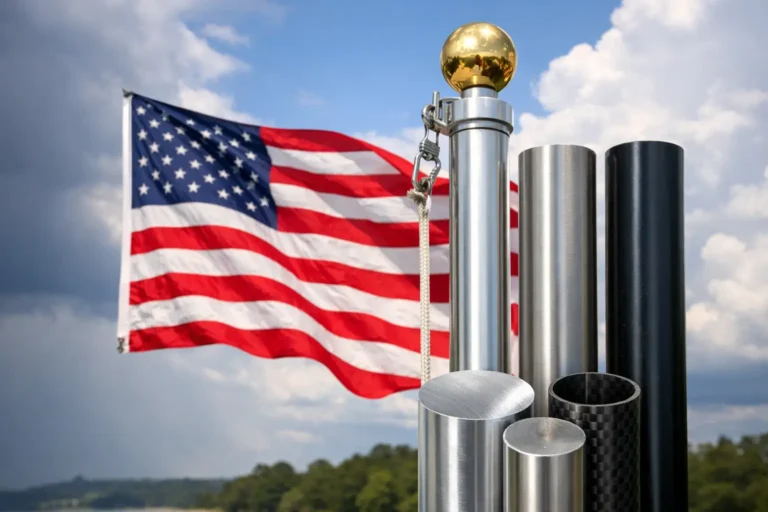
Fiberglass is a strong choice in many high-wind settings because it flexes under load instead of transmitting every force rigidly through the pole. That flexibility can be an advantage in gusty regions, especially for commercial sites, schools, and municipal properties that need dependable performance over time.
Fiberglass also resists corrosion, which matters in coastal air or areas with a lot of moisture. The trade-off is that fiberglass has a different look than metal, and some buyers simply prefer the traditional appearance of aluminum. For customers focused on durability first, fiberglass often deserves a serious look.
Aluminum flagpoles
Aluminum remains one of the most popular choices for residential and commercial flagpoles, and for good reason. A well-built aluminum pole offers a clean appearance, long service life, and excellent value. But in windy areas, not all aluminum poles are equal.
The alloy, taper, butt diameter, and wall thickness matter. Heavier-duty aluminum poles designed for higher wind loads are very different from lighter decorative models. If you are shopping aluminum for a windy site, this is not the place to guess based on photos alone.
Telescoping flagpoles
Telescoping models are popular with homeowners because they are easy to lower for maintenance and flag changes. Some premium telescoping poles perform very well in windy conditions, especially when they are built with stronger locking systems and quality hardware.
That said, wind performance depends heavily on the specific design. A telescoping pole can be a smart solution for a residential property, but buyers should pay close attention to the stated wind rating and whether the product is truly intended for frequent high-wind use.
Height, flag size, and wind load
A taller pole is not always better. As height increases, leverage and wind load increase too. The larger the flag, the more drag it creates. That means a pole that is perfectly suitable with one flag size may not be suitable with a larger one on the same site.
For homeowners, a 20-foot or 25-foot pole is often the sweet spot, but local exposure matters. For commercial and government properties, larger poles may be appropriate, though they must be matched carefully to engineering requirements. Open campuses, roadway frontage, and coastal sites often need a more conservative approach.
This is one reason specialist guidance matters. Generic sizing charts can be helpful, but they do not account for every site condition. If your property gets strong seasonal storms or regular gusts, it is worth treating wind as a primary buying factor, not a side note.
Hardware matters more than many buyers realize
Even a strong pole can become a headache if the hardware is not built for the job. In windy conditions, halyards, cleats, trucks, pulleys, and snap hooks all take more abuse.
External halyard systems are common and easy to use, but in some settings, buyers prefer internal halyard designs for added protection and cleaner presentation. For high-wind areas, the goal is reliable operation and reduced wear. Anti-wrap devices can also make a real difference by helping prevent the flag from tangling around the pole during gusts.
Flag choice matters too. A heavy-duty American flag made for tougher outdoor use is often a better fit than a lighter decorative flag in exposed areas. Sometimes the smartest move is to fly a slightly smaller flag to reduce stress on the entire setup.
Installation can make or break performance
A premium pole installed poorly is still a problem waiting to happen. In windy areas, proper installation is every bit as important as product quality.
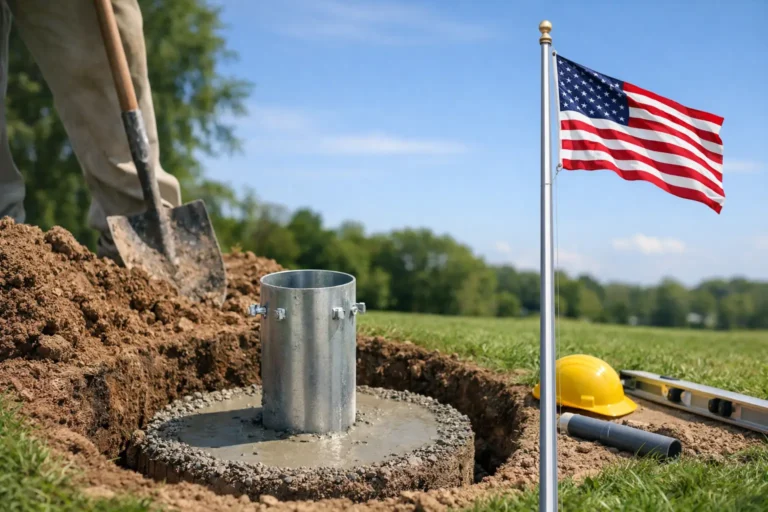
Foundation depth, diameter, soil conditions, drainage, and sleeve alignment all affect long-term performance. A site with sandy soil, coastal moisture, or freeze-thaw conditions may need a different installation approach than a sheltered suburban lawn. For wall-mounted poles, the mounting surface and bracket strength are just as critical.
This is where experienced advice pays off. A specialist can help you think through local wind exposure, soil conditions, and intended flag size before you buy. That reduces the odds of ending up with a pole that looks good in the catalog but struggles on your property.
Choosing the right flagpole for windy areas by property type
For a typical homeowner, ease of use and durability usually lead the conversation. A high-quality telescoping pole or a properly rated residential aluminum pole may be the best fit, especially if you want to raise and lower the flag without much effort.
For small businesses and property managers, the priorities often shift toward appearance, longevity, and reduced maintenance. A commercial-grade aluminum or fiberglass pole is often the better route, particularly on open lots or near roadways where wind exposure is constant.
For schools, municipalities, and government properties, durability and public presentation tend to carry equal weight. These sites often need engineered poles with dependable hardware and a professional installation plan. Saving a little upfront rarely helps if the pole is undersized for the environment.
Common mistakes buyers make
The biggest mistake is assuming all flagpoles are built to the same standard. They are not. A low-cost pole may work fine in a protected yard, but that says nothing about how it will perform on a windy hill or a coastal business property.
Another common mistake is overlooking the flag itself. Oversized flags, lower-grade materials, and worn hardware all add stress. Some buyers also underestimate how much open exposure changes the equation. A site with no windbreaks is simply harder on equipment.
The last mistake is treating the purchase like a simple commodity order. A flagpole is a structural outdoor product. If your site gets serious wind, expert guidance is part of the value. That is one reason many customers choose Bob's Flagpole Company LLC - they want to talk through the real conditions before making a decision.
When it pays to ask for expert help
If you are replacing a bent pole, dealing with repeated hardware failures, or installing on a property with obvious wind exposure, it is smart to ask questions before you buy. The right recommendation may be a different material, a shorter height, a heavier wall, or a different flag size than you first expected.
That does not mean you always need the biggest, most expensive model. It means you need the right combination of strength, usability, and presentation for your site. Good advice can save money just as often as it prevents problems.
A flagpole should stand straight, fly proudly, and give you confidence when the weather turns. If your location sees regular gusts, strong storms, or open exposure, choosing the right flagpole for windy areas is one decision worth getting right the first time.