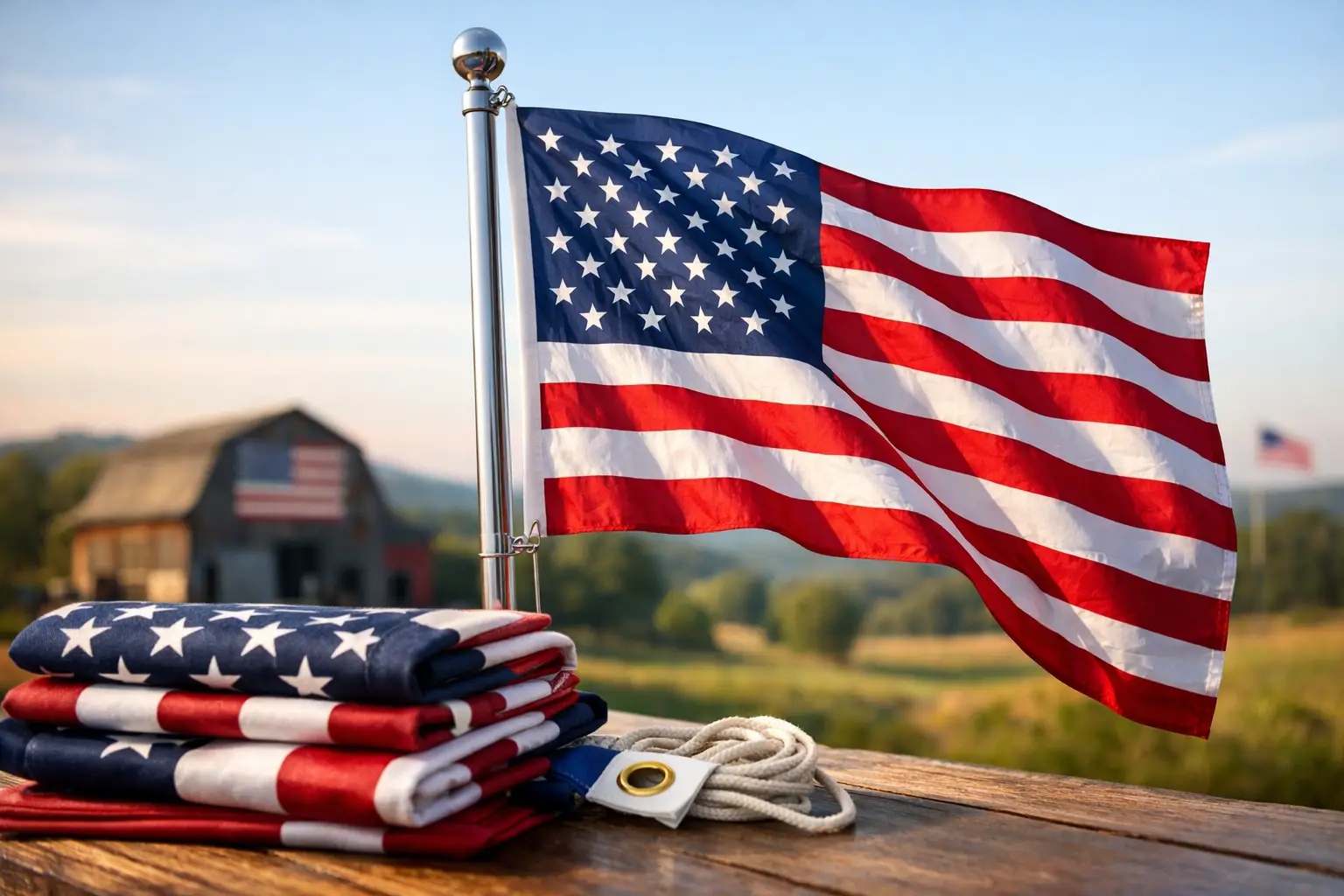
Best American Made Flags for Lasting Pride
A flag that starts fraying after a few weeks is more than a disappointment. For many homeowners, schools, businesses, and public buildings, it feels like a poor reflection on the property and the country it represents. That is why people looking for the best american made flags are usually not shopping for the cheapest option. They want a flag that looks right, flies right, and holds up in real weather.
The challenge is that not every flag labeled "heavy-duty" or "premium" is actually built for long service. Materials matter. Stitching matters. Where the flag is made matters too, especially if you care about buying a genuine American product instead of an imported flag with patriotic packaging. If you want a flag that honors the occasion and stands up to daily use, it helps to know what separates a dependable flag from one that will need replacing too soon.
What makes the best American made flags worth buying
A well-made American flag has to do three jobs at once. It needs to present the right appearance, withstand outdoor exposure, and match the way it will be flown. If any one of those is off, the flag may still look acceptable at first, but it will not perform the way you expect.
The first sign of quality is the fabric itself. Outdoor American flags are usually made from nylon or polyester, and each has a place. Nylon is a favorite for many residential settings because it is lightweight, flies well in a gentle breeze, dries quickly after rain, and has a crisp, bright appearance. Polyester is heavier and better suited for stronger wind conditions, larger poles, and commercial sites where the flag sees rougher treatment. Neither is automatically better in every case. The right choice depends on where the flag will be flown.
Construction is the next piece. Strong headers, embroidered stars, clean stitching, and reinforced fly ends all help extend the life of the flag. The fly end takes the most punishment because it is the trailing edge exposed to wind whip day after day. A flag can be made from good material and still fail early if the finishing work is weak.
Then there is authenticity. For buyers who want a truly American-made product, it is worth confirming that the flag is manufactured in the United States from domestic materials when possible. Some shoppers assume every U.S. flag sold by a U.S. company is American made, but that is not always the case. If that matters to you, ask the question before you buy.
Nylon or polyester - which is better for your flag?
This is where many buyers get stuck, and the answer is not one-size-fits-all. The best american made flags for a quiet neighborhood lot are often not the same ones you would choose for a windy commercial property.
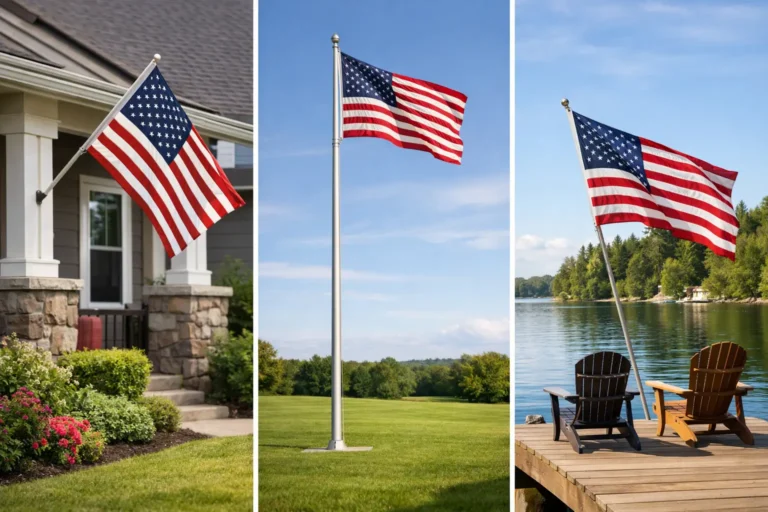
Nylon is an excellent all-around option. It has a rich appearance, catches light well, and flies nicely even when the wind is light. For residential flagpoles, especially house-mounted poles or smaller in-ground poles, nylon is often the most attractive and practical choice. It also tends to be easier on hardware because it weighs less than polyester.
Polyester earns its reputation when conditions get tougher. If your site is open, exposed, or regularly hit with stronger wind, a 2-ply polyester flag usually gives you better durability. It is heavier and built for punishment, though that added weight means it may not move as gracefully in low wind. For businesses, schools, municipalities, and taller flagpoles, that trade-off often makes sense.
If you are replacing flags often because of weather, switching fabrics may solve the problem faster than simply buying another flag in the same material. The best choice is not about marketing terms. It is about matching the flag to the site.
The details that separate a premium flag from a cheap one
At a glance, many flags look similar in online photos. The difference shows up once they are in the air for a month or two.
Look for embroidered stars rather than printed stars if presentation matters to you. Embroidery gives the flag a traditional, higher-end appearance that many customers prefer for homes, businesses, memorial settings, and government use. Printed stars can still be acceptable on some flags, especially budget or lightweight options, but they generally do not carry the same visual weight.
Pay close attention to the heading and grommets. A strong canvas heading helps the flag stay secure under repeated strain, and solid brass grommets resist corrosion better than lower-grade hardware. If the flag is going on an in-ground pole and will be flown daily, these details are not extras. They are part of what keeps the flag serviceable.
Stitching should be neat and reinforced, especially on the stripes and fly end. Multiple rows of stitching at stress points are a good sign. The fly end is where corners get cut on lower-quality products, and it is usually where failure begins.
Choosing the right size for the best American made flags
Even a high-quality flag will not look right if the size is off for the pole. Too small, and it disappears. Too large, and it can put unnecessary strain on the pole, halyard, and mounting hardware.
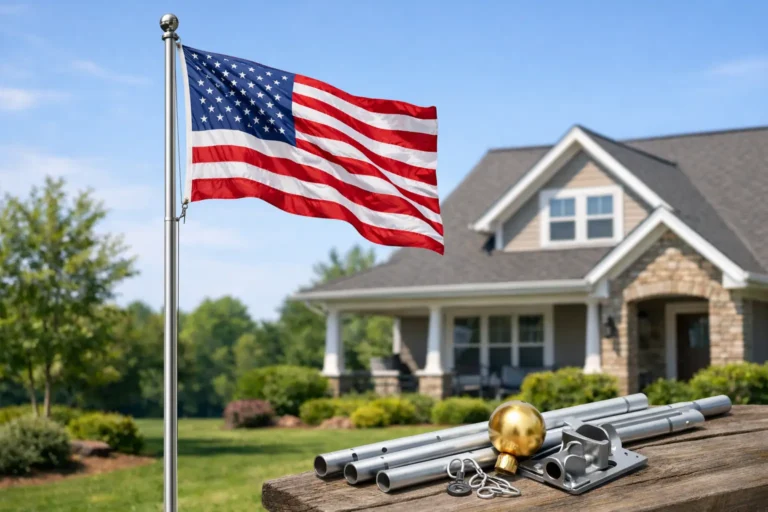
For residential in-ground poles, a common guideline is to match the flag size to the pole height in proportion, such as a 3x5 flag on a 20-foot pole or a 4x6 flag on a 25-foot pole. House-mounted poles often use 2.5x4 or 3x5 flags depending on the pole length and the scale of the home. Commercial and municipal sites may require larger proportions to maintain visibility and proper presentation.
Wind exposure should be part of the sizing decision too. A larger flag creates more drag. On a high-wind site, choosing a slightly smaller but better-built flag can sometimes lead to better long-term performance than going oversized. This is especially true when customers want a bold look but also want to reduce wear on the flag and hardware.
When heavier-duty flags are the smarter buy
Some properties need more than a standard outdoor flag. If your pole stands in an open field, near the coast, on a ridge, or in a parking lot with constant wind exposure, a heavier-duty American-made flag is usually worth the extra investment.
That does not mean the heaviest flag is always the right answer. On smaller poles or in low-wind areas, an overly heavy flag may not display well. The goal is to find the strongest flag that still flies properly for your location. This is where experience matters. A flag that looks great in a product photo may behave very differently on a 30-foot pole at an exposed commercial property than it would on a calm suburban lawn.
Buyers who manage schools, public buildings, or business sites often benefit from thinking in terms of total replacement cost rather than sticker price. A less expensive flag that fails early can cost more over time once labor, downtime, and repeat purchases are factored in.
How to avoid common buying mistakes
One common mistake is buying based on price alone. It is understandable, especially when flags need periodic replacement. But low-cost imported flags often fade faster, fray sooner, and fail where the stress is highest. What looked like savings upfront can turn into a cycle of frequent replacements.
Another mistake is ignoring site conditions. A homeowner in a sheltered backyard and a property manager overseeing an exposed business frontage do not need the same flag. The right fabric, size, and construction depend on how and where the flag will be used.
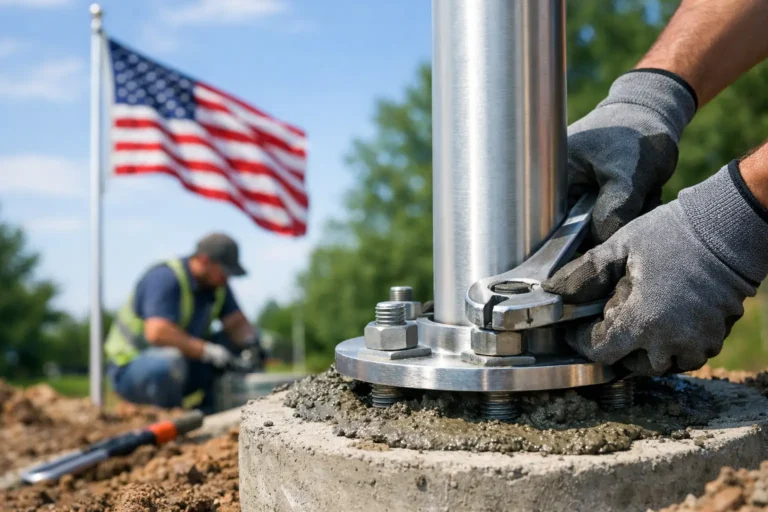
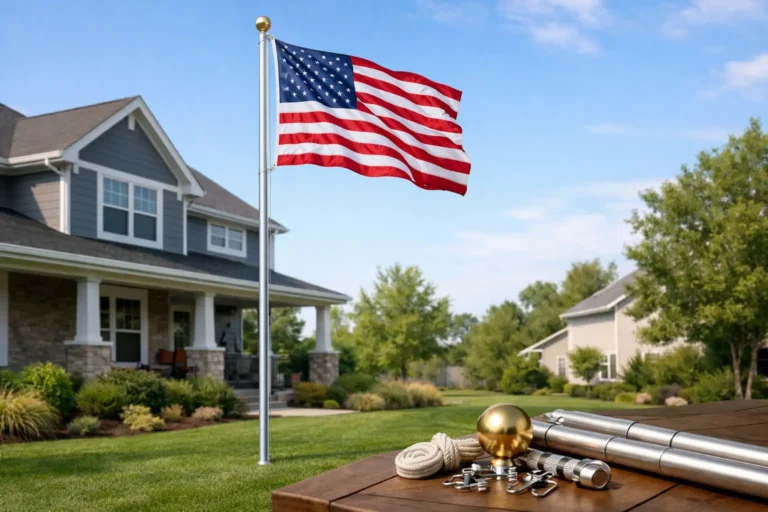
A third mistake is treating the flag as separate from the pole and hardware. The flag, pole height, halyard system, wind exposure, and mounting style all work together. If one part is mismatched, performance suffers. That is one reason specialist guidance matters more here than it does in a generic online marketplace.
Why specialist advice matters when buying a flag
There is a big difference between buying from a general retailer and working with a company that deals with flagpoles and flags every day. A specialist is more likely to ask the questions that actually affect performance: pole height, location, wind conditions, daily use, and whether appearance or maximum durability is the higher priority.
For first-time buyers, that guidance can prevent a frustrating purchase. For experienced buyers replacing worn-out flags, it can help solve a pattern of early failure. Sometimes the answer is a different fabric. Sometimes it is a better size match. Sometimes it is a sign that the site needs a stronger setup overall.
That hands-on approach is exactly why many customers prefer working with a flagpole company that knows the products and stands behind them. At Bob's Flagpole Company, that means practical recommendations from people who understand what works in the field, not just what sounds good in a listing.
The best american made flags are not simply the ones with the highest price or the most polished label. They are the ones built with the right materials, finished with care, and matched to the conditions where they will fly. Get that part right, and your flag will do what it is supposed to do every day - represent your property well, honor the country properly, and hold up with the kind of quality you can see from a distance.