Flagpole Installation Tips for Homeowners
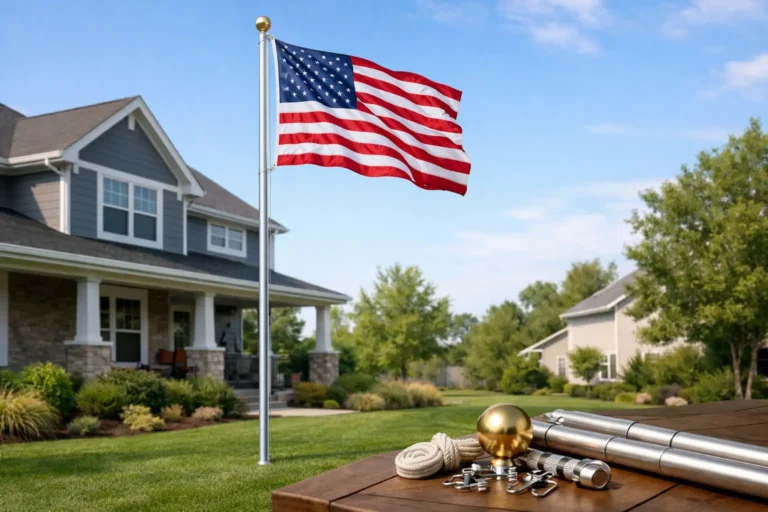
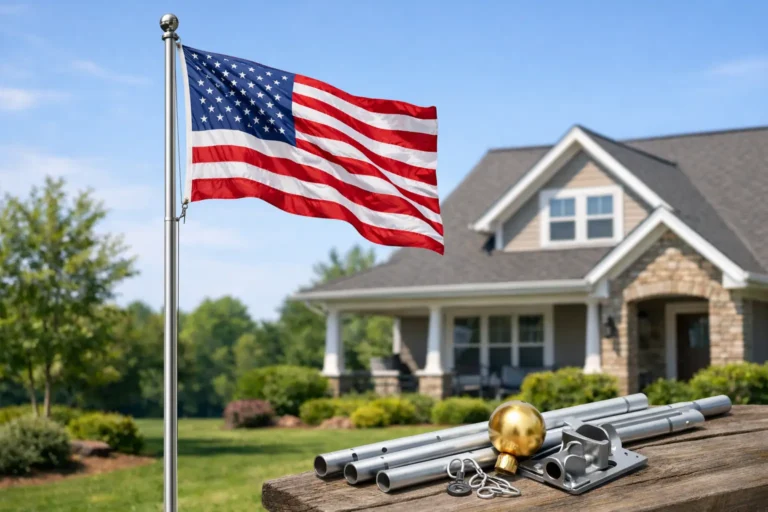
A flagpole looks simple once it is standing straight in the yard. Getting it there the right way is where most homeowners make costly mistakes. These flagpole installation tips for homeowners will help you choose the right location, prepare for wind and soil conditions, and avoid the kind of shortcuts that lead to leaning poles, loose hardware, or early replacement.
For many families, a flagpole is more than a yard feature. It is a point of pride, a way to honor service, and something you expect to hold up year after year. That is why installation matters just as much as the pole you buy. A premium flagpole installed poorly will still give you trouble. A properly matched pole, set correctly for your property, will serve you far better.
Start with the location, not the pole
Homeowners often begin by choosing height or style first. The better approach is to walk the property and decide where the pole can actually perform well. You want a location that gives the flag room to fly freely without brushing a roofline, fence, trees, power lines, or overhead branches.
Visibility matters too. In most residential settings, the best placement is in the front yard where the pole can be seen from the street but still has enough setback from sidewalks, driveways, and the house. A pole too close to the home can create noise when halyard hardware taps the metal in windy weather. A pole placed too far out can look disconnected from the house and may be more exposed to accidental damage from lawn equipment or vehicles.
If your property gets strong prevailing winds, pay attention to how open the site is. An exposed hilltop or coastal lot calls for a different level of planning than a sheltered suburban yard. Wind is one of the biggest factors in residential flagpole performance, and it should shape both the pole you choose and how you install it.
Flagpole installation tips for homeowners before digging
Before you put a shovel in the ground, confirm local requirements. Some neighborhoods, HOAs, and municipalities have rules about height, placement, and setbacks. This step may feel tedious, but it is a lot easier than moving a pole after installation.
You also need to have utilities marked. That includes electric, gas, water, cable, and irrigation lines if you know they are present. Hitting a buried line turns a straightforward project into a dangerous one fast.
Once the site is clear, think about scale. Many homeowners choose a pole that is either too short to make the visual statement they want or too tall for the lot. A common residential range is 15 to 25 feet, but the right answer depends on the home’s size, lot width, and surrounding trees. A one-story home may look balanced with a 20-foot pole. A larger two-story property with open frontage may carry a 25-foot pole better.
Match the pole to your conditions
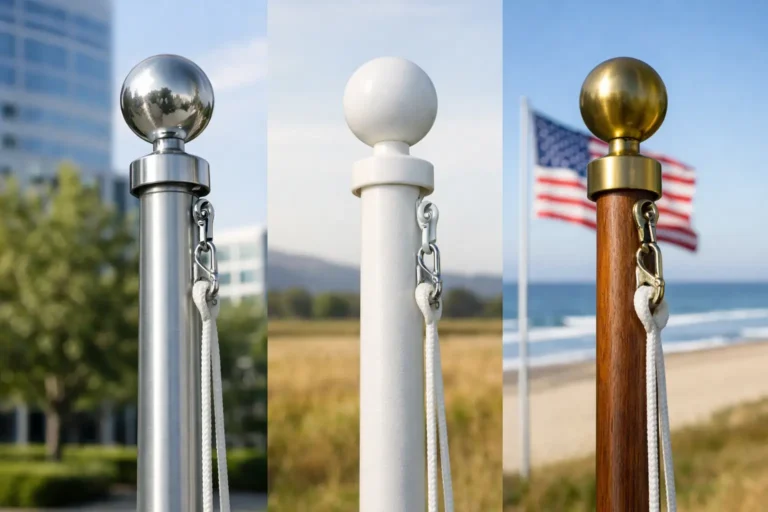
Not every residential flagpole installs the same way or performs the same way after installation. Telescoping poles are popular because they can be easier for homeowners to manage, especially if you want to raise and lower the flag without a rope system. Sectional poles can offer a practical balance of appearance and affordability. Fiberglass poles can be an excellent choice in certain environments, especially where corrosion resistance matters.
What matters most is matching the pole to your wind zone and intended use. If you live in an area with frequent storms or sustained gusts, a high-wind model may be worth the investment. That extra durability can save you frustration and replacement costs later. The trade-off is usually a higher upfront price, but that cost often makes sense if your site is especially exposed.
It also helps to be realistic about the flag size. Bigger is not always better. A flag that is too large for the pole height or local wind conditions puts unnecessary stress on the system. The right proportion looks better and helps the installation last longer.
The foundation is where good installations are won
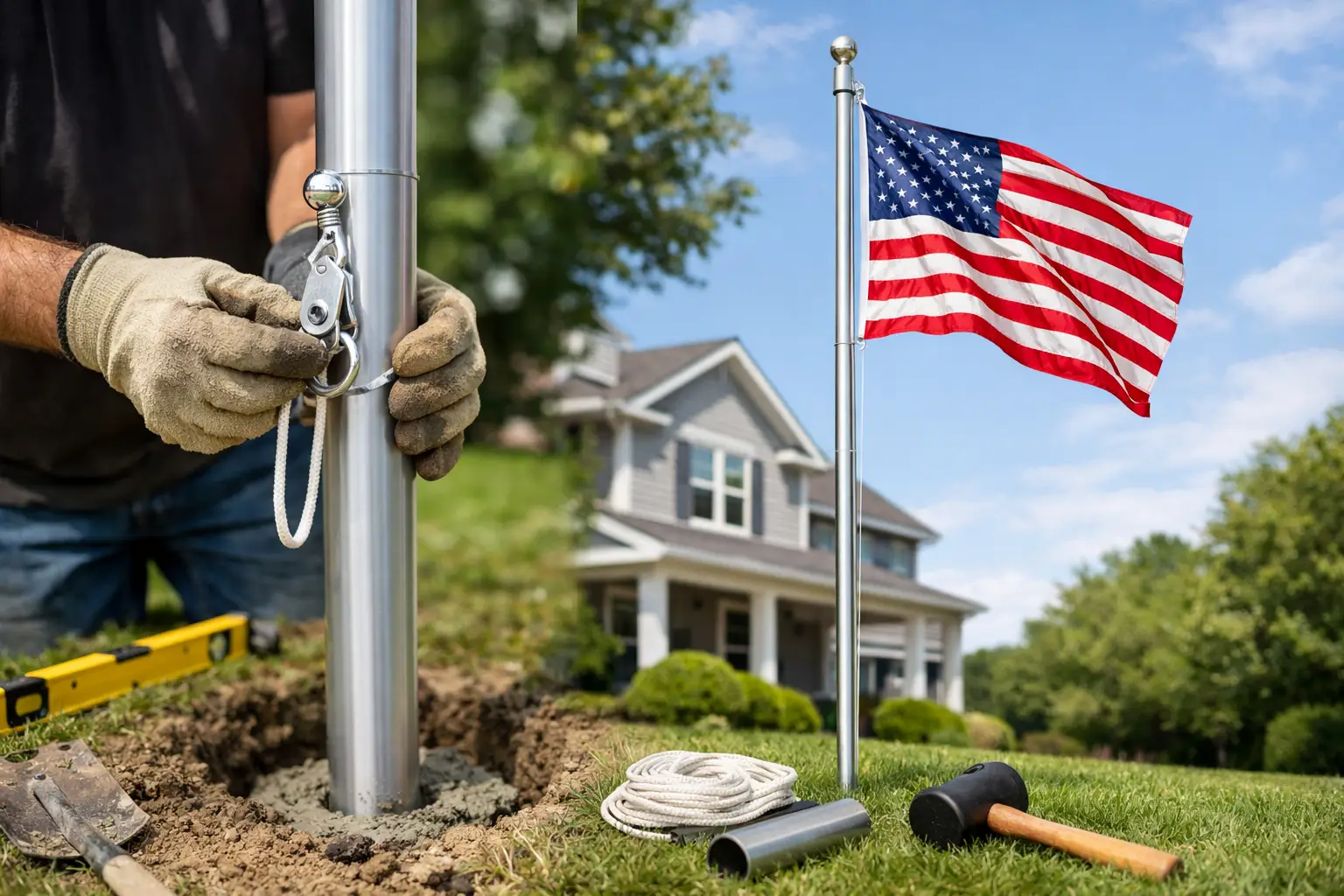
Most residential flagpole issues can be traced back to the ground sleeve and concrete footing. If the foundation is undersized, too shallow, or out of plumb, the pole will never perform the way it should.
The exact hole depth and diameter depend on the pole type, height, and manufacturer requirements. There is no smart shortcut here. Follow the recommended footing specifications for that specific model. Soil conditions matter too. Loose, sandy, or frequently saturated soil may require more attention than firm, stable ground.
Set the sleeve straight and check it more than once. A small error at ground level becomes very obvious when the full height of the pole is standing. Homeowners sometimes assume they can correct a slight tilt later, but once the concrete cures, your options get expensive.
Drainage is another detail that gets overlooked. Water collecting around the sleeve can create problems over time, especially in freeze-thaw climates. A proper gravel base or drainage approach, depending on the system, helps protect the installation.
Give concrete enough time
One of the most common homeowner mistakes is rushing the cure time. After the footing is poured, it needs time to set properly before the pole is installed or raised. That timing depends on weather, concrete mix, and manufacturer guidance, but the larger point is simple: patience here prevents problems later.
Trying to finish everything in one day may be tempting, especially on a weekend project, but this is not where you want to save time. A stable foundation gives the pole the support it needs when the flag starts pulling in the wind.
Think through hardware and access
Good installation is not just about getting the pole upright. It is also about making sure you can use it comfortably for years. Consider how you will raise and lower the flag, secure the halyard, and access any lighting or topper.
If you are installing an external halyard system, make sure the cleat height is convenient and secure. If quiet operation matters, especially near bedrooms or close neighbors, hardware choices can make a real difference. In many residential settings, reducing rope slap and metal contact is not just a comfort issue. It helps preserve the appearance of the system as well.
Solar lighting is another point worth planning early. A flag displayed at night should be properly illuminated. If you want that capability, choose a setup that supports dependable lighting without becoming a maintenance headache.
Safety is part of smart installation
A residential flagpole may not look intimidating when it is lying on the lawn, but long poles, concrete footings, and overhead hazards can create real risk. If the pole height, site slope, or wind exposure makes the project feel uncertain, that is your sign to slow down.
Some homeowners are comfortable with smaller residential installs, especially with systems designed for easier setup. Others are better served by getting help. That is not overcautious. It is a practical call based on the size of the investment and the value of doing it once.
If you are anywhere near overhead wires, do not proceed until you are certain you have safe clearance. That is one area where there is no room for guesswork.
Plan for maintenance on day one
The best flagpole installation tips for homeowners always include what happens after install day. A flagpole is not a set-it-and-forget-it item. It needs occasional inspection, especially after storms or seasonal weather changes.
Check hardware, fasteners, sleeves, and moving components regularly. Watch for wear on the flag itself too. A torn or oversized flag can put extra strain on the pole and hardware. If you live in a high-wind area, you may want to lower the flag during severe weather rather than asking the system to absorb every storm that rolls through.
It is also worth choosing parts and accessories you can replace easily down the line. Specialized support matters here. When you buy from a flagpole specialist instead of a general retailer, you are more likely to get guidance that fits your actual property conditions.
When expert guidance saves money
There is a point in almost every flagpole purchase where homeowners realize the decision is less about picking a product and more about matching a system to the site. That is especially true if your yard has unusual wind exposure, limited space, sloped ground, or HOA restrictions.
This is where talking to a true specialist can save you from buying the wrong height, wrong style, or wrong foundation setup. Bob's Flagpole Company has built its reputation on exactly that kind of hands-on help. For homeowners who want expert service they can count on, a quick conversation before ordering is often the smartest part of the whole project.
A well-installed flagpole should feel solid, look right for the property, and give you confidence every time you raise the flag. Take the time to plan the location, respect the foundation requirements, and match the pole to your weather. The result is not just a better installation. It is a flag display you will be proud to stand behind for years.