In Ground Flagpole Foundation Requirements
A flagpole that looks straight on day one can start leaning a season later if the base was undersized, the soil was ignored, or the sleeve was set wrong in the concrete. That is why in ground flagpole foundation requirements matter so much. The pole itself gets the attention, but the foundation is what decides how well that installation holds up through wind, rain, frost, and years of use.
For homeowners, schools, businesses, and municipalities, the foundation is not a small detail. It is the part that carries the load from the pole into the ground. If it is too shallow, too narrow, poorly drained, or not matched to the pole height and site conditions, you can end up with movement, cracking, premature wear, or a full replacement that costs far more than doing it right the first time.
What in ground flagpole foundation requirements really cover
When people ask about foundation requirements, they are usually asking one simple question - how big does the hole need to be? That is part of it, but not the whole story. A proper in-ground installation also depends on the pole type, wall thickness, overall height, wind exposure, local frost depth, soil conditions, and whether the pole uses a ground sleeve, hinge base, or direct burial system.
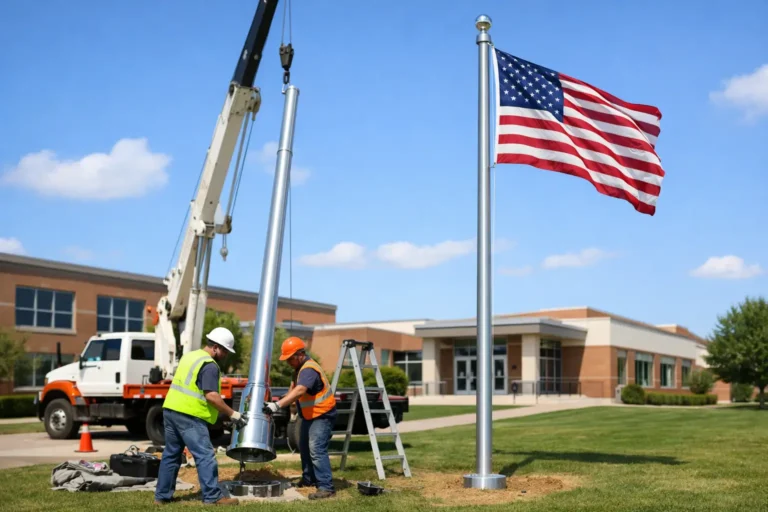
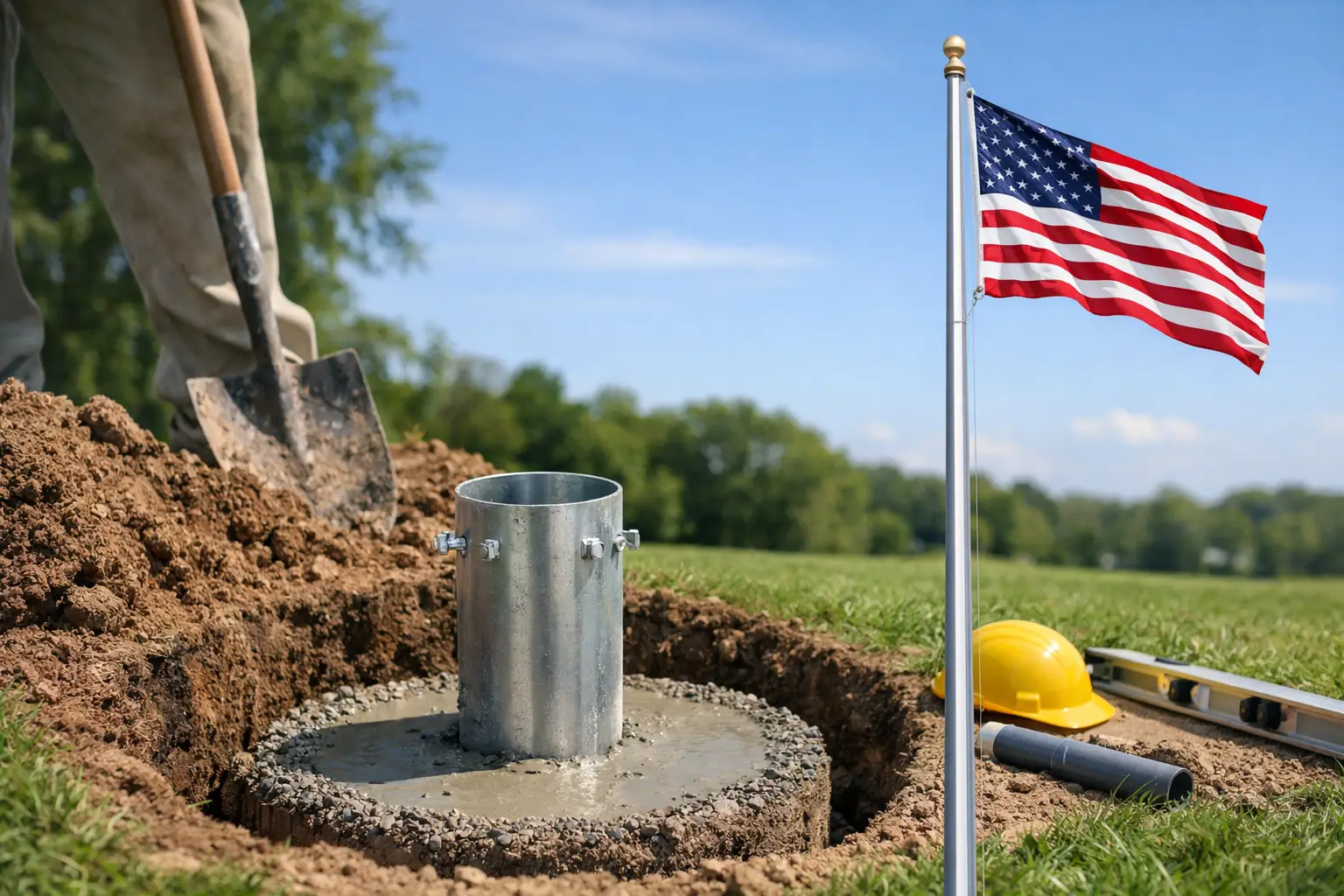
Most residential and commercial in-ground poles are installed with a foundation tube or ground sleeve set in concrete. That sleeve has to be plumb, centered, and supported by the right footing size. The concrete itself must be sized to resist overturning forces, not just hold the pole upright on a calm day.
This is where buyers can get tripped up. A 20-foot residential telescoping pole and a 35-foot commercial fiberglass pole are both flagpoles, but their foundation needs are not remotely the same. Add coastal wind, soft soil, or a large flag, and the requirements change again.
The biggest factors that determine foundation size
Pole height is usually the first factor because a taller pole creates more leverage at the base. As height goes up, foundation depth and diameter generally increase too. A larger flag also increases wind load, which means the footing must resist greater force.
Material matters. Aluminum, fiberglass, and steel poles behave differently under load. A heavy-duty one-piece commercial pole may need a much more substantial foundation than a lighter residential model of similar height. Telescoping poles can have their own installation guidance as well, depending on the manufacturer.
Site exposure is another major piece. An open field, waterfront property, hilltop, or parking lot sees stronger and more sustained wind than a sheltered backyard. The same pole installed in two different locations may call for different footing dimensions.
Then there is the ground itself. Dense, stable soil provides better support than loose fill, sandy conditions, or areas that stay wet. In colder parts of the country, frost depth can also affect how deep the footing should go to reduce heaving and seasonal movement.
Typical foundation requirements for in-ground flagpoles
There is no one-size-fits-all hole dimension that works for every flagpole, and any installer who says otherwise is glossing over the important part. Manufacturers usually provide recommended foundation depth and diameter for each model, and those numbers should always come first.
That said, many in-ground flagpole foundation requirements follow the same general logic. Smaller residential poles may use a footing that is measured in the 18-inch to 24-inch diameter range with depth based on pole height and frost conditions. Larger commercial poles often require significantly deeper and wider concrete footings, sometimes several feet in both dimensions.
The foundation usually includes a ground sleeve or foundation tube surrounded by concrete, with space at the bottom for drainage material if the design calls for it. The top of the concrete is commonly sloped away from the sleeve to help shed water rather than trap it around the opening.
That drainage detail matters more than many buyers realize. Water that sits around the sleeve can contribute to corrosion, freeze-thaw stress, and long-term instability. A clean, well-drained foundation tends to last longer and perform better.
Why drainage and frost matter more than people expect
A strong-looking concrete base can still fail if water has nowhere to go. In many standard installations, the bottom of the hole includes gravel or another drainage layer beneath the sleeve. That helps keep water from pooling at the base.
If you are in a freeze-thaw climate, poor drainage becomes an even bigger concern. Water expands when it freezes, and that repeated movement can push on the foundation over time. It may not cause an immediate problem, but after a few winters you may notice a pole that is no longer perfectly plumb.
Frost depth requirements vary by region, so this is one of those areas where local conditions really matter. A footing depth that performs well in the South may be inadequate in the Upper Midwest or Northeast. That is why experienced guidance is worth having before concrete is ordered.
Sleeve alignment, plumb setting, and concrete curing
Even if the footing is the right size, poor setup can create problems. The ground sleeve must be set perfectly plumb and held in position while the concrete cures. If the sleeve shifts during the pour or leans even slightly, the flagpole will show it.
Installers also need to pay attention to orientation for poles with hardware access, door openings, or external halyard systems. Once the concrete sets, those adjustments are not easy to fix.
Curing time is another place where patience pays off. Concrete gains strength over time, and raising the pole too early can compromise the installation. The exact cure period depends on mix, temperature, and conditions, but rushing this step is a mistake.
Common mistakes that lead to foundation trouble
The most common issue is undersizing the footing to save time or concrete. That can work for a while, especially in mild weather, but it leaves very little margin when wind load increases. Another problem is using generic dimensions pulled from a different pole model instead of the actual manufacturer's recommendation.
Poor drainage is right up there as well. So is installing in disturbed or backfilled soil without accounting for compaction and support. In some cases, buyers also overlook the effect of a larger flag. A pole may be rated for one foundation size with a standard flag and need a different approach with a bigger or heavier banner.
One more mistake is treating every site as if it were level and sheltered. A corner lot, school entrance, municipal campus, or commercial frontage often sees stronger wind exposure than people expect.
When standard requirements are not enough
Some installations need engineering review rather than a rule-of-thumb approach. This is especially true for taller commercial poles, high-wind zones, coastal properties, government sites, or locations with poor soil. It can also apply when local code requires stamped drawings or permit review.
That is not overkill. It is how you protect a meaningful investment. A premium flagpole should look right, perform right, and stay right for years. If the site conditions are challenging, the foundation needs to reflect that.
For schools, businesses, and public properties, that matters even more because a flagpole is often part of the front entrance or main visual approach. A leaning or unstable pole sends the wrong message fast.
Getting the right answer before you dig
The best approach is simple. Start with the exact pole model, height, and intended flag size. Then look at the installation instructions and foundation recommendations for that specific product. After that, consider the site - wind exposure, soil, drainage, and frost depth.
If anything about the location is unusual, ask before you pour. That is especially true if you are choosing between residential and commercial-grade products, upgrading to a taller pole, or replacing a failed installation. What worked for an older pole may not be right for the new one.
At Bob's Flagpole Company, this is the kind of detail that should be sorted out before a shipment arrives at your property. The right recommendation is not just about selling a pole. It is about helping you install one that stands straight, performs well, and honors what it is flying.
A flagpole is meant to be a lasting display of pride. Give the part below ground the same attention you give the part above it, and you will be far happier with the result.