School Flagpole Replacement Guide
When a school flagpole starts leaning, the halyard jams every other week, or corrosion shows up around the base, waiting usually makes the job more expensive. A good school flagpole replacement guide starts with one simple point: replacement is not just about getting a new pole in the ground. It is about safety, appearance, code considerations, and choosing a flagpole that will serve students, staff, and visitors for years without constant repair calls.
Schools have different needs than a small office or a private home. The flag is part of the front entrance, the daily routine, and often school ceremonies. That means the replacement pole has to look right, handle regular use, and stand up to local weather. If the existing pole failed early, the answer is not to buy the same thing again and hope for better results.
When a School Should Replace Instead of Repair
Some flagpoles can be repaired. A worn rope, a damaged truck assembly, or a missing cleat does not always call for full replacement. But there is a point where repairs become a patchwork approach that keeps draining maintenance time and budget.
If the pole has visible structural damage, deep corrosion, cracks in fiberglass, a failing foundation connection, or repeated hardware failures caused by age, replacement is usually the smarter move. The same is true when the pole is undersized for the site or no longer fits the building after renovations. A school entrance that has been upgraded with new signage, landscaping, or a larger facade may need a taller, better-proportioned pole.
There is also the issue of liability. A pole that sways excessively, leans, or has compromised anchoring should be treated as a safety concern, not a cosmetic one. For schools, that matters even more because the area around the flagpole is often near student traffic, pickup zones, or main walkways.
A School Flagpole Replacement Guide to Choosing the Right Pole
The right replacement starts with the site, not the catalog. Height, material, wind exposure, and usage all have to work together.
For many schools, aluminum remains the most common choice because it gives a clean, traditional appearance and good long-term value. It is strong, widely used, and available in a range of heights and finishes. Fiberglass can also be a strong option, especially where corrosion resistance or a specific look is important. In coastal or harsh-weather areas, material choice matters a great deal more than it would in a protected inland setting.
Height depends on scale. A small elementary school may be well served by a pole in the 25 to 30 foot range, while larger campuses, high schools, or municipal-style school buildings often need 35 to 50 feet to look proportionate. Bigger is not always better. A pole that overwhelms the entrance can look out of place, while one that is too short can disappear against the building.
Flag size should be matched properly to pole height. That sounds obvious, but it is one of the most common replacement mistakes. An oversized flag puts unnecessary load on the system, especially in windy conditions. An undersized flag can make a new installation look cheap or unfinished.
External Halyard or Internal Halyard?
This decision often comes down to security, noise, and maintenance preference. External halyard systems are familiar, cost-effective, and easy to service. They are a solid fit for many campuses, especially where staff regularly raise and lower the flag and the area is monitored.
Internal halyard systems offer a cleaner appearance and better protection against tampering. They also reduce the clanging sound that can happen when rope and hardware hit the pole in windy weather. For schools that want a more secure, polished setup near a main entrance, internal halyard systems are often worth the higher upfront cost.
Don’t Reuse Old Assumptions About Wind Load
One of the biggest reasons school flagpoles fail early is that the original installation did not truly match the site conditions. Open campuses, hilltop properties, athletic-field-adjacent entrances, and coastal areas all create more wind stress than a sheltered urban courtyard.
That means a school flagpole replacement guide has to account for local wind ratings, not just the height of the old pole. If the previous pole bent, loosened, or wore out faster than expected, wind exposure may have been the real issue all along. In those cases, upgrading to a heavier-duty pole or changing the flag size may be the better long-term move.
This is where specialist advice matters. A general maintenance supplier may only compare basic dimensions. A flagpole specialist will look at exposure, usage, hardware type, and whether the school needs a standard commercial pole or a high-wind model designed for tougher conditions.
Foundation and Base Details Matter More Than Most Buyers Expect
Many buyers focus on the visible pole and forget that the foundation is carrying the load. If the old flagpole was installed decades ago, the existing foundation may not be suitable for a new pole, even if the replacement height is similar.
That does not automatically mean a full foundation rebuild is required. Sometimes the existing sleeve or base can be evaluated and reused, but that should never be assumed. The base diameter, depth, soil conditions, and pole design all come into play. A new pole installed on an inadequate foundation is not a savings. It is a future problem.
Schools should also think about drainage around the base. Standing water, freeze-thaw cycles, and poor grading can shorten the life of both the pole and the installation. If the site has had repeated water issues, that should be addressed during replacement rather than after the new pole is already in place.
Planning the Replacement Around School Operations
Unlike many commercial jobs, school projects often have tight timing windows. Summer break, holiday closures, and teacher workdays are usually the best opportunities for replacement work. That makes lead time important.
If a school waits until the last minute, product availability and scheduling can become a problem. The best approach is to start planning early, especially if the project requires approvals, purchase orders, or coordination with maintenance staff and contractors. A straightforward replacement can move quickly, but custom sizing, internal halyard systems, or foundation work may add time.
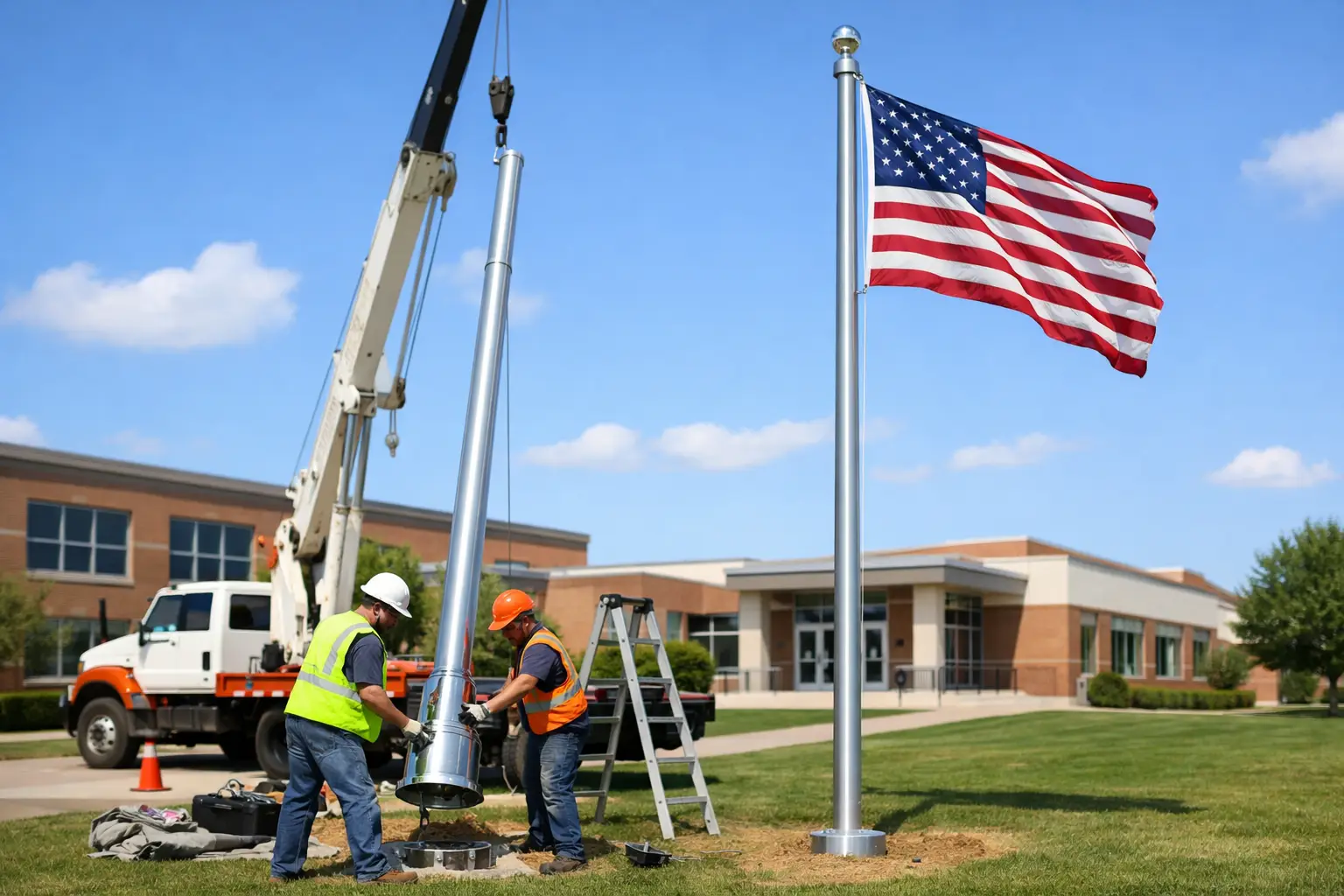
Access is another factor. Is the pole near a busy entrance? Is there enough room for equipment? Will the removal of the old pole affect sidewalks, signs, or landscaping? These details should be settled before the order is placed, not after the truck arrives.
Common Mistakes Schools Make During Flagpole Replacement
The first mistake is replacing based only on what was there before. If the old pole underperformed, copying it may repeat the same issue. The second is buying by price alone. Schools do have budgets, but a lower-cost pole that needs more service or fails early is rarely the better value.
Another common problem is overlooking hardware quality. The pole gets the attention, but the winch, rope, cleat, truck, snap hooks, and anchor points affect day-to-day performance. On a school campus, where the flag is handled often and expected to look right every day, those details matter.
The last mistake is treating the project like a generic site fixture purchase. A flagpole is not just another post in the ground. It is a visible symbol at the front of the campus. It should be selected with the same care a school would give to signage, entry design, or memorial features.
What to Have Ready Before You Request a Quote
A smoother buying process starts with a few basic details. Know the approximate height of the current pole, whether it uses an external or internal halyard, and what problem is driving the replacement. Photos of the site and base area are also useful. If you know the school’s location and whether the site is exposed to heavy wind, that helps narrow the right options quickly.
If there are purchasing requirements, installation constraints, or target dates tied to the school calendar, mention those early. Good guidance depends on complete information. That is especially true for campuses that need a flagpole that is secure, durable, and sized correctly for a prominent entrance.
For schools that want expert service you can count on, working with a true flagpole specialist makes the process a lot easier. Bob’s Flagpole Company has helped customers choose premium flagpoles built for real-world conditions, not just product listings on a page.
The best replacement is the one that looks right on campus, performs well in local weather, and gives the school one less thing to worry about every morning when the flag goes up.