
Government Building Flagpole Requirements
When a flagpole is going in front of a city hall, courthouse, school, or other public facility, the stakes are higher than they are for a typical commercial site. Government building flagpole requirements are not just about flying a flag - they affect public appearance, safety, accessibility, maintenance, and long-term durability. A pole that looks good on day one but fails in high wind, creates access problems, or does not match site expectations can turn into an expensive mistake.
For municipalities and public agencies, the right choice usually comes down to more than one specification sheet. You are balancing code compliance, local wind exposure, appearance, budget rules, and how the pole will actually be used over time. That is why it helps to look at flagpole requirements as a full-site decision, not just a hardware purchase.
What government building flagpole requirements usually include
Most government building flagpole requirements fall into a few practical categories: pole height, material, wind rating, foundation design, access to the halyard system, lighting, and placement on the site. Some agencies also have purchasing standards that favor American-made products, specific finish options, or approved installation methods.
The exact requirements depend on the property. A small town administrative office may need a single exterior halyard pole that is durable and cost-conscious. A courthouse or state facility may need a taller, more formal installation with multiple poles, an internal halyard system, and stronger anti-tamper protection. A public school may care just as much about ease of daily raising and lowering as it does about appearance.
This is where many first-time buyers get tripped up. They assume there is one universal government standard for flagpoles. In reality, there are layers of expectations. National flag etiquette matters. State or local purchasing rules may matter. Building code and engineering matter. The property owner’s operational needs matter too.
Height and proportion matter more than people think
One of the first questions any public buyer asks is how tall the flagpole should be. There is no single height mandated for every government property, but proportion matters. The pole should fit the building scale, the setback from the road, and the size of flag being displayed.
For many smaller government buildings, poles in the 20-foot to 30-foot range are common. Larger campuses and prominent civic buildings often move into 35-foot, 40-foot, or taller installations. If the building sits back from the street or is surrounded by larger site features, a short pole can look underbuilt and disappear visually. On the other hand, a pole that is too tall for the frontage can feel out of place and create larger engineering demands than the site really needs.
Flag size has to match the pole. A common mistake is choosing a large flag because it looks impressive on paper, then mounting it on a pole not designed for that wind load. Public sites should be especially careful here because the pole has to perform in all weather, not just on calm ceremonial days.
The flagpole should match the setting
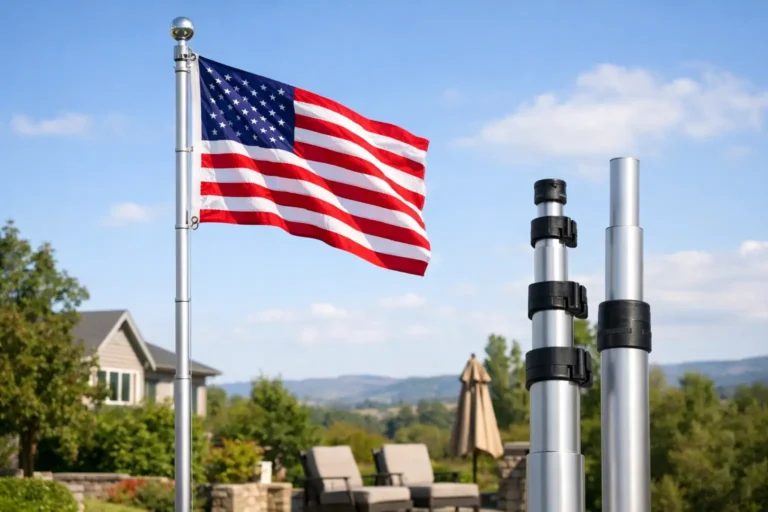
A formal government entrance usually calls for a more traditional appearance than a utilitarian back-lot installation. Tapered aluminum poles are often selected for front-facing civic use because they present a clean, dignified profile. Fiberglass may be considered in corrosive environments or where non-conductive properties are desired, but aesthetics and local preferences still matter.
If the building serves as a centerpiece for civic events, the pole becomes part of the public image of the property. That is not a minor detail. A well-sized, well-placed installation signals care and permanence.
Wind rating and engineering are not optional
If there is one area where government building flagpole requirements should never be treated casually, it is structural performance. Public buildings need poles designed for the local wind conditions, soil conditions, and intended flag size. This is especially important in coastal regions, open plains, hurricane-prone areas, and elevated sites.
A flagpole is not just a decorative upright tube. It is an engineered structure subject to bending loads, foundation forces, and dynamic stress when a flag is flying. The same 30-foot pole may be perfectly acceptable in one location and completely wrong in another.
For public buyers, wind speed ratings and engineering documentation often matter during the approval process. Some jurisdictions or project managers will want stamped drawings or foundation recommendations. Others may require coordination with an engineer of record. This is one reason cheap, lightly built poles often end up costing more in the long run. Lower-grade hardware may save money up front, but it can create maintenance issues, replacement costs, and public safety concerns later.
Security, access, and daily operation
Public facilities need to think about who will operate the flagpole and how often. That drives the choice between external halyard and internal halyard systems.
External halyard poles are common, economical, and easy to service. They are often a practical fit for schools, smaller municipal buildings, and sites where staff raise and lower the flag regularly. The trade-off is that the rope and hardware are exposed, which can increase wear and create opportunities for tampering.
Internal halyard poles offer a cleaner look and better security. For prominent government locations, that can be a major advantage. They are often chosen for courthouses, memorial sites, and civic buildings where appearance and anti-tamper protection carry more weight. The trade-off is cost. Internal systems typically require a higher budget and should be selected with long-term serviceability in mind.
Accessibility is part of the real-world requirement
A flagpole can meet engineering standards and still be a poor fit if staff cannot safely operate it. Ground-level access, crank systems, cleat placement, and the surrounding walkway all matter. The site should allow safe raising and lowering without awkward reach, trip hazards, or conflict with public foot traffic.
That matters even more at schools and municipal properties where the flag may be handled every day. Easy operation reduces neglect. If the system is frustrating or unsafe, routine display standards often slip.
Lighting and visibility at government sites
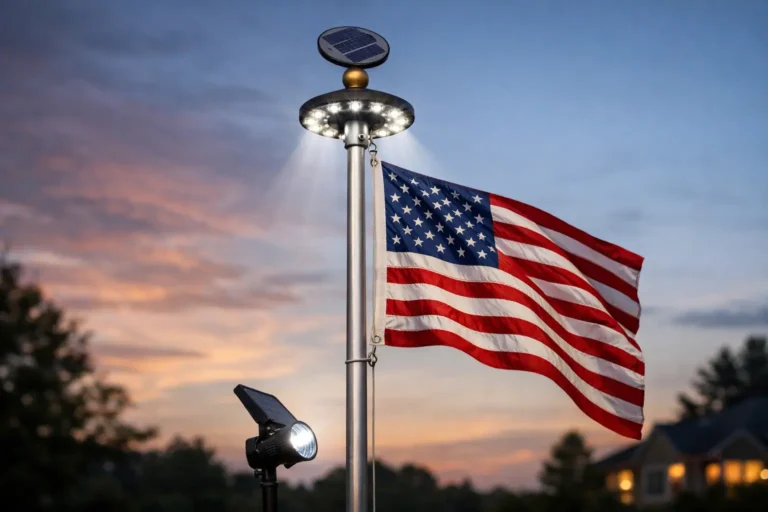
If a flag is flown at night, it should be properly illuminated. That is a practical and respectful consideration for any property, but especially for government buildings. In some cases, the site may already have enough building or landscape lighting. In other cases, dedicated flagpole lighting is the better choice.
Solar lighting can work well in the right setting, particularly when trenching power is difficult or budgets are tight. But site conditions matter. Shade, winter performance, and mounting position can affect reliability. Hardwired lighting may be the better fit for high-visibility civic sites where consistent overnight presentation is expected.
This is a classic case of it depends. The best lighting choice is not always the cheapest or the most advanced sounding. It is the option that will work dependably on that property, through that climate, with that maintenance staff.
Site placement, setbacks, and foundations
Placement is one of the most overlooked parts of a government flagpole project. The pole needs to be visible and dignified, but it also has to work with pedestrian traffic, underground utilities, signage, and building entrances. Poor placement can create awkward sightlines or interfere with future maintenance.
Setbacks are often governed by local practice, engineering judgment, and code considerations rather than one universal rule. A pole should have enough open space around it for safe installation and service. The swing area for the flag should also be considered, especially near trees, walls, light poles, or monument signs.
Foundation requirements are equally site-specific. Pole height, soil conditions, frost depth, and wind load all affect the footing design. For public projects, that design may need approval before installation begins. Guesswork is not good enough here.
Material choices for long-term public use
Aluminum remains one of the most common choices for government and municipal flagpoles because it offers a strong balance of appearance, corrosion resistance, and service life. It is especially popular for civic entrances where a polished or satin finish supports a formal look.
Fiberglass has its place too, particularly in coastal conditions or locations where corrosion is a serious concern. Some agencies also like it for lower maintenance needs in harsh environments. Still, material choice should be based on the site, not on trends or assumptions.
Hardware quality matters just as much as pole material. Trucks, pulleys, cleats, snap hooks, and halyard systems take daily wear. A public facility that buys a premium pole but skimps on hardware can still end up with frustrating maintenance issues.
Buying for compliance is only half the job
Meeting government building flagpole requirements on paper is one thing. Choosing a pole that public staff can operate, maintain, and feel proud of for years is another. The best projects get both right.
That usually means asking a few plain questions early. How windy is the site really? Who will raise and lower the flag? Is tamper resistance important? Will the flag fly at night? Does the entrance call for a formal appearance, or is function the main priority? Those answers shape the right solution much faster than shopping by price alone.
For schools, municipalities, and public buyers, this is one of those purchases where specialist guidance pays for itself. A good flagpole should look right, perform right, and hold up without constant attention. If you are planning a public installation and want help sorting through options, Bob's Flagpole Company is built for exactly that kind of conversation. A few smart decisions up front can save years of trouble later.