How to Replace a Halyard the Right Way
A flag that sticks halfway up the pole, drops unexpectedly, or refuses to lower smoothly usually points to one thing - a worn halyard. If you're wondering how to replace a halyard, the good news is that this is a straightforward job when you use the right rope, pay attention to the pulley, and take your time.
For many property owners, the halyard gets ignored until it frays badly or snaps outright. That is understandable. The rope is exposed to sun, wind, rain, and constant movement, so it takes more abuse than almost any other part of an external flagpole system. Replace it before it fails completely, and you avoid the bigger headache of a stranded flag or a more complicated repair.
When a halyard needs to be replaced
A halyard rarely fails without warning. In most cases, you will see fuzzy spots, flattened sections, discoloration, stiffness, or broken fibers long before it snaps. If the rope has become rough enough to scrape your hands, that is a sign it is nearing the end of its service life.
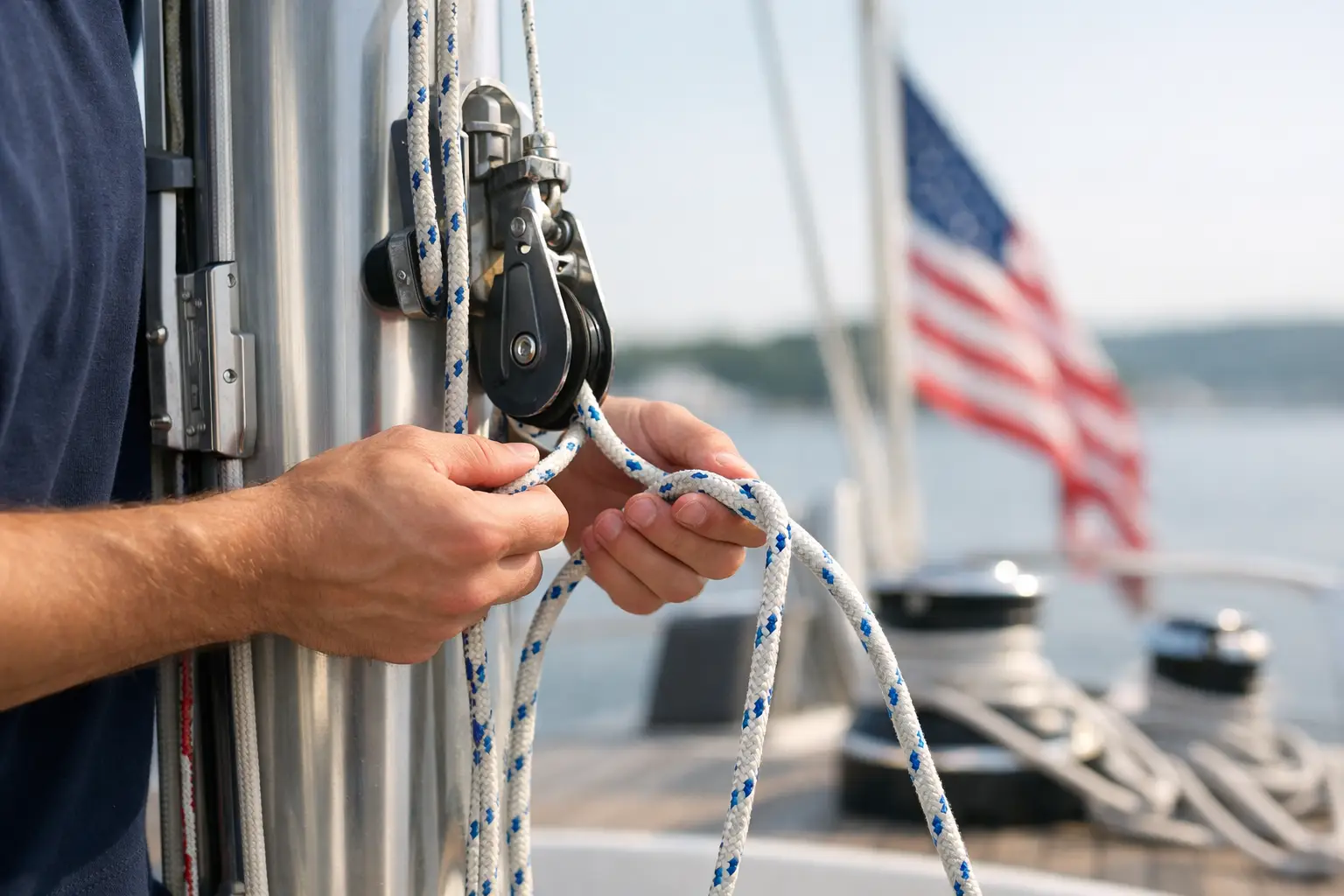
You may also notice the flag no longer raises and lowers smoothly. Sometimes the issue is the rope itself. Other times, the halyard is fine but the truck pulley at the top of the pole has worn out, seized up, or developed a sharp edge that is chewing through the rope. That is why replacing the halyard should always include at least a quick inspection of the pulley, snaps, and any cleat hardware.
If your flagpole is on a commercial site, school property, municipal building, or any location where the flag is flown daily, expect the halyard to wear faster than it would at a private residence. Strong wind also matters. In high-wind areas, halyards can chafe more aggressively, especially if the flag is oversized for the pole.
Before you replace a halyard, know your flagpole style
The process depends on what kind of flagpole you own. On a traditional external halyard pole, the rope runs outside the shaft, up through the truck at the top, and back down to a cleat. This is the easiest style to service.
On an internal halyard pole, the rope or cable runs inside the pole and usually works with a winch, cam cleat, or revolving truck assembly. That type can be more secure and quieter, but it is usually less forgiving for first-time repairs. If your pole uses an internal system, the basic principle is similar, but the hardware can vary a lot from one manufacturer to another.
For most homeowners and smaller commercial properties with external rope systems, replacing the halyard is a manageable maintenance task. If the pole is especially tall, the truck is damaged, or the top assembly is inaccessible without special equipment, it may be time to call for help instead of forcing the repair.
What you'll need
For a standard external rope halyard replacement, you usually need a new halyard rope of the correct diameter and length, a knife or scissors, a lighter or tape to seal the rope end if the material allows it, and possibly replacement flag snaps if the old ones are bent, corroded, or worn.
The most important choice is the rope itself. Do not guess. The wrong diameter can slip poorly through the pulley, wear too quickly, or feel awkward on the cleat. Too thin, and it may cut into your hands and wear faster. Too thick, and it may bind at the top. Many flagpoles use braided polyester because it handles weather well and holds up better than basic twisted rope.
As for length, you need enough rope to run from the cleat to the top of the pole, back down to the cleat, plus extra for tying. If you are replacing an existing halyard and the old one is intact, measure that rope and use it as your guide. If the old rope has broken or gone missing, estimate carefully based on pole height and tie-off allowance.
How to replace a halyard step by step
The simplest method is to use the old halyard to help feed the new one through the truck pulley. If the old rope is still threaded and unbroken, this saves time and frustration.
Start by lowering the flag and removing it from the snaps. Untie the old halyard from the cleat, but do not pull it out yet. Inspect the rope. If it is still in one piece, attach the new halyard to the end of the old one with strong tape, making the connection as slim and smooth as possible. The goal is to pull the old rope through the top pulley while it draws the new rope into place.
Once the two ropes are joined, gently pull the opposite side of the old halyard. Move slowly. If the taped connection is bulky or the pulley opening is tight, forcing it can jam the rope at the top. A smooth, patient pull is better than a hard yank.
When the new halyard has passed over the truck and both ends are back down at ground level, detach the old rope and set it aside. At this point, inspect how the new rope is tracking. It should move freely over the pulley without grinding, catching, or twisting.
If the old halyard is already broken and cannot be used to thread the new one, the job becomes more involved because you need a way to get the rope over the top pulley. On a shorter pole, that may mean lowering the pole if the design allows it or accessing the truck assembly directly. On a taller fixed pole, special equipment may be required. This is often where a simple rope replacement turns into a service call.
Attaching snaps and securing the rope
After the new halyard is in place, attach your flag snaps at the correct spacing for your flag. If your setup uses snap covers, beads, or retainer rings to reduce flag wrap, reinstall them in the right order before tying everything off. This is a small detail, but it matters. A clean halyard setup helps the flag fly better and cuts down on unnecessary wear.
Tie the halyard ends together securely, typically with a knot that will not slip under tension. On many external halyard systems, the rope forms a continuous loop. The knot should be neat and positioned so it does not interfere with the flag or the cleat during normal operation.
Raise and lower the flag a few times before finishing. The motion should feel smooth and predictable. If the rope drags, squeaks, or hesitates, stop and find the cause. It may be a worn pulley, a twisted section, or a mismatch between rope size and hardware.
Common mistakes when learning how to replace a halyard
The biggest mistake is replacing the rope but ignoring the reason it wore out. If the truck pulley has a sharp groove or frozen wheel, your new halyard may start fraying almost immediately. A rope is only as reliable as the hardware guiding it.
Another common mistake is choosing rope based on price alone. A bargain rope may look fine at first, but poor UV resistance and lower-grade fibers tend to show up fast in outdoor use. If the flagpole flies a flag every day, quality matters.
There is also the issue of flag size. An oversized flag creates extra strain on the halyard, snaps, and pulley. That can shorten service life even if the rope itself is good. Matching the flag to the pole height and local wind conditions is one of the simplest ways to protect your setup.
Should you replace anything else at the same time?
Sometimes yes. If the halyard is badly worn, the snaps may not be far behind. Worn clips can fail unexpectedly, especially in corrosive or coastal environments. Retainer rings, snap covers, and cleats should also be checked while you already have the system apart.
If the truck at the top no longer spins freely, replacing only the rope is a short-term fix. This is one of those cases where it depends on the age of the pole, the exposure level, and how often the flag is raised and lowered. For a residential pole with occasional use, you may get by with just a rope. For a busy commercial property, a more complete refresh often makes better sense.
A few ways to make the new halyard last longer
Good rope helps, but maintenance matters too. Lower the flag during severe weather when appropriate. Make sure the flag is properly sized for the pole. Watch for early fraying near contact points, especially around the cleat area and top pulley.
It also helps to inspect the halyard regularly instead of waiting for a failure. A quick visual check every so often can save you from a snapped line on a windy day. For customers who want dependable performance without guessing, Bob's Flagpole Company has long believed that the right replacement parts and honest guidance make all the difference.
A halyard may seem like a small part of the system, but it is the working part you handle every time you raise the flag. Replace it carefully, use the correct materials, and your flagpole will do its job with the kind of reliability that honors the flag flying above it.