Best Flagpoles for Coastal Homes
A flagpole that works perfectly inland can fail fast near the coast. Salt air gets into hardware, steady breezes become strong gusts, and a beautiful residential setup can turn into a maintenance headache if the wrong pole is chosen. When homeowners ask about the best flagpoles for coastal homes, the answer usually comes down to one thing - buying for your environment, not just for appearance.
Along the shoreline, conditions are harder on every outdoor product, and flagpoles are no exception. That does not mean you need to settle for an industrial-looking setup. It means you need the right material, the right wall thickness, the right hardware, and a realistic idea of how much wind your property actually sees.
What makes coastal homes different
Coastal properties deal with two constant challenges: corrosion and wind. Salt in the air accelerates wear on metal components, especially cheap fasteners, exposed pulleys, clips, and decorative hardware. Even if you are several miles inland, ocean air can still shorten the life of a pole that was not built for that environment.
Wind is the other big factor, but it is not just about hurricane season. Daily wind loads matter. A flagpole on an open beach lot, bayfront home, or elevated property may face sustained wind from one direction for months at a time. That changes what style of pole makes sense and what flag size it can safely carry.
This is why the best-looking option on a product page is not always the best long-term value. For coastal homes, durability and corrosion resistance should come first. Presentation still matters, of course, but a flagpole that stays straight, operates cleanly, and holds up year after year is what most homeowners are really after.
Best flagpoles for coastal homes by material
If you are comparing materials, fiberglass and heavy-duty aluminum are usually the strongest residential choices near the water. Each has clear advantages, and the better option depends on your site.
Fiberglass flagpoles
Fiberglass is often an excellent fit for coastal use because it does not rust and handles salt air very well. It also has some natural flexibility, which helps in windy conditions. On exposed properties where gusts are common, that flexibility can be a real advantage.
Another benefit is lower maintenance. A quality fiberglass pole typically needs less cosmetic upkeep than a painted metal pole in salty conditions. If your goal is a clean appearance with fewer corrosion concerns, fiberglass deserves serious consideration.
The trade-off is that not every homeowner prefers the look. Some people want the traditional metallic finish of aluminum, and fiberglass can feel more utilitarian depending on the model. It also matters that not all fiberglass poles are equal. Better resin systems, stronger wall construction, and quality hardware make a big difference.
Aluminum flagpoles
Aluminum remains a popular residential choice for good reason. It looks classic, performs well, and gives homeowners several finish options. For many coastal homes, a well-built aluminum pole with proper anodizing or powder coating can work very well.
The key is quality. Coastal buyers should avoid light-duty poles with basic hardware that corrodes quickly. The pole itself may hold up, but the truck assembly, clips, halyard components, and anchors often tell the real story after a year or two in salt air.
Aluminum is usually a strong option when homeowners want a more traditional appearance and are willing to stay on top of occasional maintenance. On less exposed coastal sites, especially properties not directly on the oceanfront, it can be a very good long-term choice.
Which flagpole style works best near the coast
Style matters almost as much as material. For residential buyers, the most common comparison is telescoping versus sectional or one-piece poles.
Telescoping flagpoles
Telescoping poles are popular because they are convenient. You can raise and lower the pole without ropes, which many homeowners appreciate in windy areas where external halyards can slap against the pole. Fewer exposed moving parts can also be a benefit near the coast.
That said, telescoping poles need to be genuinely heavy duty. A bargain model may sound appealing until sand, salt, and moisture start affecting the locking mechanisms. A premium telescoping flagpole built for high wind is a very different product from an entry-level version sold as a general-purpose residential pole.
For many homeowners, a heavy-duty telescoping model is one of the best flagpoles for coastal homes because it combines easier operation with a cleaner profile. It is especially appealing for people who regularly lower their flag in storms or want to avoid rope maintenance.
Sectional and one-piece poles
Sectional residential poles can work well, but quality matters even more in coastal conditions. Lighter sectionals may be fine in protected neighborhoods, yet they are often not the best pick for open shoreline properties.
One-piece poles, especially commercial-grade fiberglass or aluminum models used in residential settings, offer greater strength and stability. They are a stronger choice when your home sits on a bluff, near open water, or anywhere wind has a long, unobstructed run across the property.
The trade-off is installation. These poles are more substantial and may require more planning, but for exposed coastal sites, the extra strength is often worth it.
Wind rating matters more than height alone
Many first-time buyers focus on how tall the flagpole should be. Height does matter, but wind rating matters more. A 20-foot pole that is engineered for your conditions is a better investment than a taller model that looks impressive but struggles in regular coastal wind.
A common mistake is choosing a pole based only on what looks good from the street. The smarter approach is to think about flag size, open exposure, and how often your area sees strong gusts. The larger the flag, the more wind load the pole must handle. A house near the beach with no tree cover needs a very different setup than a home in a sheltered subdivision a few miles inland.
This is where expert guidance really helps. A specialist can match pole height, wall thickness, and flag size to the conditions on your property instead of giving you a one-size-fits-all answer.
Hardware can make or break a coastal installation
For coastal homes, the pole is only part of the story. Hardware failure is one of the most common reasons homeowners end up replacing parts early.
Look closely at stainless steel components, marine-grade hardware where available, and systems designed to reduce wear. Cheap clips, weak snap hooks, poor pulleys, and low-grade fasteners are often the first things to show corrosion. If your flagpole includes decorative ornaments, make sure those pieces are built for outdoor exposure near salt air too.
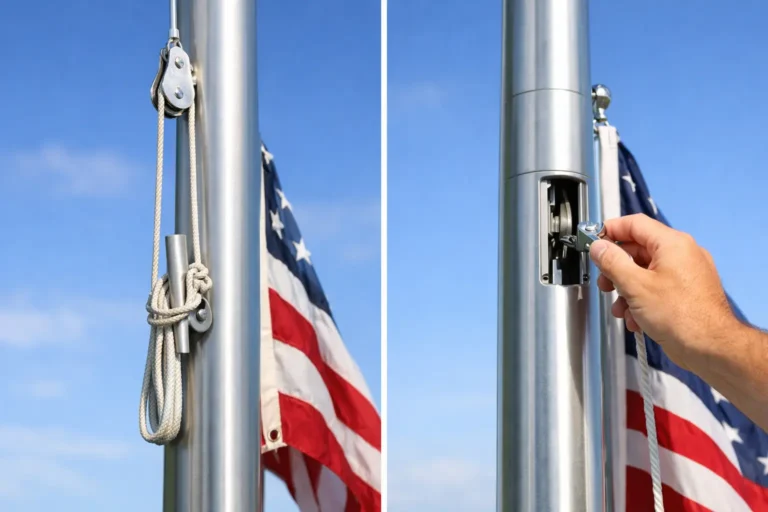
Internal halyard systems can be attractive for some buyers because they protect moving parts and reduce noise. External halyard systems are simpler and easier to service, but they need quality components if they are going to live near the coast. Neither system is automatically better in every case. It depends on your priorities, your budget, and how exposed the site is.
Installation choices for coastal properties
A good flagpole can still underperform if the installation is not right. Coastal soil conditions vary widely. Some homes have sandy ground with drainage advantages but less natural support. Others may have denser soil or sites that need extra attention for proper footing stability.
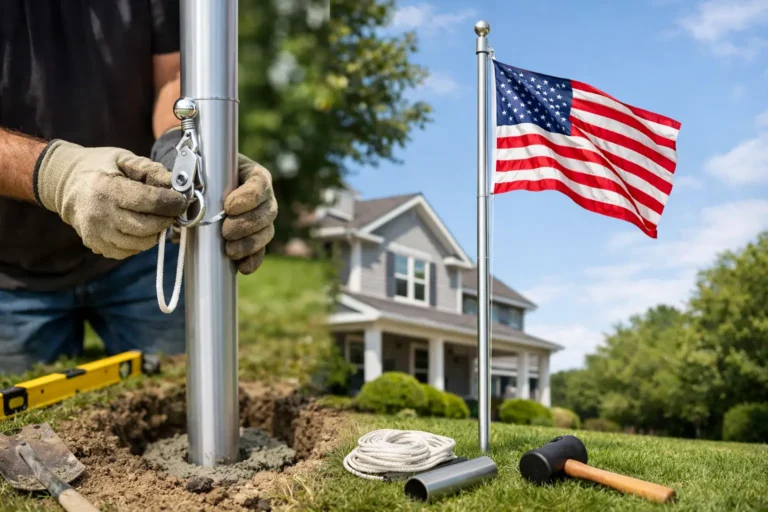
Ground sleeve installation, footing depth, and concrete work should all reflect local wind exposure and soil conditions. This is not the place to guess. On a high-wind property, the foundation matters just as much as the pole above it.
Placement matters too. Installing too close to rooflines, fences, or tree limbs can create turbulence that puts irregular stress on the flag and hardware. A clear, well-planned location usually gives better performance and a better presentation.
How to choose the right coastal flagpole for your home
Start with your actual environment. Ask whether your home is directly on the ocean, on a bay, in a canal community, or simply within a few miles of the coast. Then think about how exposed the property is. Open lots, higher elevations, and waterfront locations usually need stronger poles and more durable hardware.
Next, consider how you want to use the pole. If convenience is a priority, a premium telescoping model may be the right fit. If maximum durability in heavy wind is the goal, a stronger fiberglass or commercial-grade aluminum pole may be the better answer. If appearance is your top concern, aluminum may win, but it should still be built for coastal duty.
Finally, be realistic about maintenance. Every coastal installation needs some care. The goal is not zero maintenance. The goal is choosing a system that will hold up well and stay easier to manage over time.
At Bob's Flagpole Company, this is where talking to a specialist saves people money. The right recommendation depends on wind, exposure, flag size, and how you want the pole to operate - not just on picking the most expensive model.
The best coastal flagpole is the one that fits your property honestly. Buy for the salt, buy for the wind, and you will end up with a flagpole you can be proud to fly for years.