
Telescoping Flagpole Product Review Guide
A cheap telescoping pole usually gives itself away in the first month. The locks start slipping, the finish dulls, the pole rattles in the wind, and raising the flag feels rough instead of smooth. A proper telescoping flagpole product review has to look past the sales photos and focus on what actually matters once the pole is in the ground - strength, reliability, ease of operation, and how it holds up through real weather.
For most homeowners and many small commercial properties, telescoping flagpoles are popular for a simple reason: they are easier to live with than traditional rope-and-pulley systems. You can raise and lower the flag from ground level, avoid tangled halyard lines, and usually install the system without the complexity of larger permanent commercial poles. But not every telescoping model is built to the same standard, and the differences show up fast.
Telescoping flagpole product review criteria that matter
The first thing to examine is the material. Most quality telescoping poles are aluminum, but that alone does not tell you enough. The wall thickness, alloy quality, finish, and fit between sections all affect performance. A thin-walled pole may look fine out of the box, yet flex too much under wind load and wear out the locking system sooner. A stronger aluminum pole with a durable anodized or powder-coated finish generally offers better long-term value, especially in regions with strong sun, salt air, or regular storms.
The locking mechanism is the next make-or-break feature. Some poles use internal locking collars, while others rely on button-style or twist-lock systems. A good locking design should extend smoothly, hold securely under load, and release without a wrestling match. If a pole is hard to operate when new, it rarely gets better with age. Dirt, moisture, and temperature swings only make weak mechanisms more frustrating.
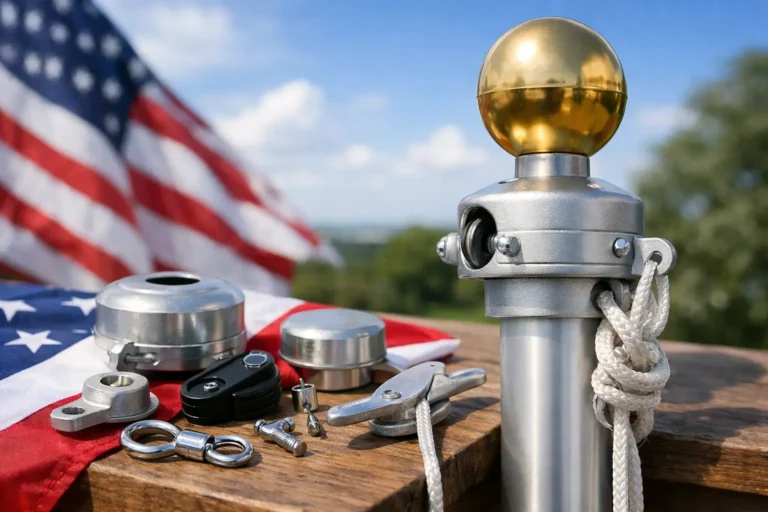
Flag attachment hardware deserves more attention than it gets. Rotating rings, anti-wrap systems, and secure clips can make a major difference in how the flag flies. On lower-end poles, the hardware often feels like an afterthought. That usually leads to wrapped flags, premature grommet wear, and extra maintenance. A premium setup keeps the presentation cleaner and puts less strain on both the flag and the pole.
Then there is the issue every buyer should think about before ordering: wind. A telescoping pole can be convenient and attractive, but convenience means very little if the product is mismatched to your site. An open rural property, coastal lot, school grounds, or commercial frontage with no windbreaks places very different demands on a pole than a sheltered suburban yard.
What separates a premium telescoping pole from a budget model
In a side-by-side telescoping flagpole product review, the premium poles usually stand apart in ways that are easy to feel. The sections fit better. The extension action feels controlled rather than loose. The hardware is heavier. The base sleeve and ground components inspire more confidence. Even the finish tends to look cleaner and hold up longer.
Budget poles often win on sticker price and lose on lifespan. That does not mean every lower-cost pole is a bad choice. If you are flying a smaller flag in a mild climate and you want a practical residential setup, a mid-range telescoping pole may serve you well. But if your priority is long service life, better wind resistance, and fewer problems over time, paying more up front usually saves money and frustration later.
This is especially true for buyers replacing a failed pole. Many replacement customers have already learned that the least expensive option can become the most costly one once you factor in damaged flags, bent sections, broken clips, or the need to buy a second pole far sooner than expected.
Ease of installation and daily use
One of the strongest arguments for a telescoping system is ease of use. Most homeowners want something they can install without bringing in a large crew, and they want to lower the flag without climbing, fighting rope systems, or dealing with noisy hardware. On that front, telescoping poles are often the right fit.
Still, installation quality matters. A well-made pole can still perform poorly if the ground sleeve is not set correctly or if the site has drainage problems. Buyers should also pay attention to overall height. A 20-foot telescoping pole may be ideal for many homes, while 25-foot and larger options can make sense for bigger lots, business properties, schools, or municipal settings. The right height depends on the scale of the building, the viewing distance, and local wind conditions.
Daily operation should feel simple. If extending and collapsing the pole takes excessive force, or if the sections bind easily, that is a warning sign. A good telescoping pole should feel dependable in the hand, not delicate.
Wind performance is where reviews get real
Many product descriptions sound strong until the weather tests them. That is why wind performance deserves a hard look in any review. Some telescoping poles are perfectly adequate in moderate conditions but not well suited to exposed properties or high-wind regions. Others are engineered specifically for heavier use and more demanding environments.
Manufacturers may list wind ratings, but those numbers need context. Wind exposure changes dramatically depending on terrain, nearby structures, elevation, and whether the flag is fully unfurled during gusty conditions. A homeowner in a protected neighborhood may be satisfied with a pole that would struggle on a coastal property or an open commercial lot.
For buyers in demanding conditions, this is where specialist guidance matters. It is one thing to read a spec sheet and another to match the pole to the property. The wrong choice can look fine on paper and fail in the field.
Common trade-offs in a telescoping flagpole product review
There is no perfect pole for every job. Telescoping models are convenient, clean-looking, and user-friendly, but they can involve trade-offs compared with heavy-duty one-piece or commercial-style external halyard poles.
A telescoping pole is often the better choice for residential buyers who value ease of operation and a quieter setup. It can also be a smart solution for small businesses that want a professional display without a more complex installation. But for very large flags, extreme wind zones, or heavy institutional use, a different flagpole style may be the better long-term answer.
That does not diminish telescoping poles. It just means the right product depends on the site and the job. Buyers who understand that upfront tend to be happier with the result.
Who should buy a telescoping flagpole
For homeowners, a telescoping pole makes a lot of sense when you want a premium look without the upkeep of ropes and pulleys. It is also a strong option for retirees, first-time flagpole buyers, and anyone who wants the ability to raise and lower the flag quickly from the ground.
For small businesses, churches, schools, and municipal buyers, telescoping poles can work well in the right scale and setting. The key is not to assume that "commercial use" automatically means any telescoping model will do. Property size, visibility, flag size, and wind all need to be part of the decision.
That is one reason buyers often turn to a specialist instead of a generic online seller. A true flagpole company can help you avoid buying a pole that is too light, too short, or simply wrong for your location. At Bob's Flagpole Company, that kind of hands-on guidance is part of the value.
Final verdict
A strong telescoping flagpole earns its keep in three ways: it operates smoothly, stands up to weather, and keeps your flag looking right day after day. If a product falls short in any of those areas, the low price stops looking like a bargain pretty quickly.
The best buying decision is usually not about finding the cheapest telescoping pole or even the tallest one. It is about matching build quality, wind capability, hardware, and height to your property and your expectations. If you are unsure which model fits your home, business, school, or public site, get expert advice before you buy. A few minutes of guidance can save you from years of dealing with the wrong pole.