
Choosing a High Wind Residential Flagpole
If you have ever watched a flag snap hard in a storm and wondered whether your pole is up to the job, you are asking the right question. A high wind residential flagpole is not just a taller pole or a heavier pole. It is a system built to handle real weather, repeated stress, and the day-to-day demands of flying a flag with pride at home.
For many homeowners, the problem starts after the purchase. A pole may look strong in a product photo, but local wind conditions can expose weak fittings, thin wall construction, poor mounting choices, or the wrong style for the site. That is why choosing the right flagpole takes more than picking a height and clicking buy. Wind load, pole material, flag size, yard exposure, and installation method all matter.
What makes a high wind residential flagpole different
A standard residential flagpole may work well in a sheltered neighborhood with light to moderate conditions. A high wind residential flagpole is designed for tougher environments, including open acreage, hilltops, coastal areas, and homes where wind regularly funnels across the property.
The difference usually comes down to engineering and fit. High-wind models are built with stronger materials, better wall thickness, more durable hardware, and designs that reduce stress on the pole. In many cases, the goal is not to make the pole indestructible. The goal is to make sure it performs reliably in the conditions it is actually going to face.
That is where many buyers get tripped up. They assume the strongest option is always best, but that depends on how you plan to use it. Some homeowners want a telescoping pole they can raise and lower easily. Others want a fixed fiberglass pole for a clean, traditional look. Both can be excellent choices, but they behave differently in wind.
The best material depends on your site
Material is one of the first decisions to get right, and there is no single perfect answer for every yard.
Aluminum flagpoles
Aluminum is a popular choice because it offers a strong balance of durability, appearance, and manageable weight. A quality aluminum pole can perform very well in high-wind residential settings, especially when the wall thickness and construction are matched to the height and expected wind exposure. Aluminum also resists rust, which makes it a practical long-term option in many parts of the country.
The trade-off is that not all aluminum poles are built the same. A light-duty residential model sold as a general-purpose flagpole is very different from a heavy-duty pole intended for higher wind conditions. That is why the specifications matter more than the label alone.
Fiberglass flagpoles
Fiberglass is another strong candidate for windy properties. It has some natural flex, which can be an advantage in gusty conditions. It also resists corrosion and has a classic appearance that many homeowners prefer.
The trade-off with fiberglass is that it can be more specialized in appearance and installation. Some buyers love that traditional look. Others prefer the convenience and adjustability of telescoping aluminum. Again, it depends on the property and the homeowner.
Telescoping flagpoles
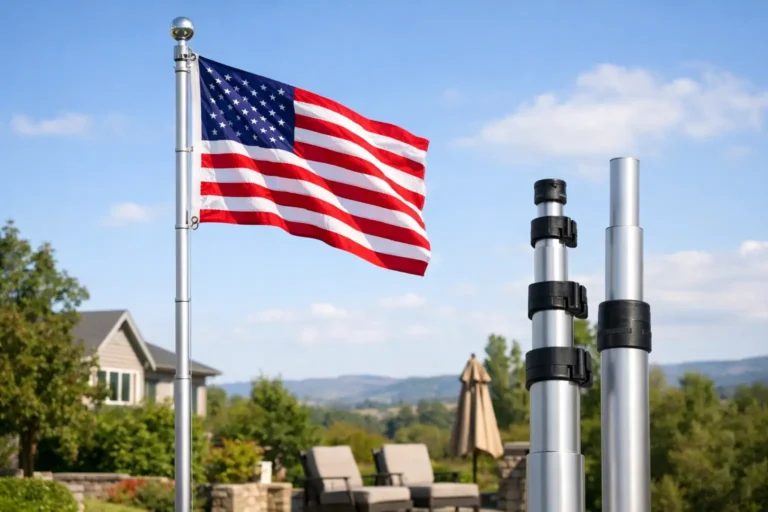
A telescoping pole can be an excellent choice for residential use, especially if you want easy access for raising, lowering, or half-staff display. Many homeowners appreciate being able to bring the pole down for maintenance or severe weather.
That said, a telescoping design should not be chosen on convenience alone. In a true high-wind area, you want a model specifically built for those conditions, with dependable locking mechanisms and hardware that can stand up to repeated use. A cheaper telescoping pole may be the wrong fit if your yard sees strong, sustained wind.
Height is not just about appearance
A flagpole should look right on the property, but height also affects performance. The taller the pole, the more leverage wind has against it. That does not mean you should avoid a taller pole. It means the pole has to be properly matched to the job.
For many homes, a 20-foot pole gives a balanced look and works well with standard residential flag sizes. A 25-foot pole can make a stronger visual statement on a larger lot. In open or windy locations, though, every additional foot matters. A homeowner with a compact suburban yard may do better with a shorter heavy-duty pole than with a taller pole that pushes the limits of the site.
A good rule is to choose the height that fits the property first, then make sure the construction level supports the expected wind load. The flag matters here too. A larger flag creates more drag, and that extra force is felt by the pole, truck, halyard, and all the fittings.
Installation can make or break performance
Even the best flagpole can fail early if it is installed poorly. This is one area where buyers sometimes focus so much on the pole itself that they overlook the foundation.
Ground-mounted poles
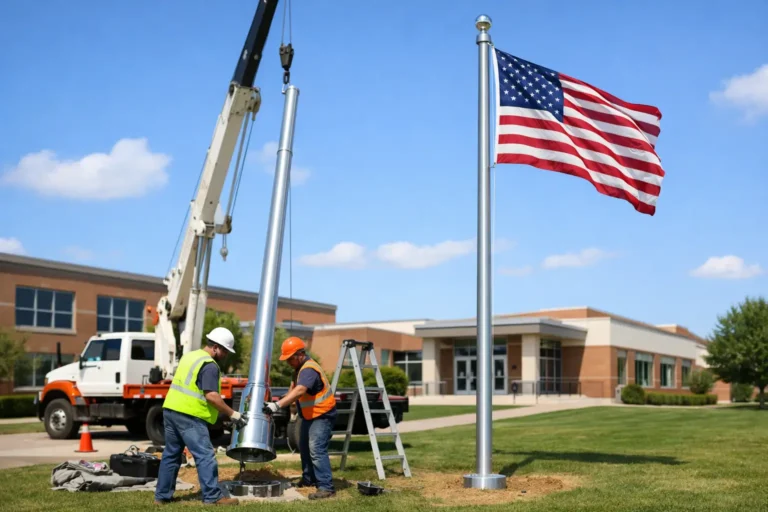
For a permanent residential flagpole, proper ground installation is critical. The footing depth, sleeve placement, drainage, and concrete work all affect long-term stability. In windy conditions, the foundation needs to do more than hold the pole upright. It needs to support repeated loading over time without shifting or causing stress problems.
Different soils and climates can affect what is needed. Frost conditions, sandy soil, and poor drainage all change the equation. That is one reason a cookie-cutter installation approach often falls short.
Wall-mounted poles
Some homeowners are considering wall-mounted options, especially for porches or front entries. These can work well for decorative display, but they are not the same as a true high-wind residential flagpole system. In an exposed location, a wall mount can put a surprising amount of stress on the bracket and the structure behind it.
If your goal is a full-size outdoor display that stands up to stronger weather, a properly selected ground-mounted pole is usually the better route.
Hardware matters more than most people realize
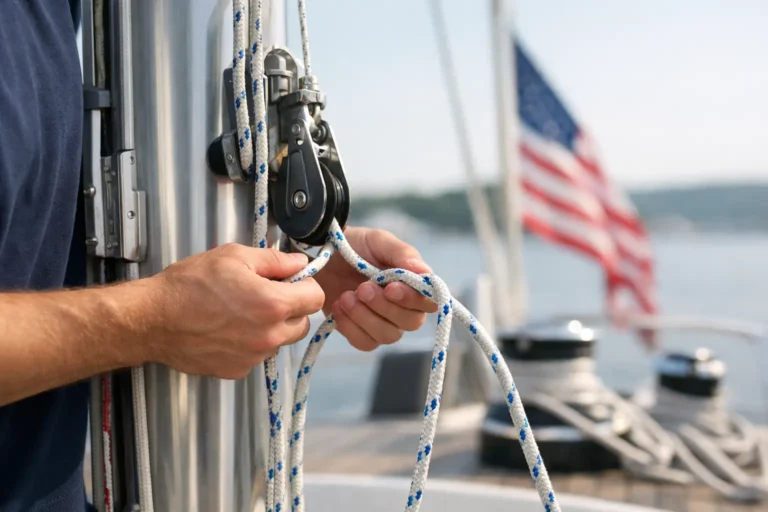
When poles fail, it is not always the shaft itself. Sometimes it is the truck assembly, clips, halyard, swivel rings, or locking components that become the weak point.
In high wind, the flag is constantly moving, twisting, and pulling. Hardware takes a beating. Better components reduce wear, improve function, and make the whole system last longer. This is especially important if you plan to fly the flag daily rather than only on holidays.
Noise can matter too. Some homeowners are surprised by how much halyard slap or metal-on-metal contact they hear in breezy conditions. Certain pole styles and hardware setups help reduce that issue. If the pole is going near a bedroom window or close to a patio, that is worth thinking about before you buy.
Weather exposure is different from one home to the next
A neighborhood address alone does not tell the full story. Two homes in the same town can have very different wind exposure.
A pole near a tree line or behind other houses may be fairly protected. A pole on a corner lot, along open farmland, near the coast, or on a ridge can take much stronger gusts. That is why the smartest flagpole choice is based on the exact site, not just a general region.
This is also where specialist advice helps. A real flagpole company will ask about your location, lot conditions, desired height, and whether the area sees frequent storms or sustained wind. That kind of conversation usually leads to a better recommendation than simply sorting by price.
When high-wind performance is worth the upgrade
Not every home needs the heaviest-duty model available. But there are situations where stepping up is the right call.
If you are replacing a bent or damaged pole, that is a strong sign the previous setup was not right for the site. If your property is exposed, if you want to fly a flag most days, or if you are investing in a long-term display rather than a temporary one, paying for better wind performance often saves money over time.
That is especially true when you factor in replacement flags, repair parts, and the frustration of a pole that cannot handle local conditions. A cheaper pole is only cheaper once.
For homeowners who want straight answers, this is where a specialist earns their keep. At Bob's Flagpole Company, many buyers call directly to talk through height, material, and wind exposure before ordering. That kind of guidance helps prevent the common mistake of buying a pole that looks good on paper but is wrong for the yard.
Buying with confidence
The best high wind residential flagpole is the one that fits your property, your weather, and how you plan to use it. That might be a heavy-duty telescoping model for ease of use. It might be a fiberglass pole for a more traditional permanent installation. It might even mean sizing down slightly to get a stronger, more reliable setup.
A good flag display should feel like a point of pride, not a maintenance headache. When the wind picks up, you want confidence in what is standing in your yard. If you take the time to match the pole to the site, you will end up with a display that looks right, performs well, and serves your home for years to come.
If you are unsure, do not guess. A short conversation with someone who understands wind ratings, materials, and installation can save you from a costly mismatch and help you choose a flagpole worthy of the flag it carries.