Fiberglass Flagpole vs Aluminum: Which Wins?
If you are trying to choose between a fiberglass flagpole vs aluminum, the right answer usually comes down to your location, your wind exposure, and how much maintenance you want to deal with over the years. Both materials are proven choices. The better pick depends on how the pole will be used and what kind of performance you expect once it is in the ground.
At Bob's Flagpole Company, this is one of the most common questions we hear from homeowners, schools, businesses, and municipalities. People want a pole that looks sharp, holds up in bad weather, and does not turn into a maintenance problem later. That is exactly where material choice matters.
Fiberglass flagpole vs aluminum: the main difference
The biggest difference is how each material behaves over time. Aluminum is a traditional, widely used flagpole material known for its clean metallic appearance, lighter weight, and strong all-around performance. Fiberglass is built for toughness in harsh conditions, especially where salt air, heavy winds, and corrosion are major concerns.
That does not mean fiberglass is always better in rough weather or that aluminum is only about looks. It means each one has strengths that show up in different environments. A suburban homeowner in a mild inland climate may be perfectly happy with aluminum for decades. A coastal property manager dealing with salt spray and steady wind may be much better off with fiberglass.
Appearance and curb appeal
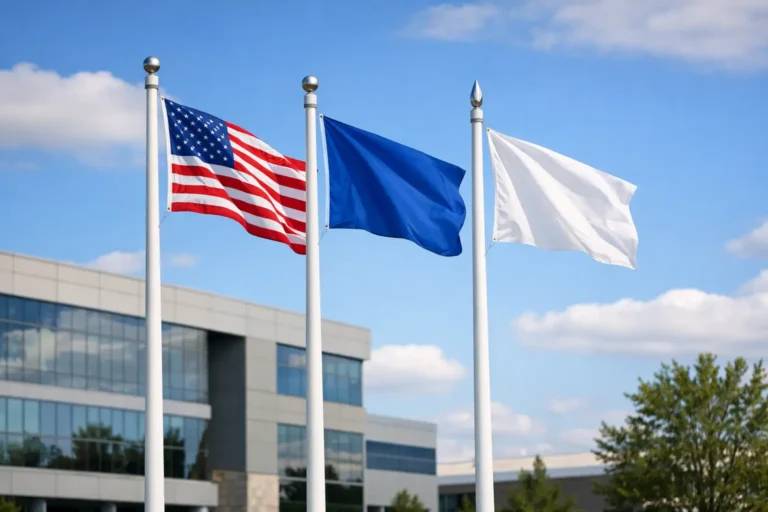
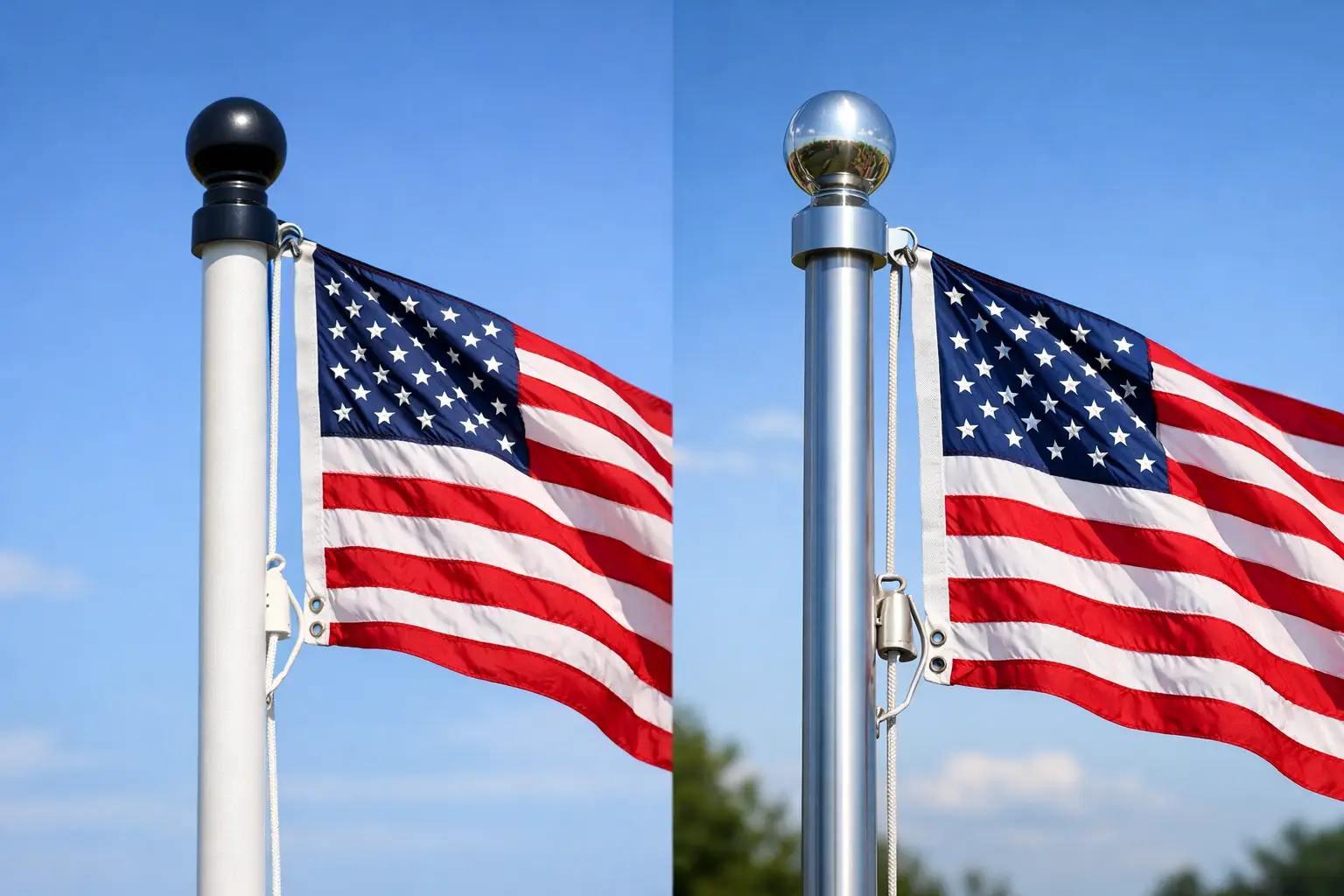
For many buyers, aluminum wins on classic appearance. It has the traditional look people expect when they picture a flagpole in front of a business, school, or municipal building. Satin-finish aluminum has a bright, clean presentation that works well with commercial properties and formal settings.
Fiberglass has a different look. It is usually finished in white and has a smooth, solid appearance rather than a metallic one. Some customers prefer that because it looks crisp and modern. Others still prefer the timeless visual of aluminum. This is partly personal taste, but it is also about matching the building and the setting.
If presentation is your top priority and you want that familiar flagpole profile, aluminum often gets the nod. If you want a clean white pole that blends well with coastal or residential architecture, fiberglass may feel like the better fit.
Wind performance and flexibility
Wind is where the conversation gets more serious. Flagpoles are not just decorative. They are structural products that need to handle real conditions, especially when a flag is flying.
Fiberglass has a natural flex that helps it absorb wind loads. That flexibility can be a real advantage in high-wind areas because the pole can bend somewhat under pressure instead of resisting every gust as rigidly. In practical terms, that can mean better survival in punishing conditions when the pole is properly sized for the site.
Aluminum also performs well in wind, but it behaves differently. It is strong and dependable, yet generally more rigid. In many residential and commercial applications, that is not a problem at all. In fact, aluminum poles are used successfully all over the country. The key is proper engineering, correct wall thickness, and choosing the right height and taper for the area.
This is where buyers can get into trouble by assuming one material solves everything. A fiberglass pole is not automatically the best high-wind option, and an aluminum pole is not automatically the wrong choice. Pole height, flag size, exposure, and local weather all matter.
Corrosion resistance and coastal use
If your property is near the coast, corrosion should move to the top of your list. Salt air can be hard on outdoor hardware, and that includes flagpoles.
Fiberglass has a major advantage here. It does not rust, and it is not vulnerable to the same kind of oxidation issues that affect metal over time. That makes it a strong choice for beachfront homes, marinas, coastal businesses, and public properties exposed to salt-laden air.
Aluminum is naturally corrosion resistant, which is one reason it has been used for so long. But even corrosion-resistant metal can show wear over time in severe coastal environments. Finish, hardware quality, and exposure level all play a role. For inland applications, this is usually much less of a concern.
If you are right on the water or in a harsh marine setting, fiberglass often has the edge for long-term durability.
Maintenance over the long haul
Most buyers want a flagpole they can install and trust, not one that gives them a new chore every season. On that front, both fiberglass and aluminum are relatively low maintenance, but they age differently.
Aluminum holds up well and does not require painting, which is a major plus. Its finish can remain attractive for many years, especially in standard environments. Depending on location and exposure, it may eventually show weathering or surface dulling, but many owners are happy with how little attention it needs.
Fiberglass is also low maintenance and especially appealing where environmental wear is a concern. Because it is not metal, it avoids some of the cosmetic and structural issues that come with corrosive conditions. However, like any outdoor product, fiberglass can still show age over time from sun exposure, dirt, and general weathering.
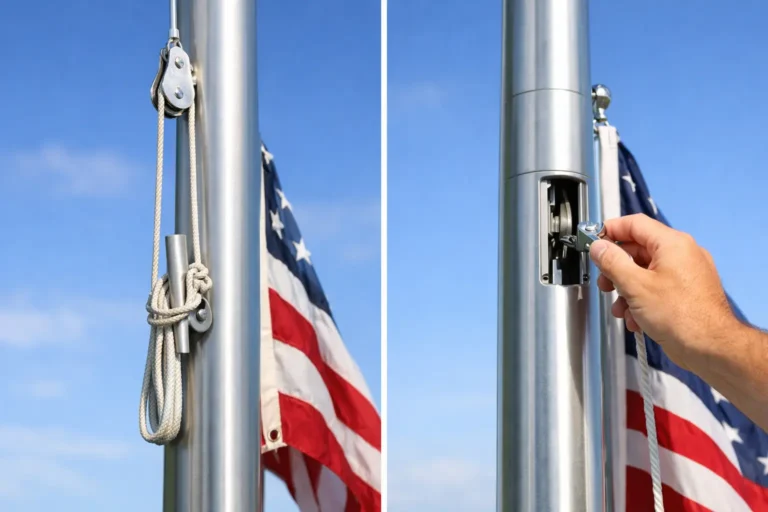
The bigger maintenance question often is not the pole material itself. It is the hardware system, the halyard setup, and whether the pole was chosen properly for the location. A well-matched pole usually stays trouble-free much longer.
Weight, handling, and installation
Installation matters, especially for homeowners and smaller commercial buyers trying to understand what the project will involve.
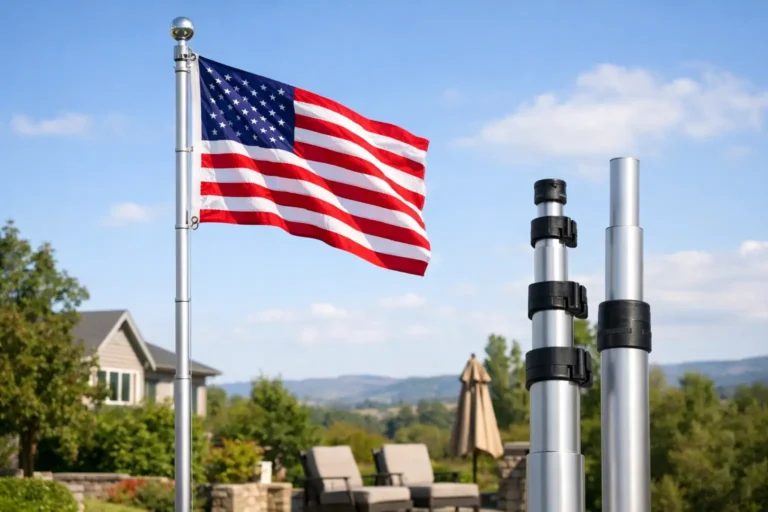
Aluminum is generally lighter and easier to handle in many applications, which can simplify transport and installation. That can be helpful when working with smaller crews or residential setups.
Fiberglass can be heavier depending on the design and wall construction, and some poles may require a little more planning during installation. That is not necessarily a downside. In some cases, the added substance is part of what gives the pole its durability. Still, it is something to account for before ordering.
For larger poles, professional installation is often the right move regardless of material. Foundation requirements, wind exposure, and hardware setup deserve careful attention.
Cost and long-term value
Price matters, but upfront cost should not be the only measure. The better question is what you are buying for the money.
Aluminum flagpoles are often attractive because they provide a strong balance of appearance, performance, and value. For many homeowners, retail properties, offices, and civic sites, aluminum is the practical standard.
Fiberglass may cost more in some configurations, especially when chosen for severe environments or specialty use. But that higher cost can make sense if it helps avoid premature wear in a coastal or high-wind location.
So which one offers better value? It depends on where the pole is going. Inland, aluminum often delivers excellent long-term value. In corrosive or punishing environments, fiberglass can earn its keep.
Who should choose fiberglass?
Fiberglass is often the better choice for coastal buyers, high-wind locations, and customers who want extra protection against corrosion. It also appeals to those who prefer a white finished look and do not need the traditional metallic appearance of aluminum.
For marinas, beachfront homes, certain municipal properties, and exposed commercial sites, fiberglass deserves serious consideration.
Who should choose aluminum?
Aluminum is often the better fit for buyers who want a classic flagpole appearance, reliable all-around performance, and a strong value for residential or commercial use. It is a favorite for schools, businesses, homeowners, and government settings because it looks right in almost any environment and performs well when properly specified.
If your site is inland or not subject to extreme corrosive conditions, aluminum is often the straightforward answer.
Fiberglass flagpole vs aluminum: how to make the right call
The smartest way to decide is to match the pole to the property, not just the product description. Ask where the pole will be installed, how strong the winds are, whether salt air is a factor, and how important appearance is to the project. Also think about who will maintain it and whether the installation is residential, commercial, or institutional.
A flagpole is not something most people buy every year. It is an investment in presentation, durability, and pride in the flag you fly. That is why expert guidance matters. Big-box sellers may show you a material list. A flagpole specialist can help you choose what actually fits your site.
If you are stuck between fiberglass and aluminum, that is a good sign you are asking the right question. The best pole is the one that stands up to your weather, looks right on your property, and serves you well for years. When in doubt, call Bob directly and get a recommendation based on your real-world conditions, not a one-size-fits-all answer.