Flagpole Truck Replacement Parts Guide
When a flag stops flying properly, the problem is often not the pole - it is the hardware at the top. Flagpole truck replacement parts matter because that small assembly does a big job. It supports the pulley, guides the halyard, helps the flag move freely, and takes constant punishment from wind, rain, heat, and ice. If the truck is worn, cracked, seized, or the wrong size, the whole system suffers.
For homeowners, schools, businesses, and municipal buyers, this is one of the most common repairs on an external halyard flagpole. It is also one of the most misunderstood. Many people know they need a new pulley or cap, but they are not always sure what the truck actually includes, how it fits the pole, or whether replacing individual parts makes sense compared with swapping out the entire assembly.
What a flagpole truck actually does
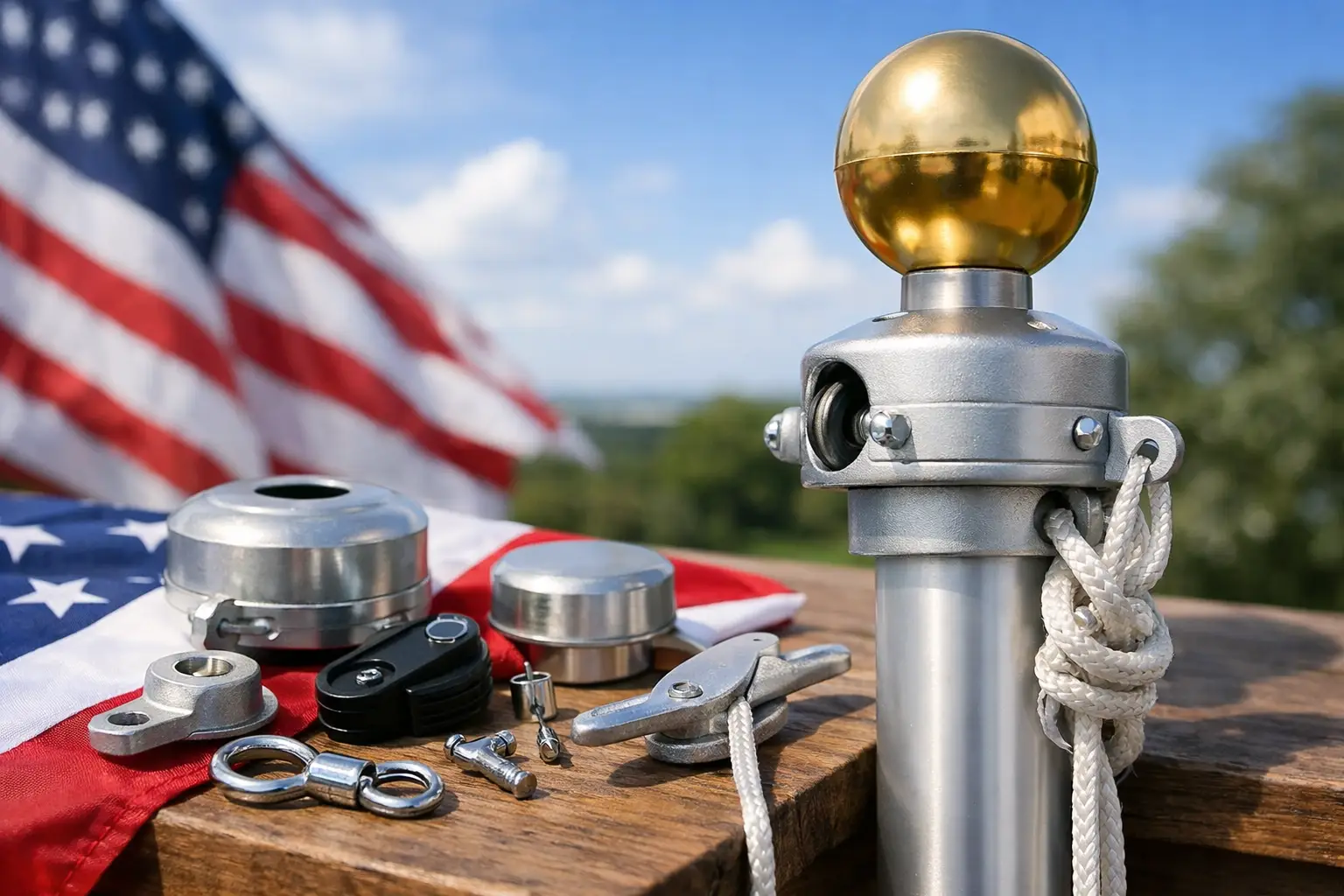
The truck is the fitting mounted at the top of the pole. On many external halyard poles, it holds the pulley or sheave that the rope runs through, and it often includes a spindle or threaded connection for the ornament ball on top. Depending on the design, it may also rotate with the wind, helping reduce flag wrapping.
That sounds simple, but this part works in a high-stress location. It carries the load of daily flag movement, absorbs vibration, and stays exposed year-round. On taller commercial poles or in high-wind areas, wear shows up faster. On older installations, sun exposure and corrosion often do the damage long before the pole itself is ready for replacement.
Common flagpole truck replacement parts
When customers ask about flagpole truck replacement parts, they are usually looking for one of a few specific pieces. The most common is the pulley, also called the sheave. If the sheave cracks, freezes, or wears unevenly, the halyard drags instead of running smoothly.
The axle pin is another frequent trouble spot. A worn or corroded pin can make the pulley wobble or bind. If that happens, replacing only the pulley may not solve the problem.
You may also need the truck body itself, especially if it is cast aluminum, nylon, or another material that has cracked from age or weather. The ornament spindle, top plug, bearings on a rotating truck, and set screws can all fail over time as well. On some models, a damaged truck collar or mounting stem keeps the assembly from seating correctly inside the pole.
In plain terms, the truck is not always a one-part fix. Sometimes one small component has failed. Other times the visible failure is just the symptom of a truck assembly that has reached the end of its service life.
How to tell what needs to be replaced
The first clue is usually hard operation. If raising the flag feels rough or the rope jumps the pulley groove, inspect the truck. A squealing or grinding sound often points to a worn sheave or axle. If the flag wraps around the pole more than it used to, the rotating mechanism may be seized, or the truck may not be aligned properly.
Visible damage matters too. Cracks, bent hardware, missing fasteners, sharp pulley edges, and corrosion around the cap are all signs that replacement should not wait. A damaged pulley can chew through halyard quickly, and a failing truck can eventually lead to a dropped ornament or a jammed flag line.
There is also the age factor. If the pole has been up for many years and the original truck has seen constant exposure, replacing the full assembly is often the smarter long-term move. Piecemeal repairs can work, but only if the rest of the hardware is still sound.
Matching flagpole truck replacement parts to your pole
This is where many buyers get stuck. A truck is not universal just because it looks close in a photo. The outside diameter of the pole, the inside top diameter, shaft size, mounting style, ornament thread size, and halyard system all need to match.
For example, some trucks are designed to slide over the outside of the top of the pole, while others are stem-mounted and fit into the top. Some are fixed trucks. Others rotate on bearings. Some are built for stationary balls, while others accommodate different ornament styles. A residential pole and a heavy-duty commercial pole may use very different hardware, even if they appear similar from the ground.
Material matters too. Cast aluminum is a common choice for strength and weather resistance. Nylon trucks can be a practical option in certain residential applications, but they are not always the right answer for larger poles or severe conditions. Bronze or stainless components may be preferred where corrosion is a constant issue.
That is why measurements are so important. Pole diameter, truck style, and a few clear photos can save a lot of frustration. Guessing usually leads to ordering the wrong part, and returning to the top of the pole twice is nobody's idea of a good afternoon.
Replace one part or the whole truck?
It depends on the condition of the assembly and how accessible the pole is. If the sheave alone is damaged and the truck body, axle, and mounting hardware are still in solid condition, replacing that single part can be cost-effective. This is especially true on newer poles or quality commercial systems where the main truck has plenty of life left.
But if the truck is older, corroded, cracked, or has multiple worn components, a full replacement is often the better value. Labor matters here. If you are already taking the pole down or arranging lift access, it often makes sense to install a complete new truck assembly instead of nursing along older hardware.
This is even more true for schools, businesses, and government properties where downtime and repeat service calls create bigger headaches than the part cost itself. A proper fix now usually costs less than doing the job again in six months.
Why wind and climate change the answer
Not every property needs the same truck hardware. Coastal exposure, open commercial lots, school campuses, and municipal sites often put much more strain on top-of-pole components than a sheltered residential yard. Salt air speeds corrosion. High winds stress rotating parts and fasteners. Freeze-thaw cycles can crack older materials or lock moving parts in place.
That means the best replacement part is not always the cheapest one that fits. A stronger truck assembly or a better-grade sheave may be the right call if your site has a history of wear. Good flag presentation depends on hardware that matches real conditions, not just catalog dimensions.
This is where working with a specialist helps. At Bob's Flagpole Company LLC, many customers call because they know something is wrong at the top of the pole but are not sure which part failed. A little guidance on pole size, truck style, and wind exposure can keep you from replacing the wrong component.
Installation considerations before you order
Before buying parts, think through access and safety. On a short residential pole, truck replacement may be straightforward once the pole is lowered. On taller commercial poles, the job may require trained personnel or equipment. The top fitting needs to be secured correctly, and the halyard must be routed properly through the pulley.
It is also worth checking related components while you are there. A worn truck often goes hand in hand with a tired halyard, cracked snaps, or an ornament that no longer threads securely. Replacing one weak link while leaving the rest in poor condition usually leads to another service call.
If your current hardware is no longer identifiable by brand or model, do not panic. Many older poles can still be matched with compatible replacement trucks or updated assemblies. What matters most is getting accurate measurements and understanding how the current system mounts.
Buying smarter, not just faster
The right flagpole hardware keeps the flag flying cleanly, protects the halyard from unnecessary wear, and spares you from repeat repairs. The wrong hardware may fit loosely, bind under load, or fail early in rough weather. That is why flagpole truck replacement parts are worth taking seriously, even though they are small compared with the pole itself.
A quality replacement should match the pole, match the use, and match the conditions on the property. If you are unsure whether you need a new sheave, axle, rotating truck, or a complete assembly, slow down long enough to get the details right. A dependable flag display starts at the top, and the best repair is the one you only have to make once.