Top Solar Lights for Flagpoles
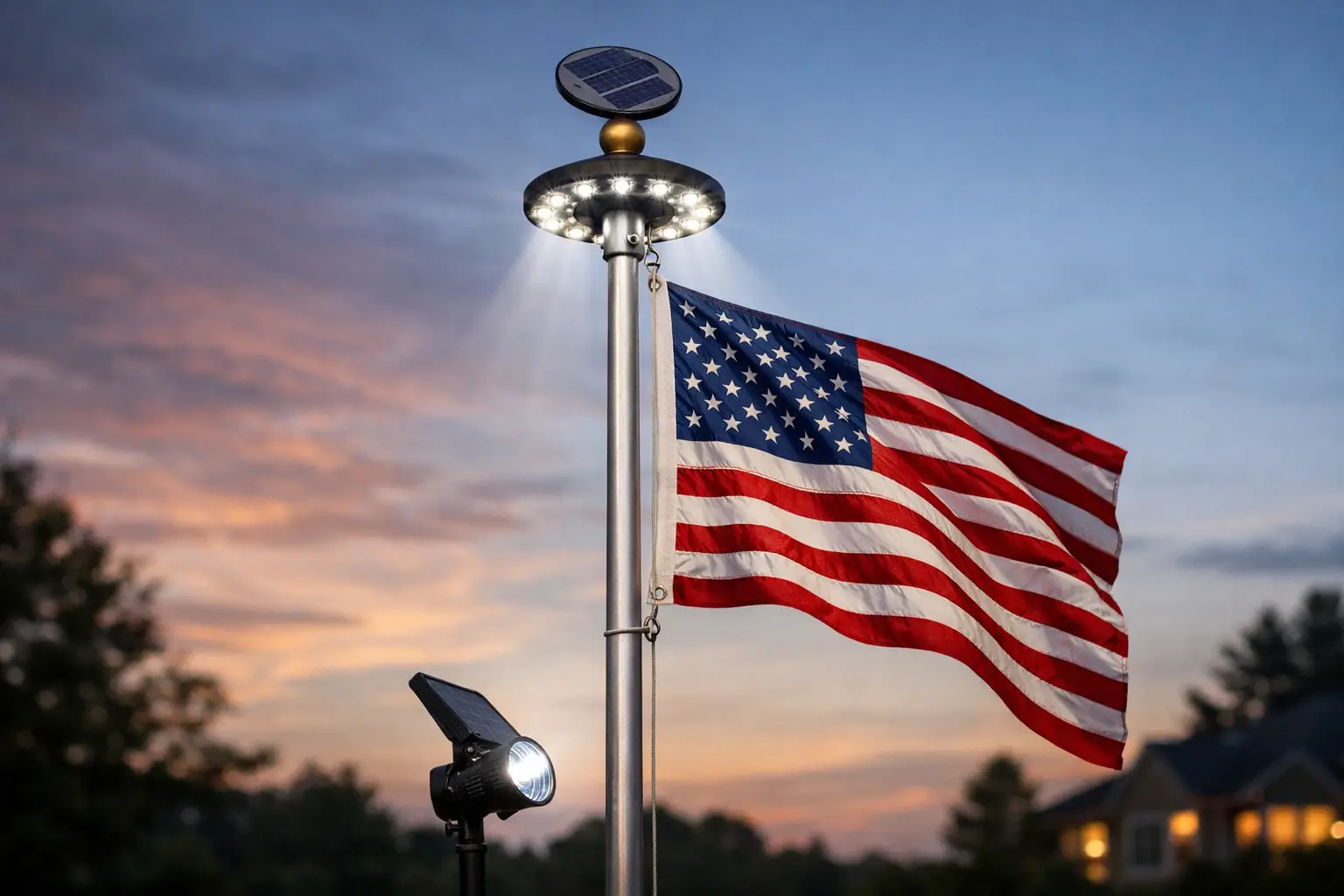
A flag that disappears after sunset is easy to overlook. A flag that stays properly lit sends a different message - one of respect, pride, and attention to detail. If you are comparing the top solar lights for flagpoles, the right choice comes down to more than just brightness. You need a light that fits your pole, holds a charge, stands up to weather, and delivers dependable coverage night after night.
For homeowners, schools, small businesses, and public buildings, solar flagpole lighting is often the simplest way to keep the flag visible without trenching wire or hiring an electrician. But not all solar lights are built the same. Some are fine for a short residential pole in mild weather. Others are made for larger poles, stronger wind, and year-round use. Knowing the difference saves money and frustration.
What makes the top solar lights for flagpoles stand out
The best solar flagpole lights do four things well. They collect enough sunlight during the day, store that energy efficiently, shine with enough output to light the full flag area, and keep working in real outdoor conditions.
That may sound basic, but this is where many bargain lights fall short. A low-cost unit might look similar in photos, yet use weaker panels, lower-grade batteries, and lighter materials that fade or fail early. On a calm summer day, it may work fine. In winter, after cloudy conditions, or on a taller pole, performance can drop quickly.
The top solar lights for flagpoles usually separate themselves in build quality first. Look for solid housings, dependable LED arrays, and batteries that are designed for repeated charging cycles. A good flagpole light should feel like outdoor equipment, not like a decorative garden accessory.
Brightness matters, but coverage matters more
A common mistake is shopping by lumen count alone. More lumens can help, but the beam pattern matters just as much. If the light is concentrated in a narrow spot, you may end up with a bright section of pole and a flag that still falls into shadow.
For most residential setups, what you want is even downward illumination that reaches the flag as it moves. A flag does not stay perfectly still, especially in the very conditions that make a display look its best. A strong light with poor spread may leave the flag dim along the edges or only light it when the wind drops.
This is especially important on taller poles or larger flags. As pole height increases, so does the challenge of delivering useful light at the right angle. In those cases, a more powerful unit with a wider and better-directed LED layout is usually worth the investment.
Pole style and mounting fit are just as important
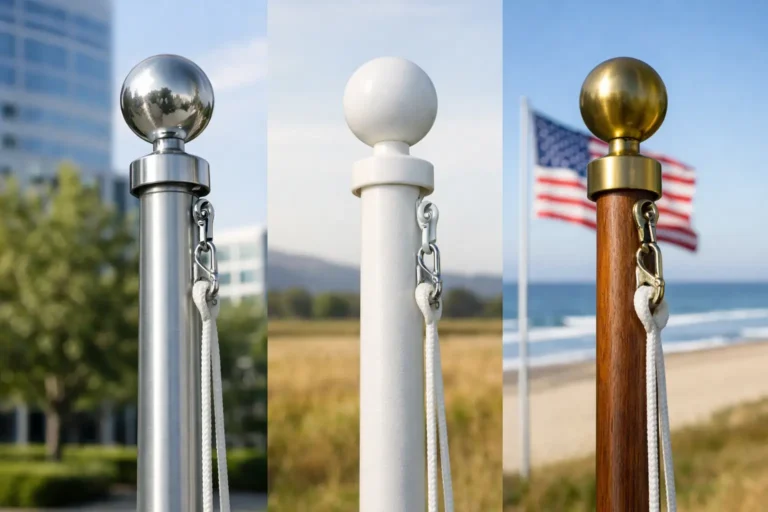
Not every solar light fits every flagpole. That sounds obvious, but it causes plenty of headaches. Some lights are made specifically for top-mounted installation under the ball topper. Others are designed for certain spindle sizes or hardware configurations.
Before buying, you need to confirm the mounting method and pole compatibility. A light that works beautifully on a telescoping residential pole may not be the right match for a sectional or commercial pole. The reverse is also true. Heavier-duty lights may be more than a homeowner needs and can create fit issues if the hardware is not compatible.
This is one area where specialist guidance helps. A generic seller may simply list dimensions and leave you to sort it out. A true flagpole company can help match the light to the pole, the flag size, and the environment. That makes a real difference when you are trying to avoid returns or setup problems.
Battery performance is where quality shows up at night
The real test of a solar flagpole light happens after several hours of darkness. A unit may turn on at dusk and still disappoint if it fades before midnight. For a proper overnight display, battery capacity and charging efficiency matter every bit as much as LED output.
Better lights use battery systems built for sustained nighttime operation, not just a few evening hours. That matters if you live in a region with long nights, winter weather, or stretches of cloudy days. A light with a small battery may perform well in July and struggle badly in December.
There is always a trade-off here. Higher output generally uses more stored power. So the best-performing units balance brightness with efficient runtime rather than chasing big numbers on the box. If you are lighting a flag every night, consistency is usually more valuable than an overly aggressive beam that drains too quickly.
Weather resistance is not optional
Solar flagpole lights live in a tough spot. They take direct sun, rain, wind, heat, and freezing temperatures. On many poles, they also sit fully exposed with no roofline or overhang for protection.
That means weather resistance is not a bonus feature. It is part of the job. A good light should have a durable outer housing, sealed components, and materials that resist corrosion. This matters even more in coastal areas, open commercial sites, and high-wind properties.
If your flagpole is installed in a place that regularly sees strong gusts, storms, or temperature swings, it is smart to lean toward a heavier-duty solar light. You may spend more upfront, but replacement cycles are often shorter with lightweight consumer-grade models. Over time, the cheaper option can cost more.
Choosing the right light for your property
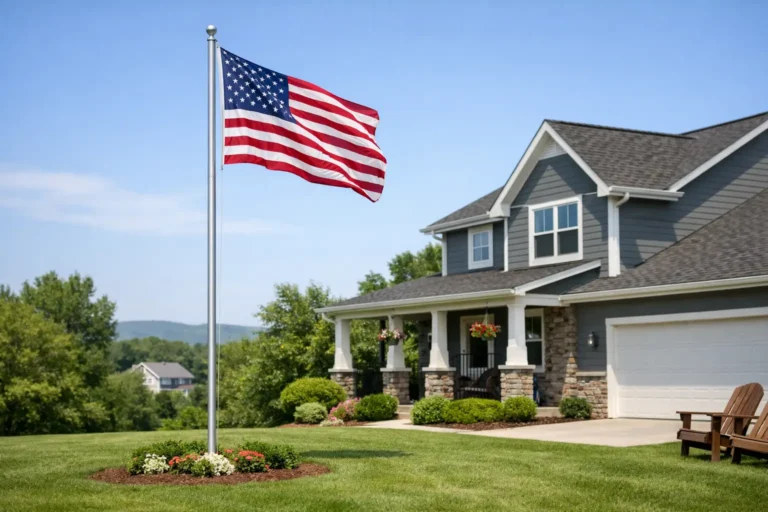
A single-family home with a 15- or 20-foot flagpole has different needs than a school campus or municipal building. That is why there is no single best answer for everyone.
For residential use, ease of installation is often the biggest priority. Most homeowners want a solar light that mounts cleanly, charges reliably, and does not require ongoing adjustment. A well-built top-mount light is often the right fit here, especially when paired with a standard residential flag size.
For small businesses and community buildings, appearance tends to matter more because the flag is part of the property presentation. In those settings, stronger and more even illumination is worth paying for. A dim light on a front-facing commercial pole can make the whole display look neglected.
For schools, municipalities, and government sites, durability and long-term dependability usually lead the decision. These buyers often need equipment that performs consistently with minimal maintenance. In those cases, selecting from the top solar lights for flagpoles means focusing less on bargain pricing and more on service life, hardware compatibility, and proven outdoor performance.
Features worth paying for and features you can skip
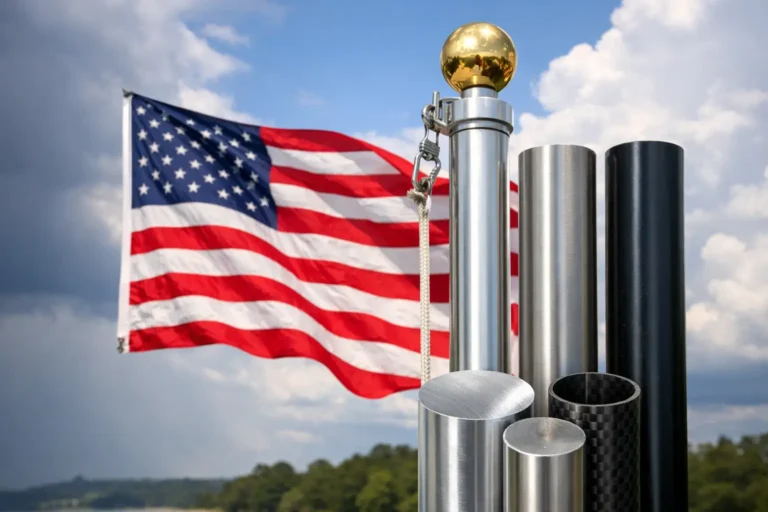
Some upgrades are useful. High-efficiency solar panels, quality rechargeable batteries, and durable metal or heavy-duty composite construction are usually worth it. So are designs that provide balanced LED placement for broad illumination.
Other features depend on your setup. Automatic dusk-to-dawn operation is helpful, but it is standard on many solid models now. Decorative styling, flashy marketing claims, or exaggerated brightness numbers are less important than reliable field performance.
You should also be careful with any product that promises exceptional output at a very low price. There is nothing wrong with wanting value, but solar lighting is one of those categories where quality tends to show up quickly. If a light is dramatically cheaper than comparable options, there is often a reason.
Installation and maintenance are part of the buying decision
Even the best light can disappoint if it is mounted incorrectly or installed on a shaded pole. Solar units need direct sun to do their job well. If nearby trees, rooflines, or buildings block sunlight for much of the day, charging will suffer.
Maintenance is usually simple, but it is not zero. The panel should be kept reasonably clean so dust, pollen, and debris do not reduce charging efficiency. Over time, batteries may also need replacement depending on the model and climate. A quality light makes that process manageable instead of turning it into a full replacement.
This is another reason buyers often do better working with a specialist rather than a broad marketplace seller. At Bob's Flagpole Company LLC, customers can get practical guidance on whether a particular solar light makes sense for their pole and site conditions before they buy.
How to judge value when comparing top solar lights for flagpoles
The cheapest light is rarely the best value. A better question is how long the unit will perform the way you need it to. If a slightly more expensive light gives you stronger output, better runtime, and a longer service life, it often comes out ahead.
Think in terms of total use, not just purchase price. A dependable solar light that works through changing seasons helps maintain a proper display with less hassle. That matters whether the flag is flying at your home, outside your business, or over a public building.
The best choice is usually the one that fits your pole correctly, gets enough sun at your location, and is built for the conditions it will face. If you are not sure which model matches your setup, that is the time to ask questions instead of guessing. A well-lit flag is a simple thing, but it says a lot about the property and the people responsible for it. Choosing the right light helps you do it right from the start.