Commercial Fiberglass Flagpole Options
If you are buying for a school, office park, municipal building, dealership, church, or multi-tenant property, commercial fiberglass flagpole options are worth a close look. They solve a problem many buyers run into with metal poles - you want professional appearance and long service life, but you do not want constant worries about corrosion, electrical conductivity, or a finish that starts looking tired too soon.
Fiberglass flagpoles have been a dependable choice for years because they balance appearance, strength, and low maintenance. But not every fiberglass pole is the same. Height, wall construction, wind exposure, halyard style, and finish all matter. A pole that performs well at a sheltered business entrance may not be the right fit for an open municipal site or a coastal property that sees steady gusts.
Why commercial fiberglass flagpole options appeal to facilities buyers
For many commercial and government buyers, fiberglass is attractive because it is non-conductive, naturally corrosion-resistant, and clean-looking from a distance. That matters on campuses, near parking lots, around utilities, and in regions where salt air or humidity can be hard on other materials.
The other big advantage is upkeep. A quality fiberglass pole generally asks less of you over time than many painted metal poles. You are not dealing with rust, and the surface tends to hold its appearance well when the pole is built with a good gel coat or protective finish. For property managers and maintenance teams, that can mean fewer headaches after installation.
Still, fiberglass is not a one-size-fits-all answer. If you are planning a very tall installation, an extreme high-wind location, or a site where you need a certain architectural look, the best answer depends on the application. That is where knowing the main options becomes useful.
The main commercial fiberglass flagpole options to compare
The first decision is usually height. Commercial fiberglass poles are commonly selected in ranges like 20, 25, 30, 35, 40, and 50 feet, with some projects going beyond that. A small business frontage may look right with a 20- or 25-foot pole. A school entrance, civic lawn, or larger office building often needs 30 to 40 feet to keep the display proportional to the structure. If the pole is too short, the flag can look lost. Too tall, and the installation can feel oversized or create stronger visual and wind loads than the site really needs.
The next choice is external or internal halyard. An external halyard system places the rope and hardware on the outside of the pole. It is straightforward, familiar, and often more economical. For many churches, schools, and small commercial sites, that is perfectly acceptable.
An internal halyard system hides the operating components inside the pole and usually secures access with a locking mechanism. This option is often preferred at municipal buildings, public facilities, and higher-traffic commercial properties where appearance and tamper resistance matter. It typically costs more, but the cleaner profile and added security can make it well worth it.
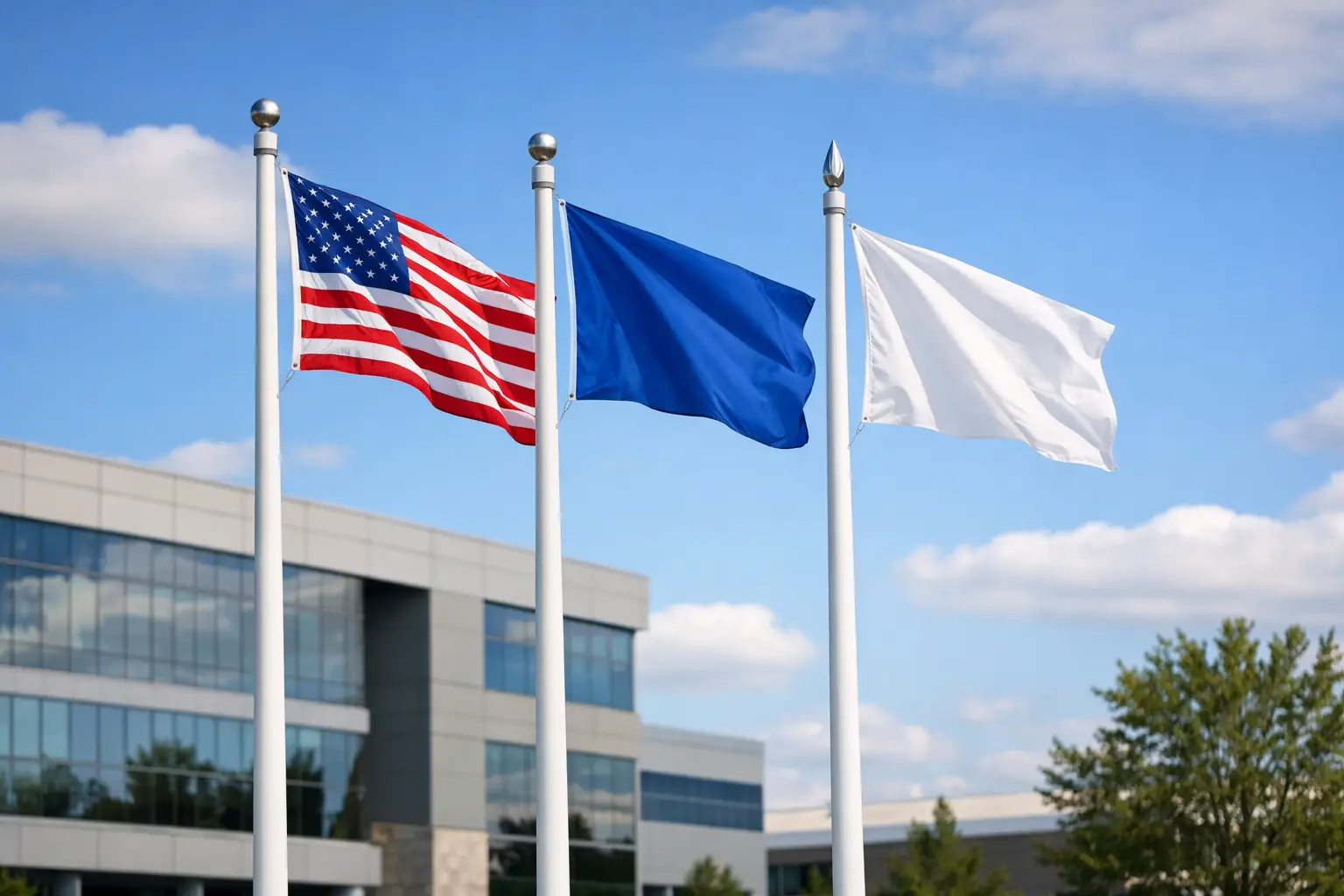
Finish is another important variable. Many fiberglass poles are offered in white, which remains a popular commercial choice because it looks crisp, traditional, and professional with almost any building style. Some poles are available in other colors or architectural finishes to better match a property. White is usually the easiest and safest visual fit, but design-driven sites sometimes want a different look. The key is making sure the finish is built for long outdoor exposure, not just good showroom appearance.
How wind exposure changes the right choice
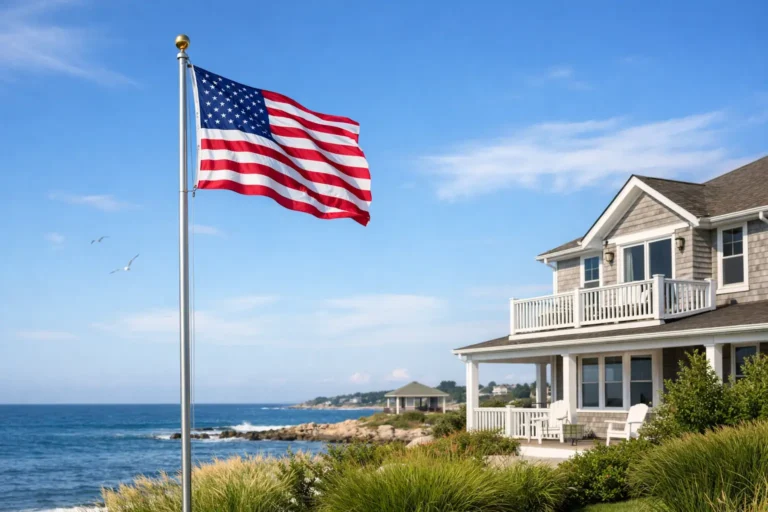
Wind is one of the biggest factors in flagpole performance, and this is where buyers can make expensive mistakes if they guess. A fiberglass pole on an open hilltop, coastal property, or wide commercial parcel may need a different specification than one installed in a sheltered courtyard.
Manufacturers rate poles based on flag size and wind speed, and those numbers should never be treated as suggestions. If your area sees regular storms, seasonal gusts, or harsh winter weather, the safest path is to choose a pole designed with that real-world exposure in mind. That may mean selecting a shorter height, a heavier wall, or a different flag size to stay within rating.
It also depends on how the flag will be used. Flying a flag every day is different from occasional ceremonial use. A site that flies a large flag year-round needs a setup that matches that duty cycle. Commercial properties that want a bold display sometimes focus on the flag size first, but the better process is to start with the pole rating and work backward from there.
Choosing the right hardware and base system
A commercial fiberglass pole is only as reliable as the components supporting it. Buyers sometimes focus on the shaft and overlook the hardware, sleeve, truck assembly, cleat, and foundation details. That is where long-term performance is either protected or compromised.
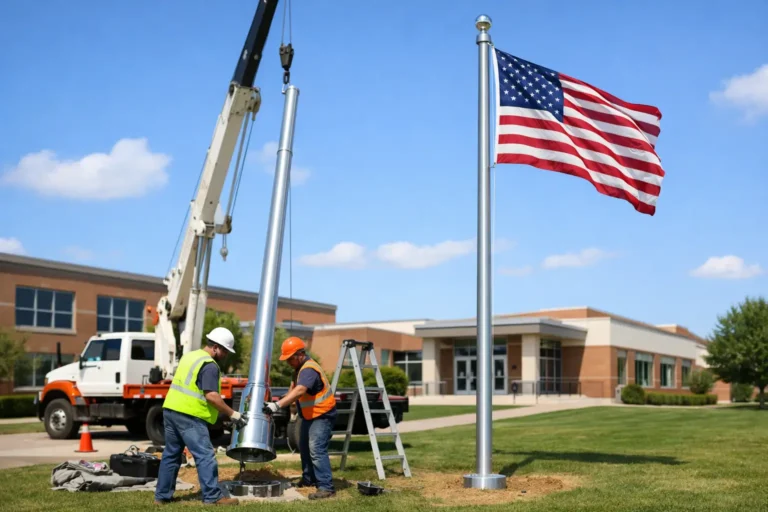
A ground-set installation with the proper foundation and sleeve is standard for many commercial jobs. The engineering behind that foundation matters more than many first-time buyers expect. Soil conditions, frost depth, local code requirements, and wind exposure all affect what the base needs to handle.
Hardware quality matters too. Stainless steel and other corrosion-resistant components are worth paying for, especially in coastal or wet climates. If the hardware fails before the pole does, your maintenance savings disappear quickly. For a public-facing installation, secure and durable components are not a luxury. They are part of the job.
Where fiberglass makes the most sense
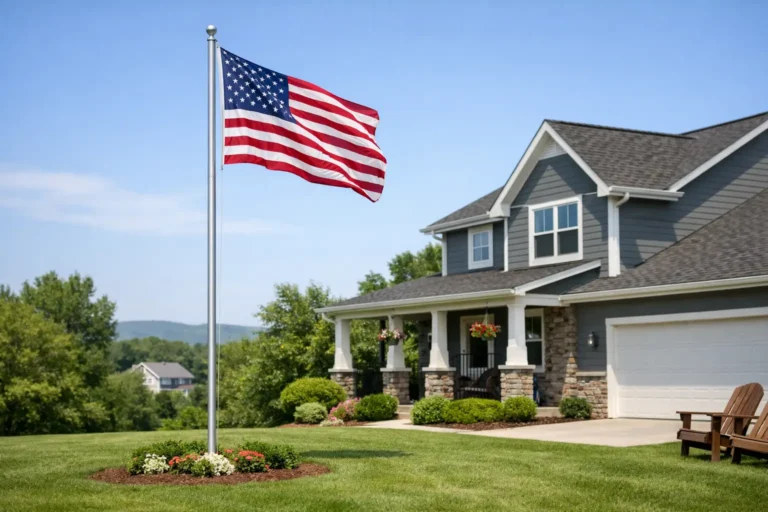
Fiberglass is often a strong fit for schools, churches, car dealerships, municipal properties, memorial settings, healthcare campuses, and business entrances. In these environments, buyers usually want a pole that presents well, performs reliably, and does not become a maintenance burden.
It also makes sense where electrical non-conductivity is a real consideration. That does not replace proper siting and safe installation practices, but it is one reason fiberglass remains popular in certain commercial and institutional settings.
On the other hand, if your project calls for a very specific metallic appearance or an exceptionally tall installation, aluminum or steel may still deserve a look. The best flagpole specialists will tell you that plainly. The right pole is the one that fits your site, not the one that sounds good in a product category.
Common mistakes when comparing commercial fiberglass flagpole options
The most common mistake is buying by height alone. A 30-foot pole sounds simple on paper, but a 30-foot pole for a protected suburban office entrance is not necessarily the same choice for a windy school campus or a courthouse lawn.
Another mistake is underestimating flag size. Larger flags create larger loads. Buyers often want the biggest flag possible for visual impact, but if the flag is too aggressive for the pole rating and local wind conditions, the display can become a maintenance problem instead of a point of pride.
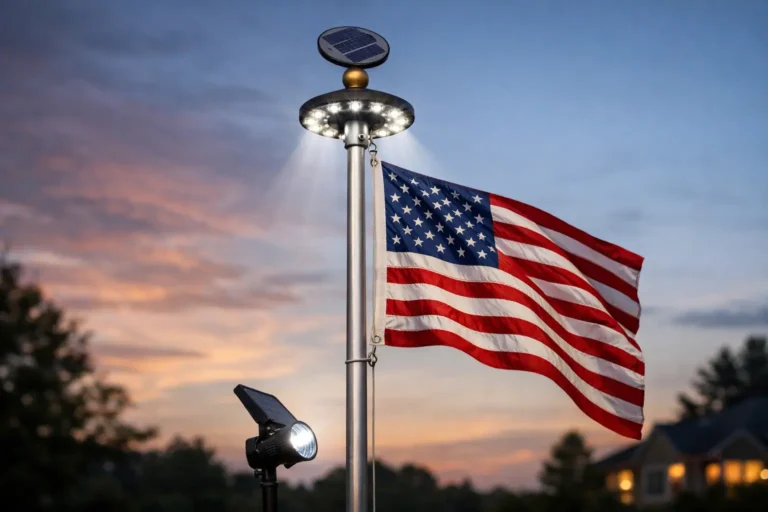
Installation planning is another area where problems start. A premium pole still needs the correct foundation, clearance from overhead obstructions, and enough room for the flag to fly freely. Trees, lighting, rooflines, and nearby signage all affect the finished result.
Finally, some buyers treat all sellers as interchangeable. They are not. With a product like this, expert guidance matters. A true flagpole specialist can help match the pole to the property, expected wind, usage pattern, and budget. That saves time on the front end and trouble on the back end.
How to narrow down the right pole for your property
Start with the building and the site. Look at the roofline, setback, surrounding open space, and how visible the pole will be from the road or entrance. Then consider daily conditions - not just average weather, but the gusts and storms your property actually gets.
Next, decide how the pole will be used. Will the flag fly every day? Is this a high-visibility civic display? Do you need extra security because the pole is in a public area? Those answers help determine whether you should choose internal or external halyard hardware and what level of construction makes the most sense.
Then think long term. A lower upfront price can be attractive, but commercial buyers usually care more about service life, appearance retention, and reduced maintenance. That is where a well-made fiberglass pole often earns its value.
If you are unsure, this is the kind of purchase where a phone call helps. At Bob's Flagpole Company, many customers call directly to talk through height, wind exposure, and hardware choices before they buy. That old-fashioned approach still works because a flagpole is not just another box on a loading dock. It is a permanent part of how your property presents itself.
A good commercial flagpole should look right on day one and still be doing its job years from now. When you choose carefully, fiberglass gives you a dependable, professional display that honors the flag and reflects well on the property beneath it.