What Flagpole Height for House Works Best?
A flagpole that looks perfect in the catalog can look too short, too tall, or just plain awkward once it is standing in your yard. That is why homeowners so often ask what flagpole height for house installation makes the most sense. The right answer is usually not the biggest pole you can buy. It is the one that fits your home’s scale, your lot, your flag size, and your wind conditions.
What flagpole height for house properties is most common?
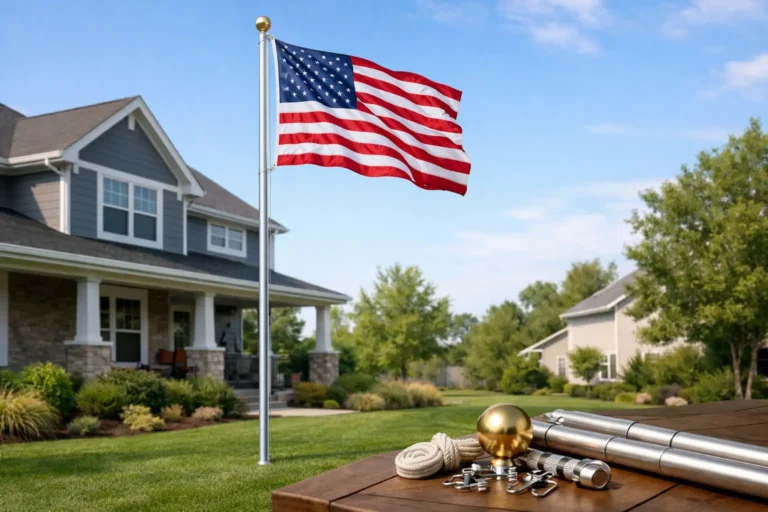
For most homes, a 20-foot residential flagpole is the standard choice. It gives the flag enough presence to be seen clearly from the street, but it usually does not overpower a one-story or two-story house. If you want the short answer, 20 feet is where most homeowners should start.
That said, standard does not mean automatic. A ranch-style home on a modest suburban lot may look best with a 15-foot or 20-foot pole. A taller two-story home with a wide front yard often carries a 20-foot or 25-foot pole better. If the property is larger, set back farther from the road, or has a long driveway entrance, a 25-foot pole may be the better visual fit.
The key is proportion. A residential flagpole should look intentional, not oversized like a commercial installation and not undersized like an afterthought.
Match the pole to the height of the house
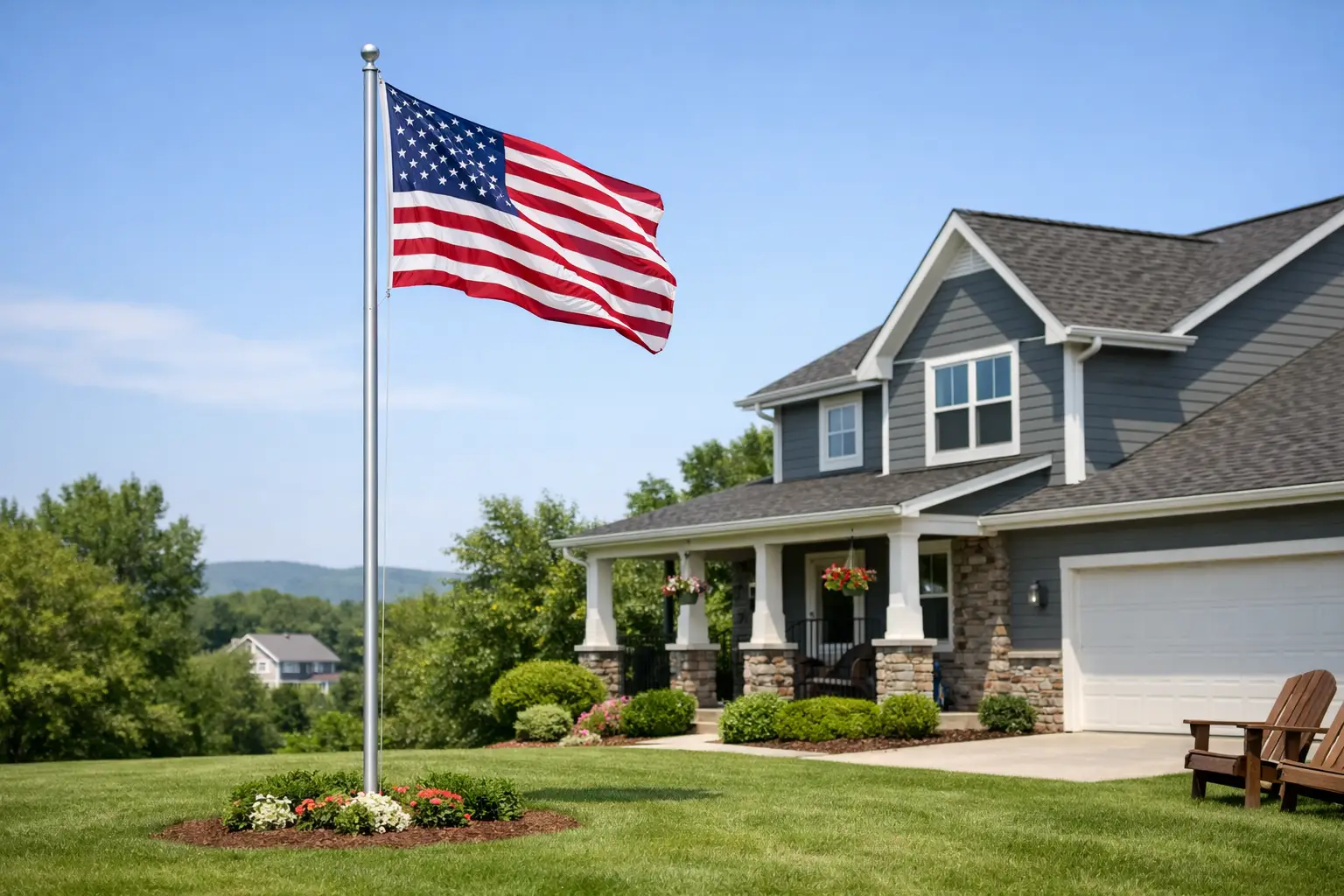
One of the easiest ways to choose the right size is to compare the pole to your roofline. As a general rule, the top of the flagpole should sit noticeably above the main roof, but not so far above it that the home looks small next to the pole.
One-story homes
A 15-foot or 20-foot pole is usually the right range for a one-story house. If the home is compact and the yard is small, 15 feet can look balanced. If you want stronger visibility or the house sits farther back from the street, 20 feet often works better.
Two-story homes
A 20-foot pole is the most common fit for a typical two-story house. If the home has a steep roof, a large footprint, or a wide open front yard, 25 feet may be the better choice.
Large homes and estate properties
For larger homes with long setbacks, expansive lawns, or formal landscaping, a 25-foot pole often looks right. In some cases, homeowners consider 30 feet, but that is where caution matters. At that height, the pole starts moving out of the casual residential category and into something more prominent. It can look excellent on the right property, but too large on the wrong one.
Lot size matters as much as house size
Many people focus only on the home itself, but the yard is just as important. A tall pole needs breathing room. If your front yard is tight, a 25-foot pole may feel crowded even if the house is large enough to support it visually.
On a small lot, a 15-foot or 20-foot pole usually keeps things in scale. On a wider lot with more open frontage, a 20-foot or 25-foot pole can create the presence many homeowners want. If the flagpole will be installed near a driveway entrance rather than close to the house, that also changes the visual equation. Entrance poles often need a little more height because they are being viewed from farther away.
This is one of those areas where photos can be misleading. A pole that seems modest online can look much taller in person once it is anchored in a front yard.
Flag size should match the pole
Choosing what flagpole height for house use is right also means choosing a flag that is properly proportioned to the pole. A common mistake is pairing a small flag with a tall pole, which makes the whole setup look off balance.
For most residential installations, the pairings are straightforward. A 15-foot pole often carries a 3-foot by 5-foot flag well. A 20-foot pole usually pairs nicely with a 3-foot by 5-foot or 4-foot by 6-foot flag, depending on the look you want and the wind exposure. A 25-foot pole is commonly matched with a 4-foot by 6-foot or 5-foot by 8-foot flag.
Bigger is not always better here either. A larger flag creates more wind load, which can matter a great deal in open or storm-prone areas. If your property sees strong gusts, the safer choice may be a slightly smaller flag on the same pole.
Wind exposure can change the recommendation
A protected neighborhood lot and an open rural property do not ask the same things of a flagpole. If your home sits on a hill, near the coast, in the plains, or anywhere with frequent wind, that should influence height, material, and flag size.
Taller poles catch more force. Larger flags do too. That does not mean you cannot have a 25-foot pole in a windy area, but it may mean you need a heavier-duty pole or a high-wind design rather than a standard residential setup.
This is where specialist guidance matters. A homeowner might be perfectly happy with a 20-foot telescoping pole in one neighborhood, while another customer with the same house size but much harsher conditions may need a different material or a stronger wall thickness. The right height is never just about appearance. It is also about long-term performance.
Telescoping vs. sectional vs. fiberglass
The type of flagpole you choose can influence which height feels right for your property.
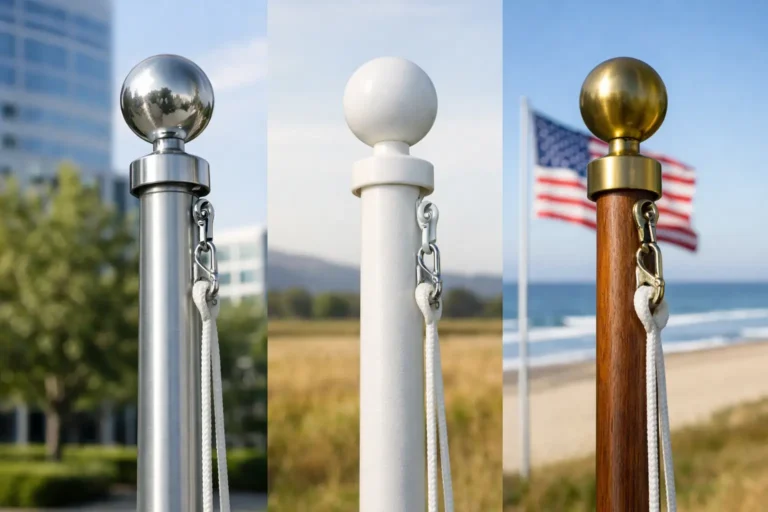
Telescoping flagpoles are popular for homeowners because they are user-friendly and make raising and lowering the flag simple. A 20-foot telescoping pole is one of the most common residential choices for good reason. It offers visibility, manageable scale, and convenience.
Sectional poles can also work well for residential settings, especially for buyers looking for a straightforward setup at a competitive price. They are often chosen in common residential heights like 15 and 20 feet.
Fiberglass poles are worth considering if durability and a clean appearance are top priorities. On larger homes or in tougher weather conditions, fiberglass can be an excellent fit. In those cases, 20-foot and 25-foot heights are often the sweet spot for residential curb appeal and performance.
Don’t forget setbacks, trees, and overhead clearance
Before settling on a height, take a look at what is around the installation area. Trees, roof overhangs, power lines, and nearby structures all matter. A pole that would look ideal on paper may be a poor real-world fit if branches crowd the top or if the flag cannot fly freely.
You also want enough open space for the flag to move without constantly tangling against landscaping or structures. If the planned spot is close to the house, a slightly shorter pole may actually perform better and look cleaner than a taller one squeezed into a tight area.
This is another reason the best residential height often lands at 20 feet. It provides presence without creating as many installation complications as taller poles can.
A simple way to choose the right height
If you are still deciding, use this practical rule of thumb. Choose 15 feet for smaller one-story homes and compact lots. Choose 20 feet for most standard residential properties. Choose 25 feet for larger homes, wider lots, or longer setbacks where a 20-foot pole may look undersized.
If you are tempted by 30 feet, pause and assess the property carefully. That height can be right, but only when the house, lot, and surroundings truly support it. Otherwise, a 25-foot pole usually gives you the statement you want without going too far.
For many homeowners, the safest and best-looking answer to what flagpole height for house installation is simply this: start with 20 feet unless your property clearly calls for smaller or larger.
When to ask for expert help
There are some situations where a general rule is not enough. If your home is in a high-wind area, if the pole will sit far from the house, if you are between two sizes, or if you want a larger flag than normal for the pole height, it pays to talk with a flagpole specialist.
That is especially true if you are investing in a premium American-made setup and want it to last. At Bob's Flagpole Company, this is exactly the kind of question customers call about every day. A quick conversation can save you from choosing a pole that looks too small, handles poorly in the wind, or does not fit the property the way you expected.
A good flagpole should look right from the first day and keep serving your home for years. If you are choosing for pride, presentation, and durability, the best height is the one that fits your property like it was meant to be there.