
External Halyard vs Internal Halyard Compared
A flagpole can look impressive from the street and still be frustrating to own if the halyard system does not fit the property. When comparing external halyard vs internal halyard flagpoles, the real question is not simply which one looks better. It is whether you need easy access, added security, a quieter presentation, or the lowest practical cost over the life of the pole.
For a homeowner flying the American flag in the front yard, an external halyard may be exactly right. For a school, municipal building, business entrance, or other high-traffic property, an internal system may offer the cleaner, more secure setup the site demands. Both can serve proudly for years when matched to the right pole, hardware, wind conditions, and installation.
What Is an External Halyard Flagpole?
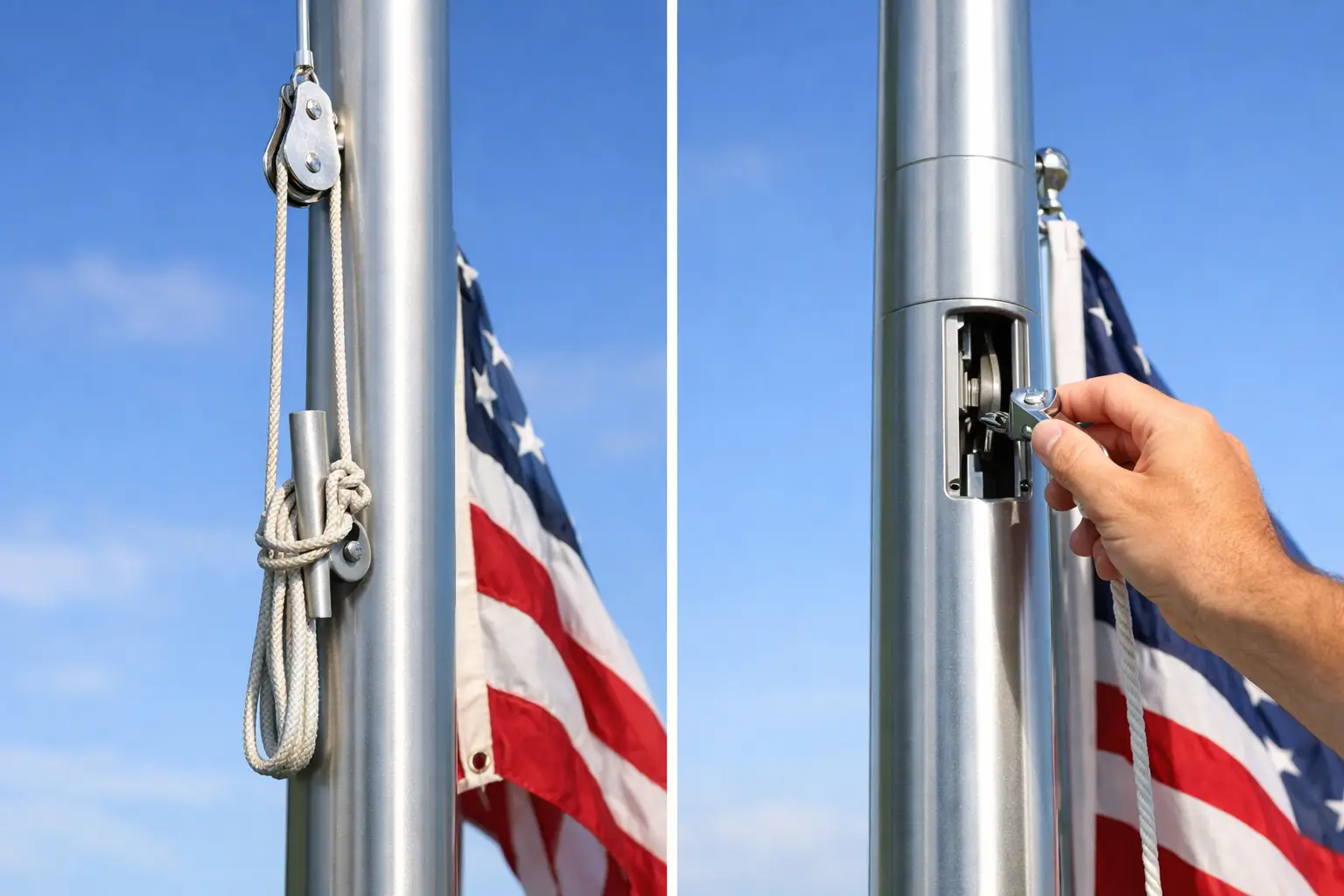
An external halyard system is the traditional arrangement most people recognize. The rope runs outside the flagpole, traveling from a truck or pulley at the top of the pole down to a cleat mounted on the lower section. The flag attaches to the halyard with snap hooks, and the rope is tied off at the cleat after the flag is raised.
This design is common on residential aluminum poles, sectional poles, and many commercial flagpoles. It is straightforward, dependable, and easy for the owner to operate. If the rope becomes worn from sun exposure, wind, or daily use, replacing it is generally a simple maintenance job. The same is true of many external components, including snap hooks and the cleat.
External halyards are usually the more budget-friendly choice because the hardware is less complex. They also make sense where one person will regularly raise and lower the flag, such as a home, small business, veterans organization, or private club.
The trade-off is visibility and access. The rope is exposed, so it can move in the wind, tap against the pole, or be handled by anyone who can reach the cleat. On an unattended public property, that access can be a concern.
What Is an Internal Halyard Flagpole?
An internal halyard system places the working cable or rope inside the flagpole shaft. Rather than tying a rope to an exterior cleat, the flag is raised and lowered using a mechanism built into or accessed through the pole. Depending on the flagpole design, that may involve a winch, stainless steel cable, a counterweight system, or a cam-action device.
The result is a clean, uncluttered appearance. From a distance, an internal halyard pole has no exposed rope running down its side. That look is often preferred for commercial properties, government buildings, schools, memorials, churches, and formal entrances where presentation matters.
Internal systems also provide better control over access. The operating mechanism can be placed behind a locking access door or secured with a specialized handle. That does not make a flagpole impossible to tamper with, but it creates a meaningful barrier compared with an open exterior cleat.
The primary trade-off is service complexity. An internal halyard has more specialized parts, and replacing a cable or servicing the winch can require more time, equipment, and experience than changing an external rope. Initial cost is generally higher as well.
External Halyard vs Internal Halyard: The Differences That Matter
The best choice comes down to how the flagpole will be used and where it will stand. A pole on a quiet residential lot has different demands than a 40-foot pole installed in front of a busy municipal office.
Appearance and curb appeal
An internal halyard system delivers the more streamlined look. There is no visible rope, exposed cleat, or loose line to distract from the pole and flag. For properties with formal landscaping, stone entrances, office parks, or ceremonial settings, that clean profile can be worth the additional investment.
An external halyard has a classic, traditional appearance. Many homeowners prefer it because it looks like the flagpoles they grew up seeing at schools, ballfields, and community buildings. A properly installed external system is not unattractive. It is simply more functional in appearance.
Security and public access
Internal halyard systems have a clear advantage when unauthorized access is a concern. A locked mechanism helps prevent someone from lowering the flag, removing it, or using the halyard improperly. This is especially valuable for schools, retail centers, government facilities, and any property where the pole is accessible after hours.
External halyards can still be used responsibly on public-facing sites. A cleat cover or lockable cleat box can limit access, but the system remains more exposed than an internal setup. For a residence or closely monitored property, that may not matter at all.
Noise in windy conditions
An exposed rope can strike the pole in gusty weather. That familiar tapping sound is a common complaint, especially when a flagpole is installed near bedrooms, patios, or office windows. Rope ties and halyard retainers can help reduce movement, but they do not eliminate every noise issue.
Because the cable is housed inside the shaft, an internal halyard is usually quieter at ground level. If peaceful outdoor space or nearby offices are a priority, this is one of the strongest practical reasons to consider an internal system.
Maintenance and repair
External systems are easier for most owners to inspect. You can see when a rope is fraying, a snap hook is wearing, or a pulley needs attention. Replacing an external halyard is a routine task for many flagpole owners, provided the pole is safely accessible and the correct replacement rope and hardware are used.
Internal systems protect the working line from direct exposure, but they are not maintenance-free. Cables, winches, pulleys, and internal hardware still need periodic inspection. When something needs repair, access can be more involved. For a tall commercial pole, professional service may be the sensible choice.
Initial price and long-term value
An external halyard usually costs less upfront. That makes it a practical choice for many homeowners and organizations working within a defined budget. Replacement parts are commonly available and relatively economical.
An internal system costs more because of its hardware and construction. Yet it can bring value through better security, a more polished appearance, and fewer concerns about exposed rope. On a prominent commercial or civic installation, those benefits often justify the higher initial price.
Which Halyard System Is Best for Your Property?
For many residential flagpoles, an external halyard is the dependable choice. It is easy to understand, easy to operate, and simple to maintain. If you want to raise the flag each morning, lower it in bad weather, or change it for holidays and special observances, the direct access is a benefit rather than a drawback.
For businesses and public facilities, internal halyards are often the better fit. They offer a professional appearance and help protect the flag and operating hardware from casual interference. They are particularly well suited to taller aluminum flagpoles installed at main entrances, parking-lot islands, memorial sites, and municipal grounds.
Wind should also be part of the conversation. The halyard style alone does not determine whether a pole is right for a windy location. Pole diameter, wall thickness, material, installed height, foundation design, flag size, and local exposure all matter. A premium flagpole should be selected as a complete system, not just by choosing an internal or external rope arrangement.
Do Not Forget the Flagpole Accessories
The best halyard system still needs quality supporting hardware. On an external setup, use a properly sized weather-resistant rope, durable snap hooks, and a secure cleat. If wind noise is a concern, ask about devices designed to keep the halyard closer to the pole.
On an internal system, make sure the operating method is appropriate for the person responsible for the flag. A system that requires a special handle, key, or operating procedure should be understood before installation. Facility managers should also plan for periodic inspection rather than waiting until the flag cannot be raised or lowered.
No matter which system you choose, use the correct flag size for the pole. An oversized flag places extra load on the hardware and pole, especially during storms. A good-looking installation is one where the pole, halyard, ornaments, lighting, and flag all work together.
A Better Choice Starts With the Site
There is no one-size-fits-all winner in the external halyard vs internal halyard decision. External systems offer familiar operation, easier service, and lower cost. Internal systems bring better security, quieter operation, and a cleaner appearance. The right answer depends on who will operate the pole, how visible the installation is, and what conditions it must handle year after year.
Before ordering, take a clear look at the site, the pole height you need, nearby wind exposure, and who will be responsible for the flag each day. If you want a second opinion from a flagpole specialist, call Bob directly at Bob's Flagpole Company. A few minutes of practical guidance can help you choose a flagpole you will be proud to fly for many years.