Weather Resistant Flagpole Materials That Last
A flagpole spends every day outside, taking the full force of sun, rain, wind, ice, and temperature swings. That is why choosing weather resistant flagpole materials is not simply a matter of appearance. The material determines how well a pole holds its finish, handles wind movement, resists corrosion, and serves your property for years to come.
For a homeowner flying the American flag from the front yard, a business making a strong first impression, or a school or municipality outfitting a public site, the right choice depends on local conditions as much as budget. A pole that performs well in a dry, sheltered neighborhood may not be the right answer for a windy plain, a snowy mountain area, or a salt-air coastal property.
Weather Resistant Flagpole Materials Compared
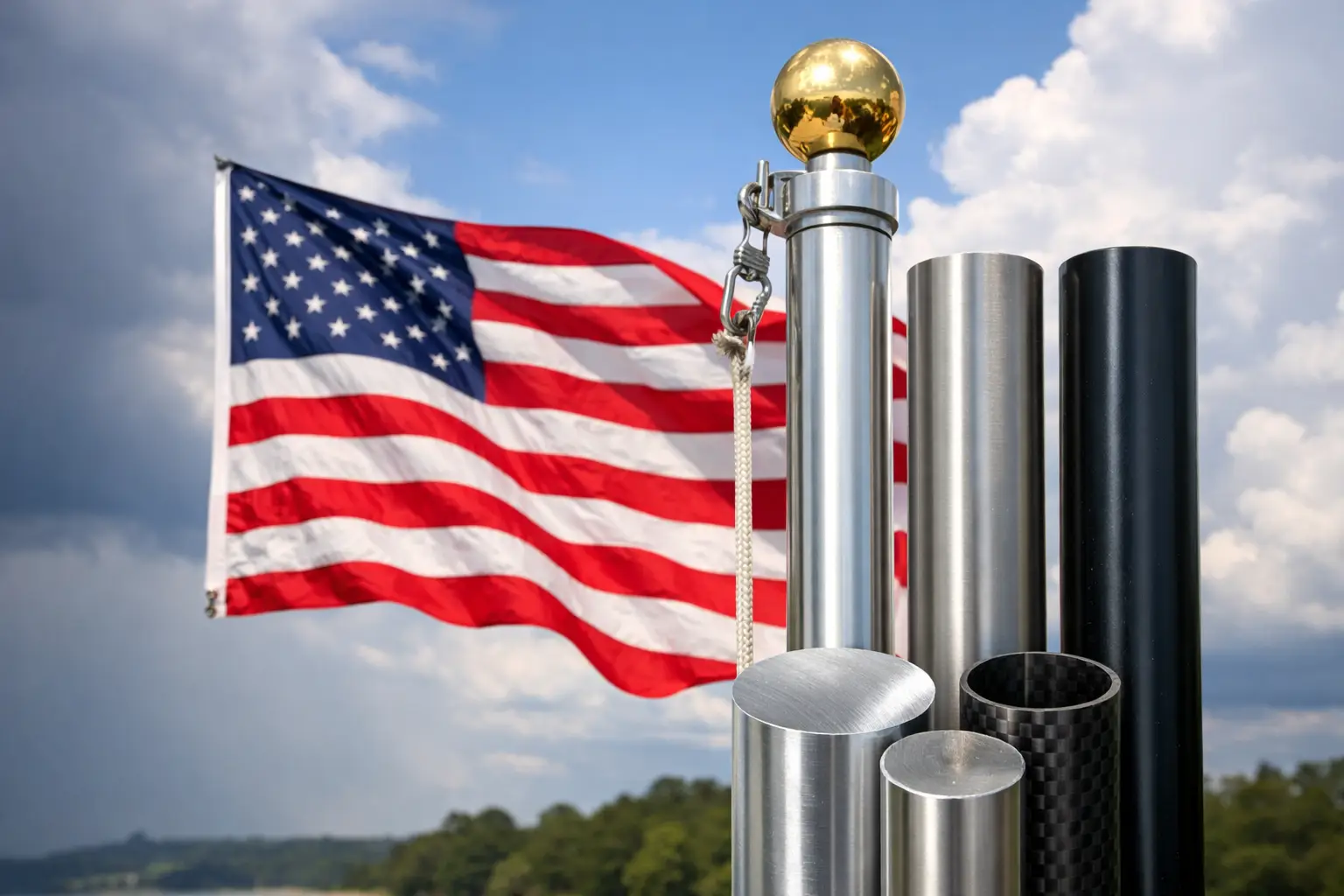
The three materials most buyers will encounter are aluminum, fiberglass, and steel. Each has a legitimate place, but they are built for different conditions and installation styles. Understanding those differences before you buy can prevent costly replacements and help keep your flag flying proudly.
Aluminum: The trusted all-around choice
Aluminum is the most common material for residential and many commercial flagpoles, and for good reason. It does not rust, it is relatively lightweight, and it can provide a clean, classic look in either satin aluminum or painted finishes. Quality aluminum poles are available as sectional, telescoping, and one-piece ground-set designs.
For most inland residential installations, an aluminum pole offers an excellent balance of strength, appearance, and maintenance. It stands up well to rain and humidity because aluminum forms a natural oxide layer that helps protect the metal beneath it. That does not mean it is maintenance-free. Dirt, airborne pollution, and salt deposits can dull the surface over time, especially near the coast.
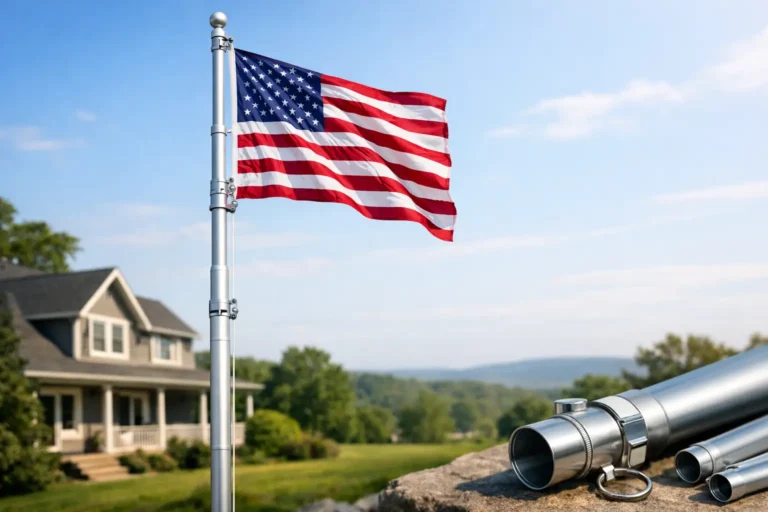
The grade and wall thickness matter just as much as the word "aluminum" on a product listing. A thin, low-cost pole can flex excessively, develop wear at connections, or struggle in sustained wind. A premium pole uses properly engineered tubing and hardware designed for the stated height and wind conditions. If you are comparing telescoping models, pay close attention to the locking system, section overlap, and whether the manufacturer provides a realistic wind rating.
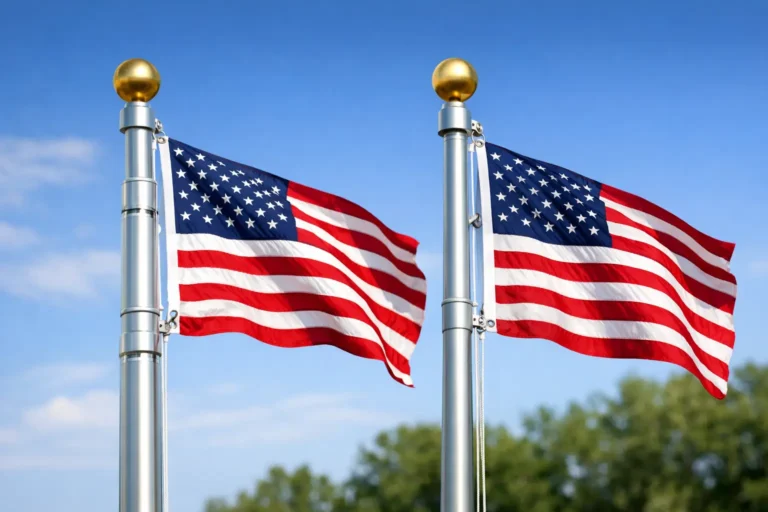
Aluminum is also a strong choice for buyers who want to raise and lower a flag easily. Telescoping aluminum flagpoles can be a practical option when you want no rope to manage and no halyard noise against the pole. The trade-off is that every moving section and locking point needs to be well made and kept clean for dependable long-term operation.
Fiberglass: Built for demanding wind and coastal conditions
Fiberglass flagpoles have earned a reputation for performance where weather is especially hard on equipment. Unlike metal, fiberglass will not rust or corrode. It is highly resistant to moisture and salt air, making it a smart consideration for waterfront homes, coastal businesses, marinas, and locations exposed to frequent rain.
A fiberglass pole also has controlled flexibility. In a gust, it can bend and recover rather than transferring all of that force through a rigid shaft. That flexibility is valuable in high-wind areas, but it should not be confused with weakness. A properly designed fiberglass flagpole is engineered to flex within its intended limits.
Finish quality is crucial. Prolonged ultraviolet exposure can eventually affect lower-grade fiberglass surfaces, causing fading, chalking, or visible fibers. Premium fiberglass poles use a protective gel coat that helps defend against the sun and maintains a polished appearance. A white fiberglass pole remains a popular choice because it looks sharp against nearly any home, building, or landscape.
Fiberglass can cost more upfront than a basic aluminum pole, but its resistance to corrosion and strong performance in difficult climates can make it the better value over time. It is particularly worth considering if your previous metal pole showed corrosion, finish damage, or frequent wind-related trouble.
Steel: Strong, but only with the right protection
Steel delivers tremendous strength and is often used for large commercial, industrial, and municipal flagpole installations. For tall poles, large flags, and engineered installations with significant wind loads, steel can be the right material. It is not usually the first choice for a typical homeowner looking for a 20-foot or 25-foot residential pole.
The challenge with steel is corrosion. Bare or poorly protected steel will rust when exposed to moisture. Quality steel poles require protective finishes such as hot-dip galvanizing, durable paint systems, or both. The finish must be inspected over time, particularly around the base, welds, fasteners, and any area where the surface has been scratched.
Steel can be a dependable long-term solution when it is professionally specified and maintained. However, buyers should not assume that a heavier pole automatically means a better pole. A properly rated aluminum or fiberglass model may be the more practical and weather-resistant choice for a smaller property.
Your Climate Should Guide the Material Choice
A flagpole is only as weather-ready as its match to the site. Start by considering what the pole will face during the worst month of the year, not just on a calm installation day.
For inland neighborhoods with normal seasonal weather, premium aluminum is often an excellent fit. It offers a traditional appearance, easy handling, and dependable resistance to rain and everyday exposure. If the installation area is open to strong winds, look beyond material alone and choose a pole rated for your expected wind conditions.
For coastal areas, salt air changes the equation. Salt can settle on metal surfaces and hardware, accelerate corrosion, and damage finishes. Fiberglass is often a leading choice because it does not corrode, while aluminum can still perform well when it has a quality finish and receives regular freshwater cleaning. Stainless steel hardware is especially valuable in these locations.
For high-wind regions, the pole's engineering is as important as its material. Pole diameter, wall thickness, taper, ground sleeve or foundation design, and the size of the flag all affect performance. A pole may be rated for a certain wind speed with no flag flying, then have a lower rating with a flag attached. Always use the manufacturer's rating for the actual flag size you plan to fly.
Snow and ice deserve attention, too. Ice adds weight to flags, halyards, and hardware, while frozen ground can complicate installation and service. In these climates, a strong pole paired with quality hardware and sensible flag management is the safer approach. During severe storms, lowering the flag can protect both the flag and the pole.
The Hardware Matters as Much as the Pole
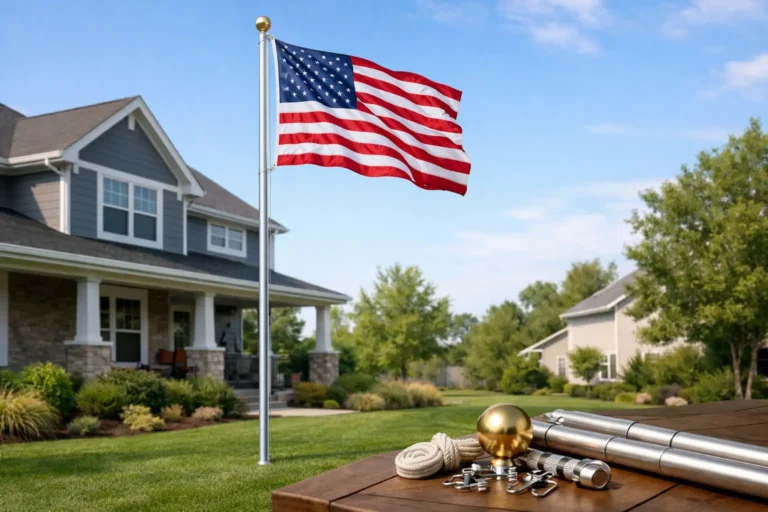
Even the best weather resistant flagpole materials can be undermined by low-grade hardware. The truck assembly at the top of the pole, halyard or rope, snap hooks, cleat, pulleys, and foundation components all live outdoors. These parts need to be selected for the same environment as the pole itself.
For standard residential use, durable nylon halyard and quality metal snap hooks are dependable choices. In coastal or high-exposure environments, buyers should consider corrosion-resistant hardware and inspect it regularly. A frayed rope, cracked pulley, or worn snap hook is inexpensive to replace compared with the damage it can cause when it fails in a storm.
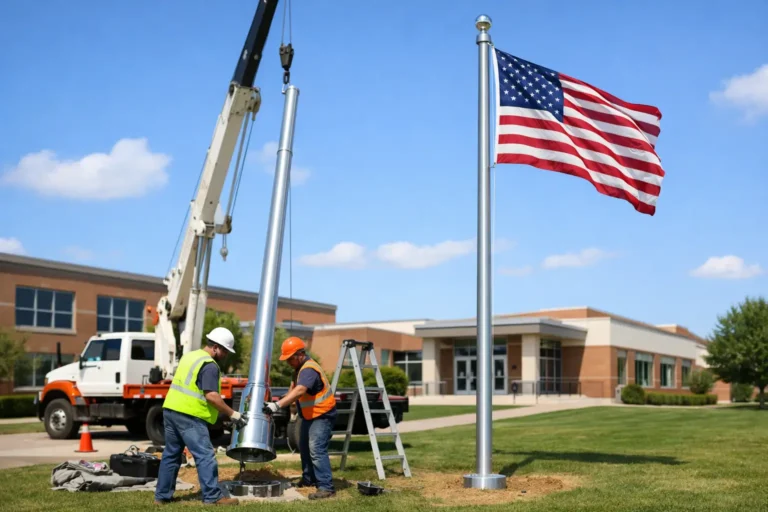
Ground-set poles require special attention at the foundation. A correctly sized sleeve, sound concrete work, drainage, and proper leveling support the pole from day one. Surface-mounted and wall-mounted poles have their own requirements, particularly regarding the building structure and bracket strength. This is not the place to guess. The installation should follow the pole manufacturer's instructions and account for local wind conditions.
Protect Your Investment With Simple Care
Weather resistance does not mean neglect-proof. A few routine checks can extend the life of nearly any flagpole. Wash aluminum and fiberglass surfaces periodically with mild soap and water, especially after storms or in salt-air locations. Avoid abrasive cleaners that can damage a protective finish.
Inspect the pole, hardware, and flag several times a year. Look for loose fasteners, worn moving parts, oxidation, cracks, finish damage, or unusual flexing. Keep nearby tree branches trimmed so they do not rub against the pole or snag the flag. Most importantly, take down a damaged or badly frayed flag promptly. A torn flag catches more wind and puts added strain on every part of the system.
When selecting a new pole, do not let a bargain price make the decision for you. Ask what material it is made from, how it is finished, what hardware is included, and how its wind rating is calculated. A quality American-made flagpole installed for the conditions at your property is a purchase you can feel good about every time you look outside.
If you are weighing aluminum against fiberglass, or need help matching pole height and wind rating to your site, Bob's Flagpole Company can help you sort through the practical details. Call Bob directly for straightforward guidance and choose a flagpole built to stand proud through the weather your property actually sees.